


HARROW · INSPECTION · TREATMENT · PREVENTION
Squirrel Control Harrow
Scratching above a bedroom, disturbed insulation or an animal entering beside the roofline needs a careful assessment. We investigate accessible evidence, establish the species and discuss a lawful plan for control and later exclusion. Squirrel work is not simply a matter of blocking a hole. The animal’s position, potential dependent young, safe access and other wildlife all affect what can be done.
Repeated roof activity or damage? Tell us what was observed from a safe position. ↗
A roof-space inspection is more than one hole
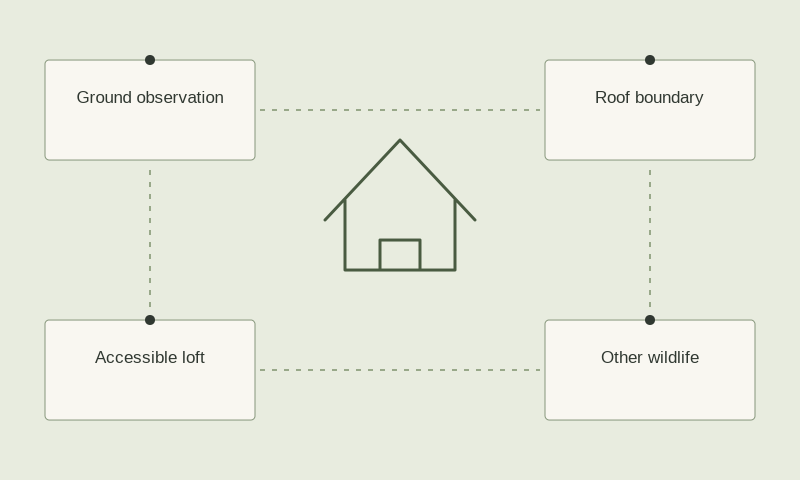
Ground observation
View possible climbing routes without climbing the roof.
Roof boundary
Connect eaves or fascia defects with actual entry evidence.
Accessible loft
Check signs from safe boarding and record hidden limits.
Other wildlife
Assess species concerns before disturbing nests or closing routes.
Start by establishing what is using the roof
We consider when the noise occurs, where it travels and any visible evidence at the access point. A sighting, distinctive damage, nesting material or droppings may help identify the animal, but sound alone does not confirm a squirrel infestation.
Tell us whether you have actually seen an animal entering the building. Keep a note of the location and take photographs from the ground if safe. Evidence may call for a rat investigation or mouse control instead.
The outside assessment begins on the ground
The first external view looks for damaged fascia edges, displaced roofing materials, gaps near eaves and possible climbing routes. Nearby branches or structures may provide access, but their presence is not proof that they are being used.
Ground-level observation may use a torch or binoculars where appropriate. Close roof inspection needs safe access; it is not assumed to be included or achievable on the first visit. Tell us about the building height, extensions, conservatories and restricted side passages.
Inside the loft: accessible evidence and hidden limits
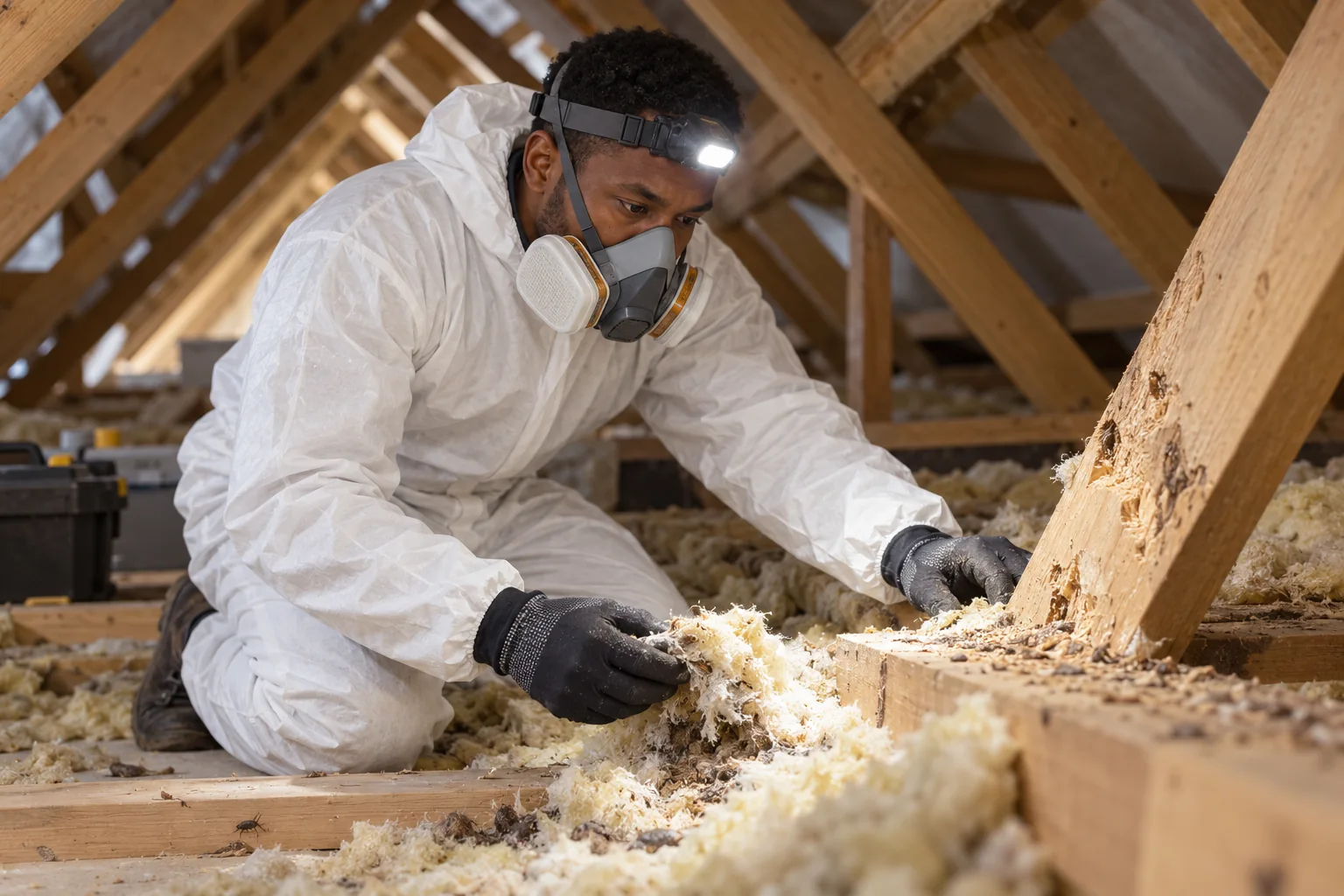
Before entering, the technician assesses the hatch, boarding, lighting and the areas that can support safe movement. We inspect accessible insulation surfaces, timbers, openings and stored materials for disturbance, gnawing and nesting signs.
A torch and suitable personal protection may be needed for the conditions encountered. Loft access is not permission to walk on unboarded ceiling areas, touch damaged wiring or disturb suspect materials. The home inspection diagram shows typical zones, not a claim that every roof void can be fully accessed.
Roof evidence and the next investigation
| Observation | What needs checking | Possible consequence |
|---|---|---|
| Entry at an eaves gap | Species, occupancy and safe view of the opening | Plan control before exclusion |
| Noise in a concealed void | Accessible evidence and the route of sound | Avoid diagnosis from sound alone |
| Disturbed insulation | Activity signs, access and potential contamination | Agree inspection limits and any separate remedial work |
| Suspect protected wildlife | Species evidence and legal restrictions | Pause relevant work for appropriate advice |
Species, nesting and lawful control come first
The species must be established before a control method is selected. Red squirrels are protected, and roof spaces can also contain protected wildlife or active nests that require a different response. If the evidence raises a protected-species concern, the relevant work must pause while appropriate advice and any required authorisation are obtained.
Captured grey squirrels cannot simply be relocated and released elsewhere. A professional control plan must account for the legal and animal-welfare requirements that apply. The presence of dependent young also affects the assessment and sequence of work; sealing a roof opening without checking occupancy can create an avoidable welfare problem.
A control plan matched to the building
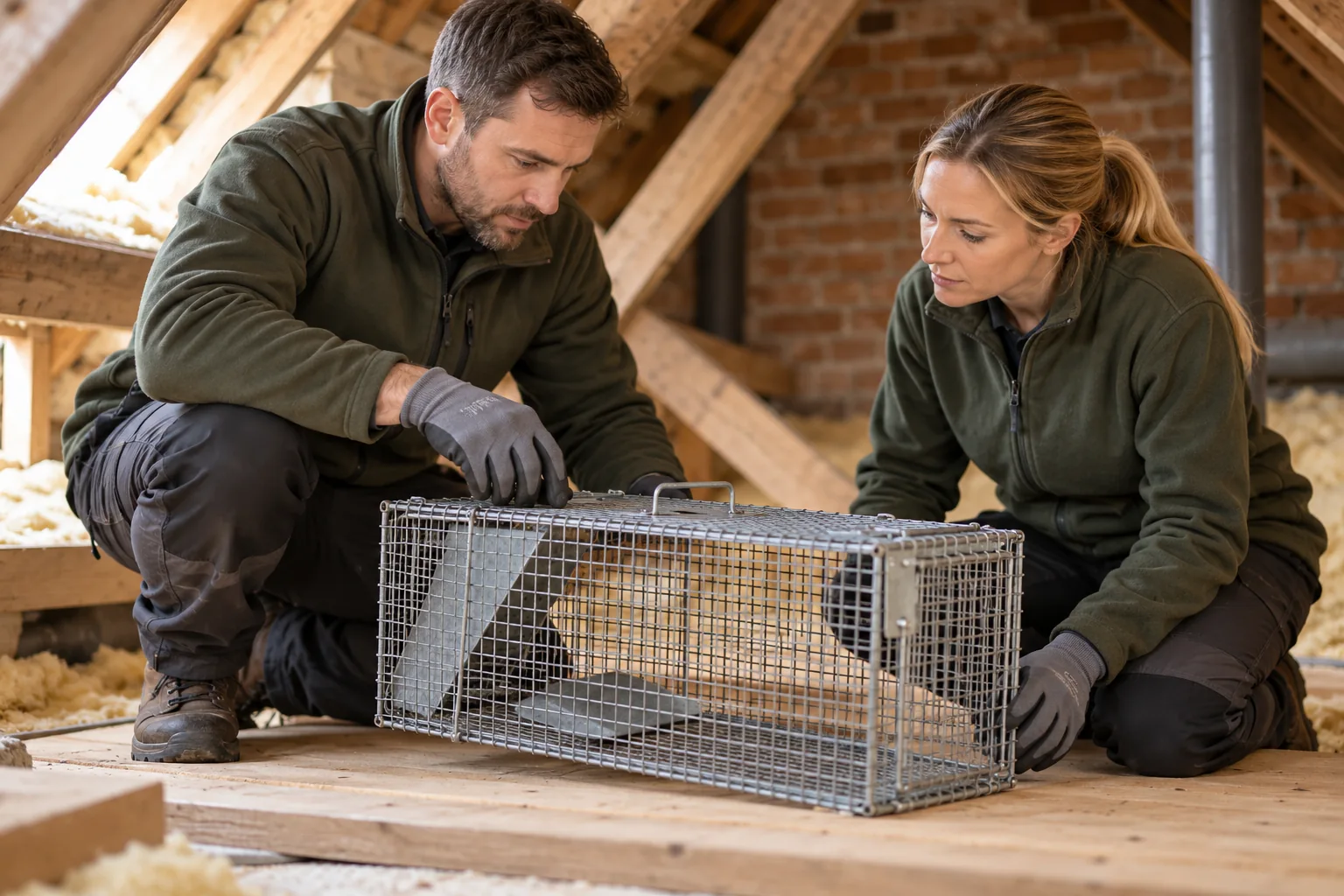
Once the evidence and access have been assessed, the technician explains the suitable options, the areas involved and the checks that will be required. Lawful species-appropriate trapping may be considered where justified. Device choice, placement and protection depend on the site and the risk to non-target animals; they are not copied from a garden wildlife deterrent arrangement.
The plan should be clear about who checks the devices, what access must remain available and how any captured animal will be handled lawfully.
Preparing for the roof-space assessment
| Preparation | Reason | What to tell us |
|---|---|---|
| Clear below the hatch | Safe access starts before entering the loft | Hatch location, boarding and known hazards |
| Keep entry points unchanged | Occupancy must be assessed before sealing | Any gap where an animal has been seen |
| Protect other occupants | People and pets must avoid the work area | Rooms and routes that cannot be isolated |
| Arrange authority | Shared or rented areas need permission | Who authorises access, control and repairs |
Protecting occupants and the parts of the loft
Keep children, pets and other occupants away from the inspection or control area as instructed. Devices and access points must not become part of normal household traffic. The technician assesses the position of stored belongings, pipework, insulation and wiring so that the chosen measure does not introduce an avoidable risk to the property.
Do not reach towards an animal, open a device or attempt to move it outside. Report any unexpected catch or damaged equipment promptly and follow the instructions given. If wiring or plumbing appears damaged, avoid touching it and arrange assessment by a competent relevant trade.
Prepare the access, not the animal’s route
Clear the floor below the loft hatch and provide information about ladders, boarding and known access hazards. Explain whether there are water tanks, solar equipment, stored chemicals or materials that should not be disturbed. If the hatch is in a tenant’s room or a shared corridor, arrange permission and access before the appointment.
Leave suspected entry points and nesting material undisturbed until assessed. Do not drive the animal deeper into the roof, add household repellents or move contaminated belongings into living spaces. Photographs of entry from a safe ground position and a short record of when noise occurs are more helpful than an attempt to climb up for a closer look.
Return checks are part of controlling the risk
Follow-up is determined by the chosen method, evidence and welfare requirements. It may include checking control equipment, reviewing roof access observations and looking for continued movement. A silent period is useful information, but it is not a complete substitute for checking the areas and routes relevant to the original findings.
Keep the agreed access arrangements in place and tell us about any new opening, building work or noise pattern. If signs continue, the review may need to consider an alternative route, an unchecked part of the void or a different animal. Record what you notice without opening devices or disturbing the loft to create a test.
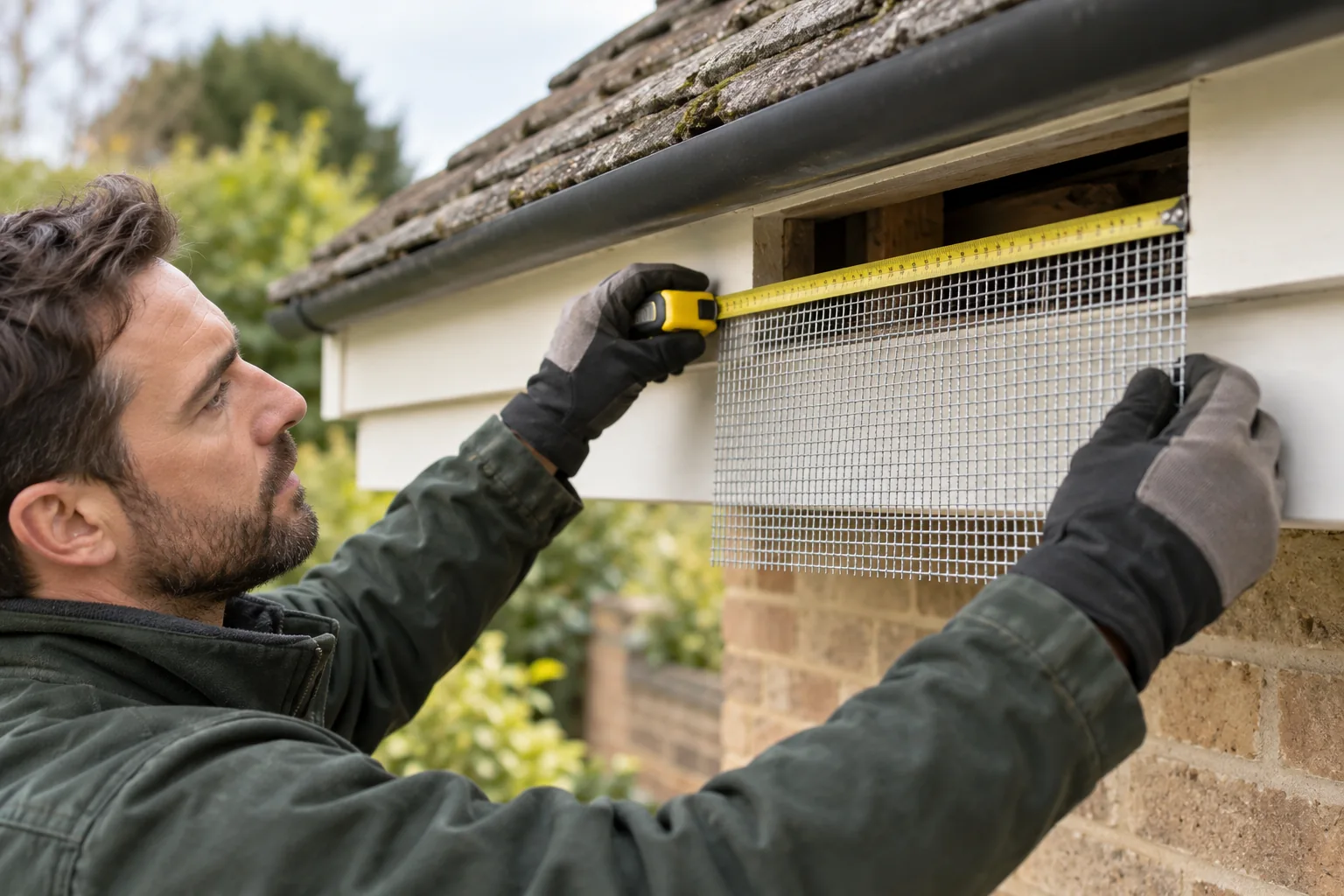
Occupancy determines the exclusion sequence

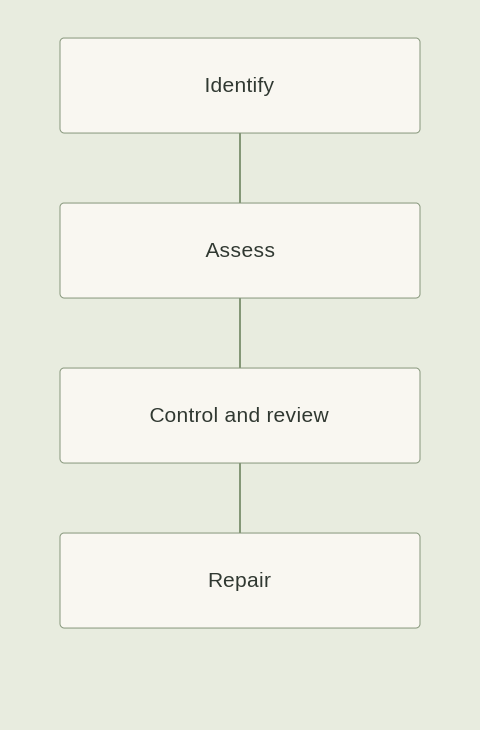
Identify
Establish species and evidence of use.
Assess
Consider access, nesting and welfare constraints.
Control and review
Use the agreed lawful method and required checks.
Repair
Close the confirmed route when suitable; maintain ventilation.
Separate control from property repair
| Part of the plan | Purpose | Important limit | What follows |
|---|---|---|---|
| Species assessment | Establish what animal is present | Sound alone is inconclusive | Select an appropriate lawful response |
| Suitable control | Address confirmed activity | Requires access, protection and welfare checks | Review the evidence and equipment |
| Entry-point exclusion | Reduce re-entry through an identified route | Timing depends on occupancy; high work may need another trade | Inspect the repair and watch for fresh signs |
| Remedial property work | Address damage or affected materials | Not automatically included in pest treatment | Agree separate electrical, roofing or cleaning scope |
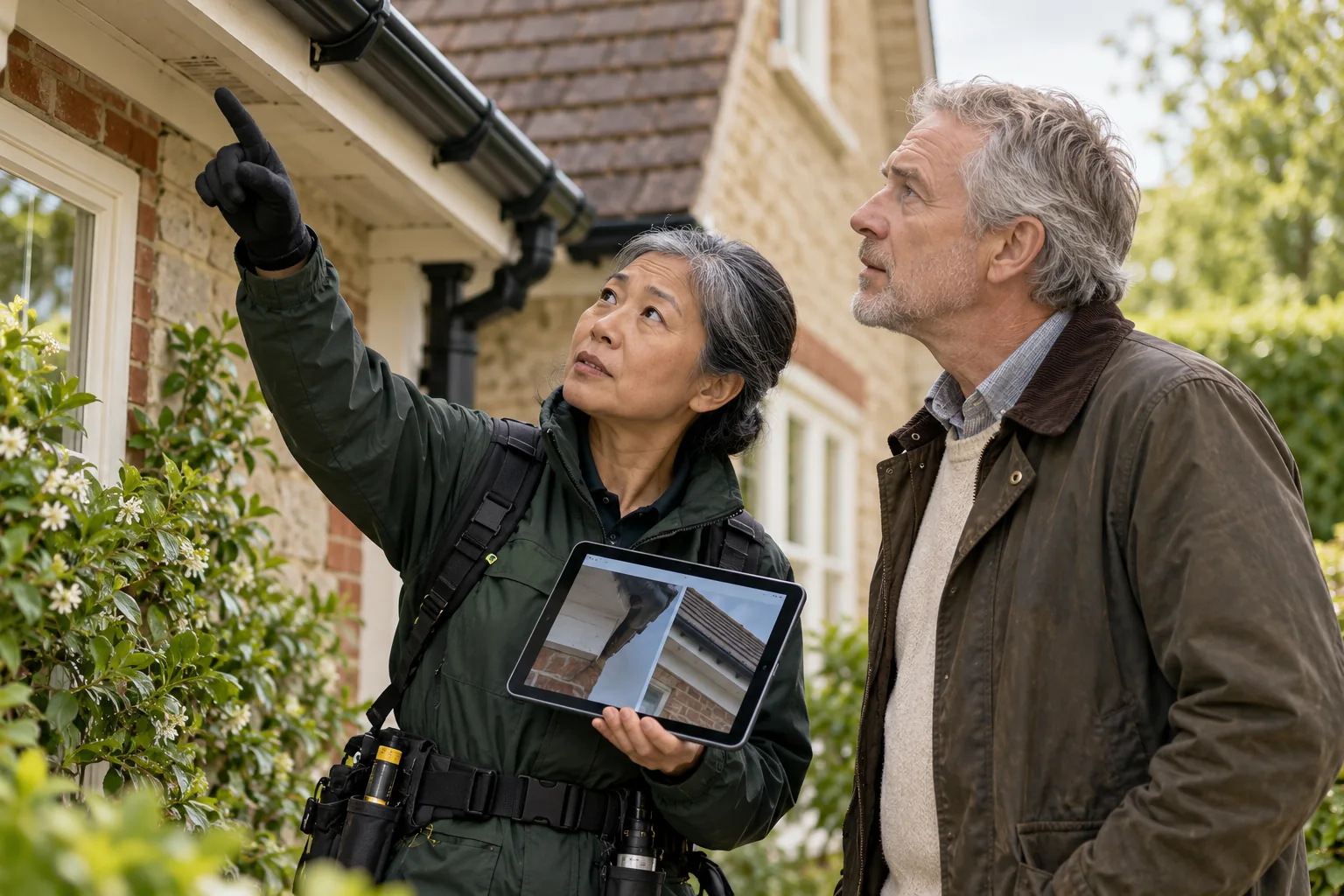
The right time to secure the opening
Exclusion is assessed after considering occupancy and the control findings. Closing a visible gap too early can leave animals inside or separate dependent young from an adult. When the timing is suitable, the repair must be durable and appropriate to the roof detail. Ventilation, drainage and building weatherproofing must continue to function.
A small accessible proofing task and a damaged roof edge are different jobs. Larger repairs, high-level access or work affecting roofing materials may need a separate quotation and qualified trade. Ask which opening has been identified, what repair is recommended and who is responsible for completing it.
When roof activity needs an urgent conversation
Repeated entry, an animal trapped in an occupied part of the home or visible damage to building services warrants a prompt call. Describe the location, whether the animal is still visible and whether people or pets can be kept clear. Do not try to corner it or create an escape route through another room.
Give the postcode, building height and any access restrictions so we can discuss the next available assessment. The emergency enquiry section sets out the information needed; it does not promise an arrival time. Suspected electrical or structural danger must be addressed by the appropriate emergency or repair professional, separately from the pest inspection.
What determines the squirrel-control quotation
The quotation depends on safe access, the extent of the affected void, the selected control plan and the required checks. A boarded loft with a reachable hatch differs from a high roof edge above an extension. The need for specialist access, roof repair, insulation work or contamination removal can change the scope and should be explained separately.
Before booking, ask what inspection and return visits are included, which repairs are excluded and how any additional work is authorised. Call with the property details to discuss an assessment, or read the Harrow pest control approach to understand how findings guide the work.
Questions about squirrel control
Can you tell whether loft noise is a squirrel over the phone?
The timing and location can help plan an inspection, but they cannot reliably establish the species. A sighting or safe photograph is useful.
Should I close the roof opening when the squirrel goes outside?
Do not assume the void is empty because one animal has left. Others or dependent young may remain. Have occupancy and the timing of exclusion assessed before a permanent opening is closed.
Can a captured grey squirrel be released in a park?
No. Grey squirrels cannot simply be caught and released elsewhere. The control plan must comply with the legal and animal-welfare requirements, which is a reason to obtain professional advice before using a trap.
Will the technician repair my roof during the visit?
Only work specifically assessed and agreed is included. High-level access, roofing repairs and damaged fascia replacement may need a separate trade or quotation. The inspection can identify what needs attention without assuming those repairs are safe to undertake immediately.
Can you inspect an unboarded loft?
Access depends on its condition and the safe areas available. Do not lay makeshift boards for the visit. Explain the hatch, existing walkway and hazards when booking so the inspection limits and any additional access needs can be discussed.
Does the whole loft insulation need replacing?
Not automatically. The affected area, contamination and damage must be assessed. Pest control and insulation replacement are separate scopes; ask for evidence and a clear recommendation before arranging extensive removal or disturbing the materials yourself.