

HARROW · HA1 & HA2 / INSECT TREATMENT
Cockroach Treatment Harrow
Cockroach control follows where insects shelter, feed and move. We inspect affected kitchens and service routes, identify evidence and plan suitable treatment. Monitoring and changes to food access, moisture or harbourages help establish whether activity is being controlled.
Cockroaches around food preparation? Describe the activity and the way the space is used. ↗
Finding out which insect is present
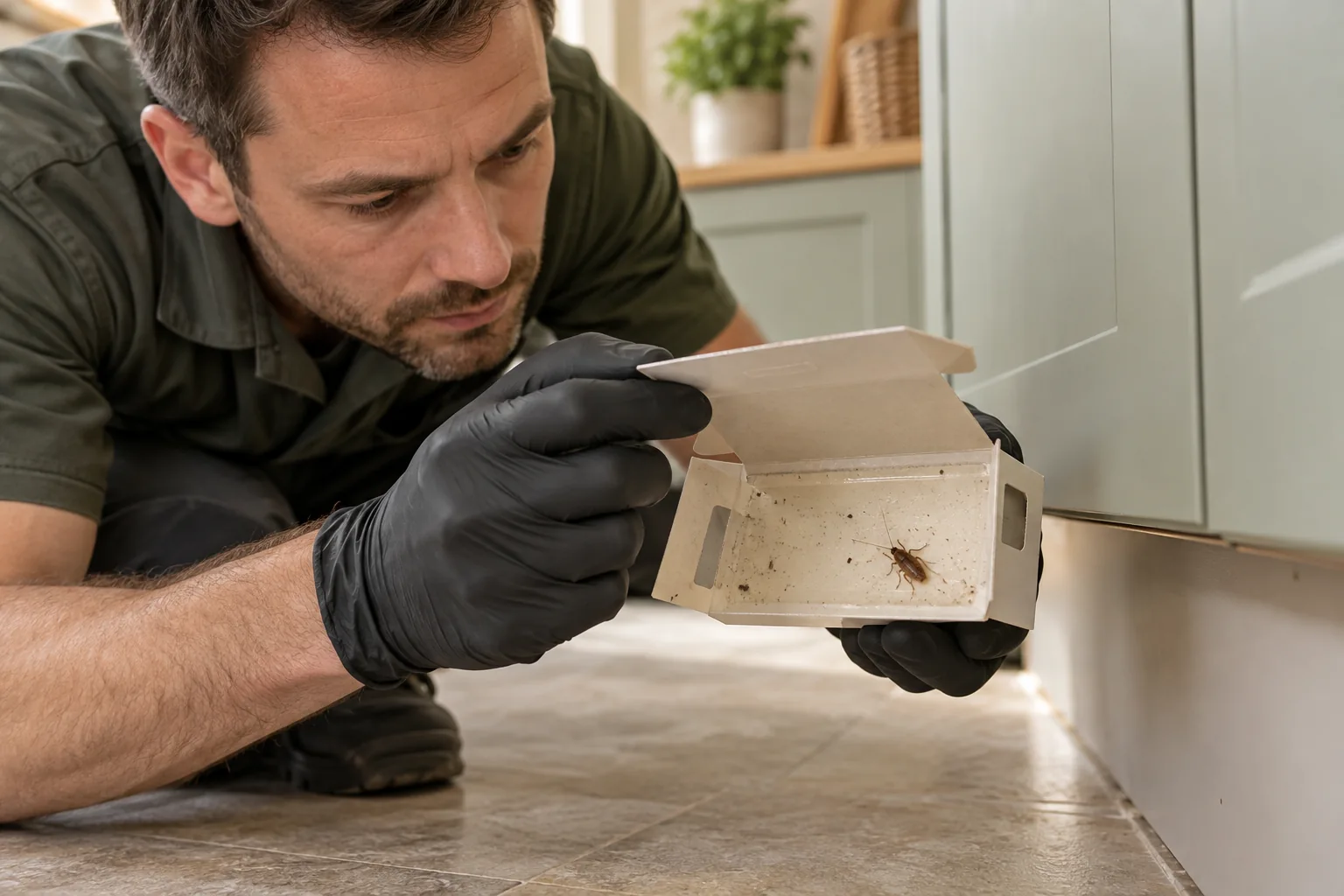
A fast-moving brown insect is not enough to select treatment. We look for live cockroaches, immature stages, egg cases, droppings and shed skins. Species identification matters because habits differ. Describe the size, colour and sighting locations. A safe photograph can help direct inspection.
Describe deliveries, second-hand equipment and changes without assuming these prove the source. An infestation is assessed from the evidence on site. If the insect is small, silvery and found around damp cracks, the silverfish service explains a different inspection focus. Avoid buying a treatment solely from a resemblance in an online image.
A kitchen inspection follows connected shelter
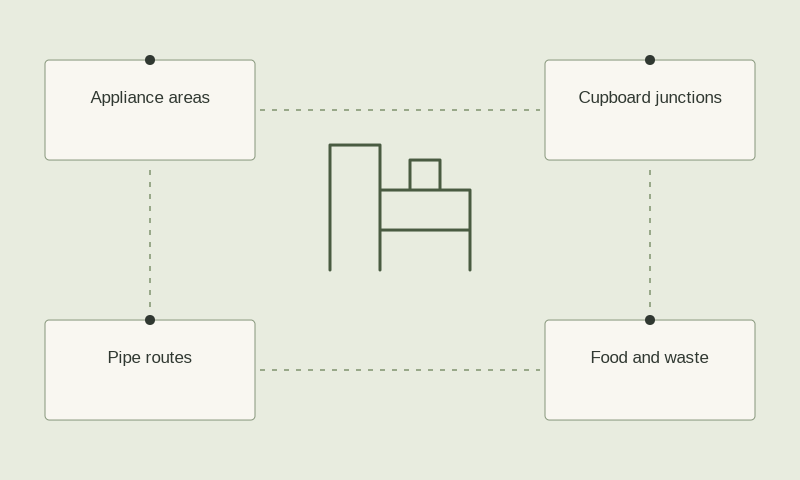
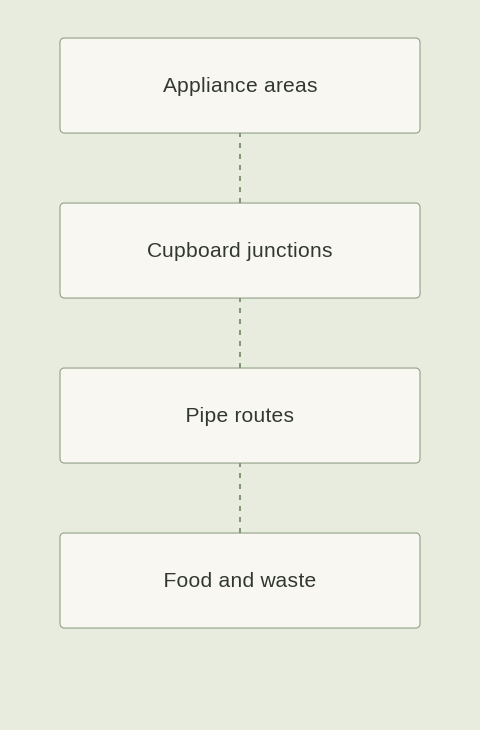
Appliance areas
Check accessible warmth, gaps and moisture.
Cupboard junctions
Look at hinges, plinths and sheltered edges.
Pipe routes
Assess activity around service penetrations.
Food and waste
Review resources that may support activity.
Surveying the kitchen from shelter to food access
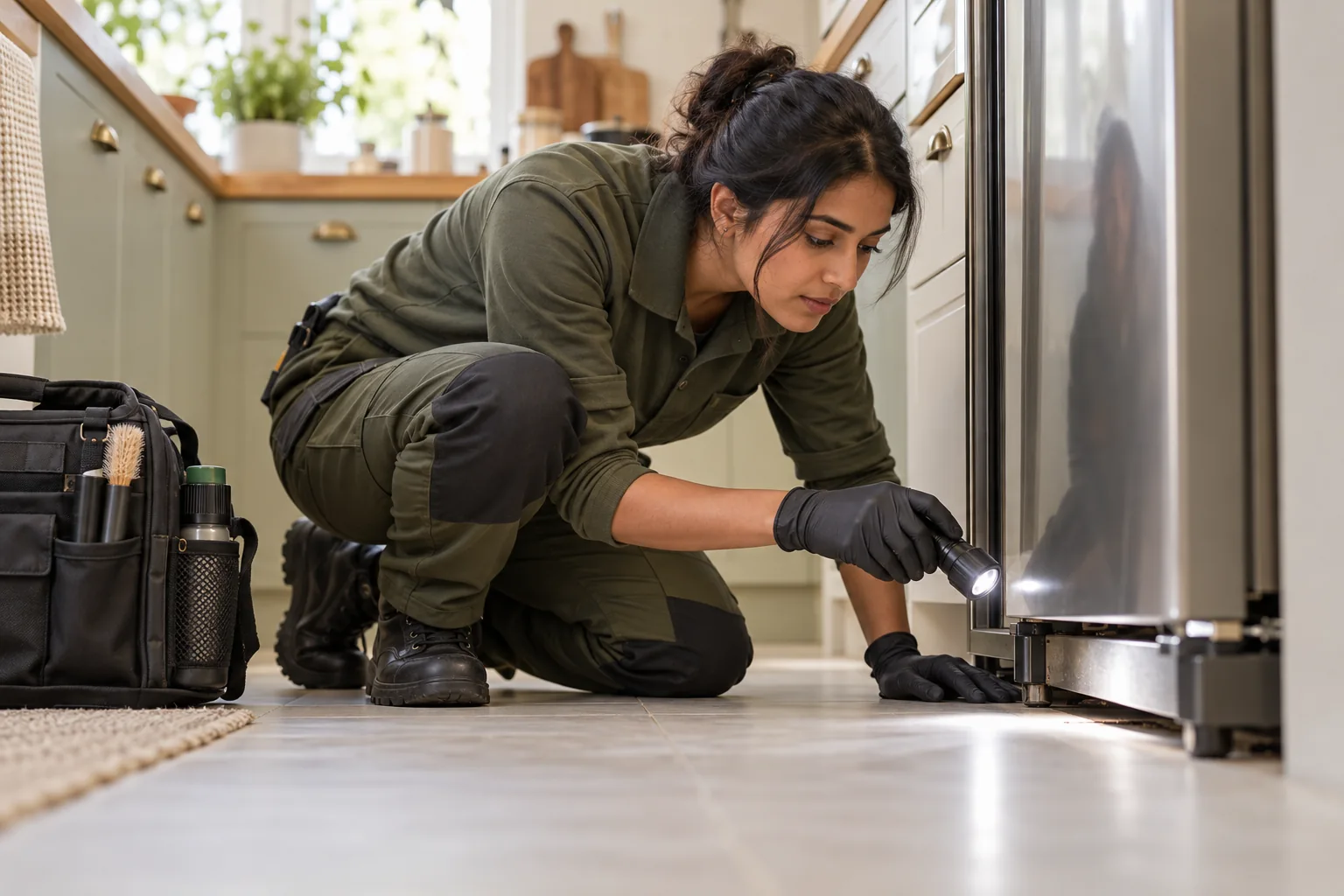
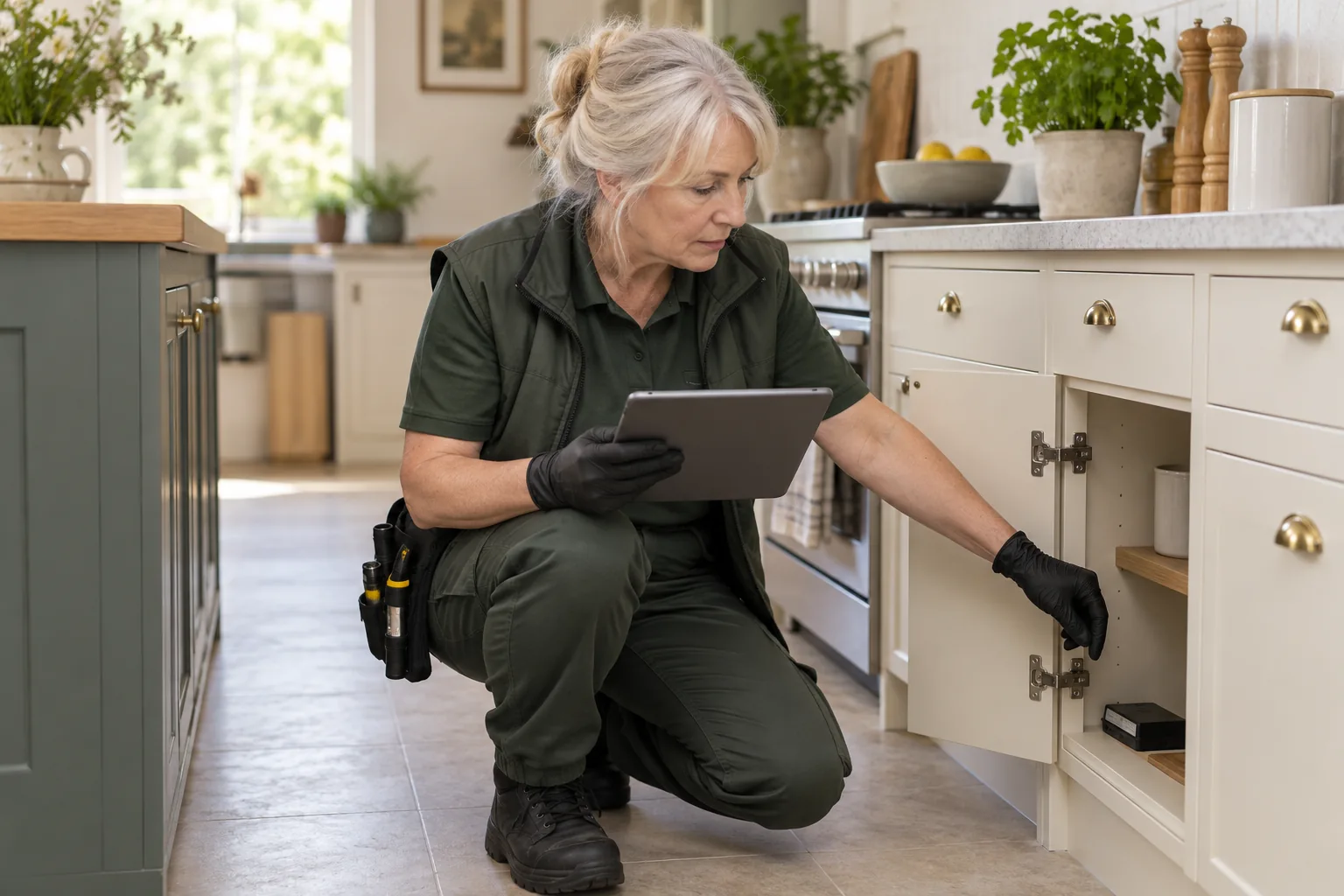
The technician checks accessible cupboard hinges, plinth edges, pipe penetrations and sheltered appliance gaps. Warmth, moisture and food residues can support activity, but do not prove insects are present. Fridge compressor areas, appliance feet and concealed kitchen junctions may need attention where access is safe.
Appliances are not automatically disconnected or dismantled. Heavy units, electrical housings and built-in fittings require suitable access and permission. Describe faults, leaks and inaccessible gaps before work starts. The record distinguishes examined sites from places still needing access, so concealed surfaces are not assumed to be checked.
Tracing movement beyond the first cupboard
Cockroaches can use connected voids and service routes, so the survey may need to extend beyond the first sighting. Nearby utility spaces, plumbing routes, storage and waste areas are considered where evidence supports it. In a flat or shared premises, an untreated adjoining space can affect progress even when the visible activity appears concentrated in one kitchen.
Access to communal ducts, another tenancy or a neighbouring unit needs the appropriate authority. We explain the relevance of those connections without claiming to have inspected them. Keep records of where insects are seen instead of repeatedly moving furniture or applying aerosols to flush them out. The home inspection guide helps describe different property areas when arranging the visit.
Survey findings and their practical consequence
| Finding | Inspection focus | Possible next step |
|---|---|---|
| Live insects by an appliance | Shelter, warmth and accessible equipment gaps | Targeted monitoring and treatment plan |
| Evidence in several rooms | Connected routes and separate harbourages | Extend the agreed survey boundary |
| Activity near food storage | Species, food access and contamination concerns | Protect stock and coordinate preparation |
Making monitoring part of the investigation
Monitoring devices can show where insects move and whether activity changes. Locations follow inspection evidence: sheltered edges near suspected harbourages can be more informative than an exposed central floor position. Placement must account for children, animals, food handling and cleaning routines.
The records should identify where monitors are placed and when they are checked. A catch in one location helps direct further investigation; an empty monitor does not prove that the entire premises is clear. Do not move or throw away monitoring devices without advice. Changed positions make later results harder to compare.
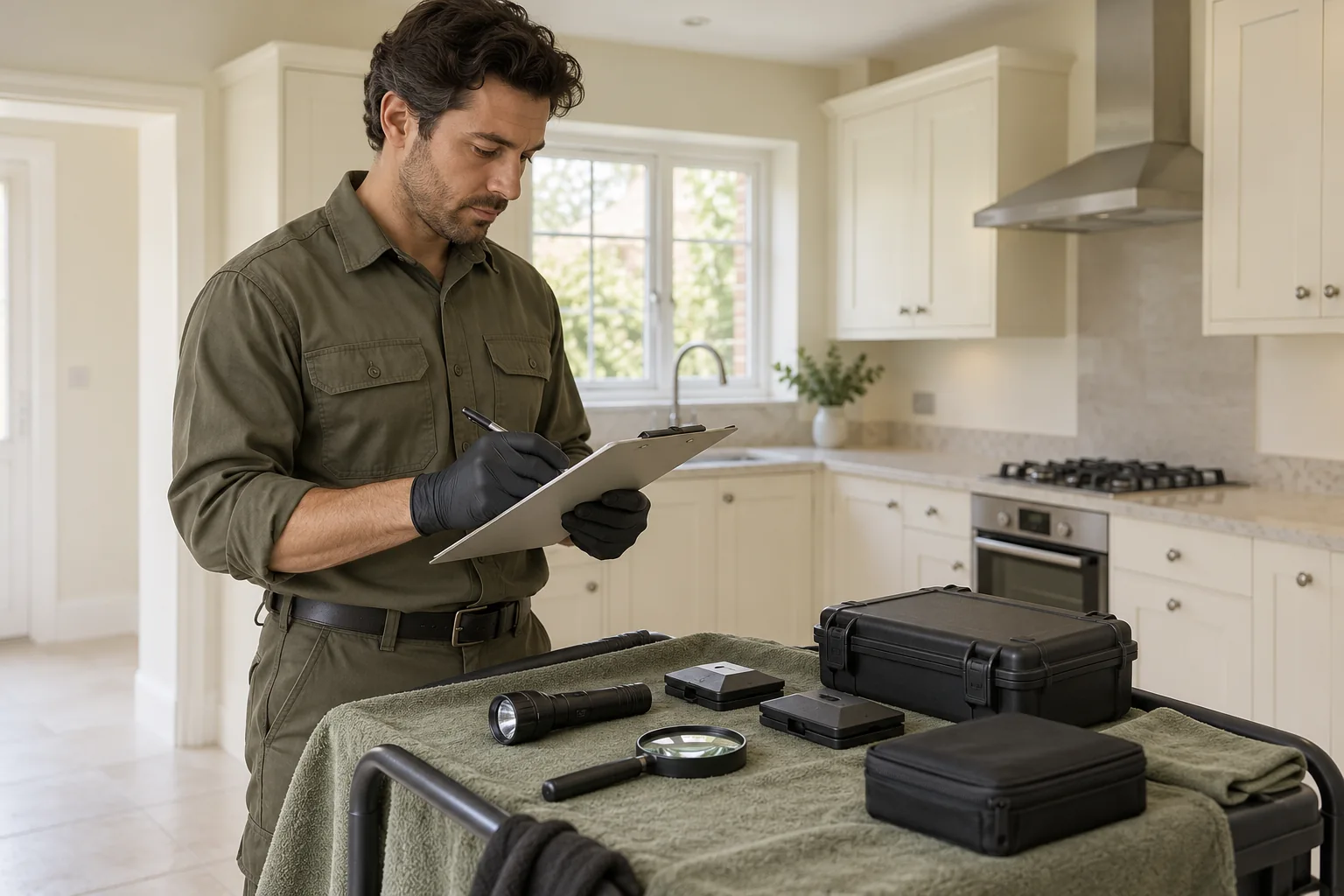
Preparing surfaces and protecting food
Preparation should improve access without moving insects or contaminated clutter elsewhere. Agree which cupboards need emptying and how contents are contained. Protect food, utensils and exposed equipment as instructed. Remove accessible grease and crumbs, while following instructions that protect subsequent monitoring and treatment placements.
Tell the technician where pets are fed, where water collects and whether a leak has been repaired. Do not apply additional sprays around planned bait locations unless this has been agreed. Product contamination, disruption of insect behaviour or overlapping applications can interfere with the approach. Provide details of products already used, including the locations and approximate application dates.
Control measures and their limits
| Measure | Purpose | Limitation | Follow-up question |
|---|---|---|---|
| Monitoring | Locate and compare activity | Empty devices do not prove clearance | Are locations and checks recorded? |
| Targeted bait | Treat suitable cockroach harbourages | Placement and competing food matter | Is bait condition being reviewed? |
| Other permitted formulations | Address appropriate assessed sites | Label and site restrictions apply | Which areas need precautions? |
| Maintenance and hygiene | Reduce food, water and shelter | Does not replace treatment of an established problem | Who will complete the recommended actions? |
Choosing a treatment that reaches the harbourage
Targeted insecticidal gel or another suitable bait may be recommended after the survey. Placement follows cockroach shelter and movement, subject to the product label and site assessment. A precision applicator may suit concealed sites; treatment is not an unrestricted coating of cupboards or worktops. Food-contact surfaces and accessible areas need particular consideration.
Another authorised formulation may be appropriate for certain inaccessible or peripheral sites, depending on the evidence and permitted use. A visible spray is not proof of a more thorough job. Ask how the method fits the premises. Monitoring, cleaning and maintenance complement treatment; they are not an excuse to apply chemicals without a defined plan.
Managing safety while the premises is treated
Discuss children, pets, aquariums, relevant sensitivities and property use before application. Restrictions depend on the actual method and product. Bait and other formulations can require different precautions. Follow your supplied preparation, exclusion and return instructions; a neighbour's experience may not apply.
Keep occupants away from application equipment and do not touch retained bait or monitoring devices. The technician should identify treated areas and explain how routine cleaning can continue without spreading or removing treatment. If a spill, accidental contact or damaged device occurs, use the provided instructions and seek advice promptly. Do not attempt to repair or relocate treatment equipment yourself.

Coordinating treatment in a food business or shared site
Commercial access must reflect food handling, equipment use and staff responsibilities. Explain operating hours, stock movement, waste arrangements and available areas. Coordinate preparation with the manager so food is protected and staff know the restrictions. Discuss any interruption before attendance rather than assuming work can continue normally.
Ask what visit records and recommendations will be provided for your own management procedures. A pest visit is not a food-safety certification or a substitute for the operator's responsibilities. Shared service routes, neighbouring units and recurring deliveries may require separate investigation. Our mice control information describes another possible food-premises concern, but rodent evidence requires its own plan rather than a cockroach application.
Preparation for an occupied kitchen
| Customer task | Reason | What to agree |
|---|---|---|
| Protect food and utensils | Avoid contact with treatment and disturbed debris | Which cupboards or equipment need clearing |
| Describe previous applications | Overlapping products may affect the plan | Product, location and approximate date |
| Explain cleaning routines | Treatment and monitor sites need protection | Permitted cleaning around retained placements |
Monitoring turns observations into decisions
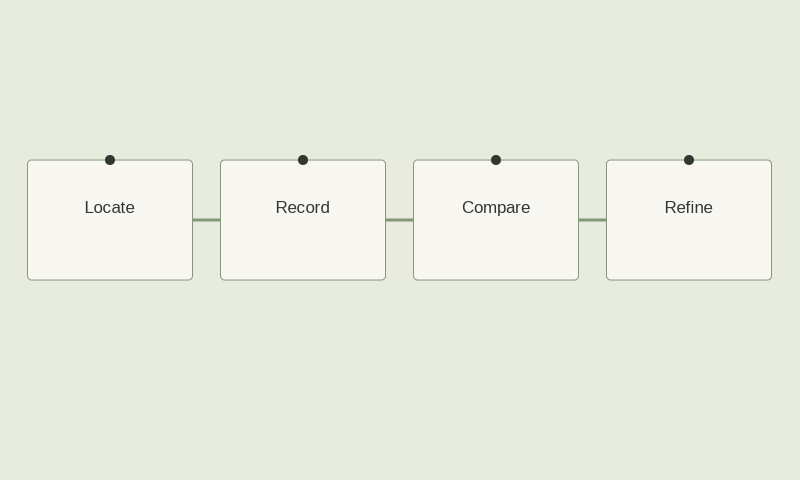
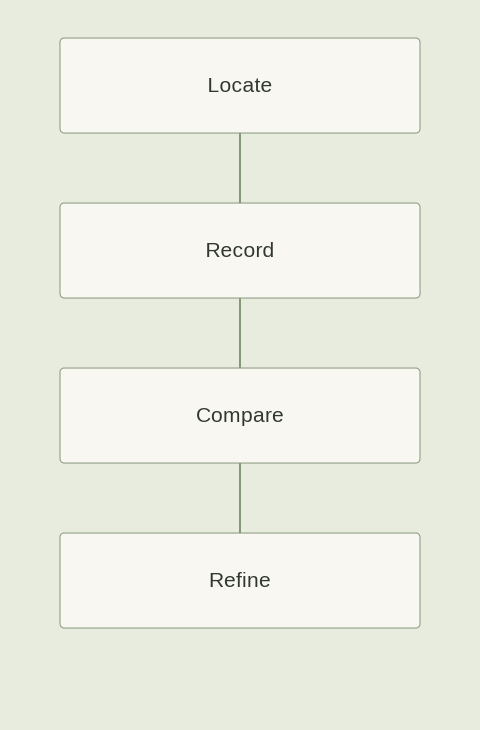
Locate
Choose sites from the survey evidence.
Record
Identify positions and relevant dates.
Compare
Assess new sightings and monitor findings.
Refine
Investigate or adjust the plan where justified.
Comparing the evidence after treatment
The review considers sightings, monitor findings, bait condition, cleaning changes and previously inaccessible locations. A sighting after application does not automatically mean failure; a quiet period is not proof of clearance. The life stages present and method used determine what needs checking next.
Further work can involve adjusting monitoring positions, refreshing suitable bait, investigating remaining harbourages or arranging access to connected areas. These choices should follow findings, not an automatic repeat of the first application. Keep a dated note of observations and share it with the specialist. Agree whether return checks are included in the quotation and what would count as additional work.
Reducing the conditions that support a return
Practical prevention addresses food access, available water and sheltered gaps. Keep food protected, manage waste and clean accessible residues. Report leaks or condensation problems that cannot be resolved by normal housekeeping. Once activity and the building conditions have been assessed, suitable repairs to cracks, fittings or service penetrations can reduce harbourages. Repairs must not compromise ventilation, drainage or required access to services.
Inspect incoming equipment and packaging where this is relevant to the premises, and keep storage arrangements accessible for routine checks. Some conditions overlap with rat control, such as food waste and external access, but the evidence, devices and methods are different. Prevention recommendations should identify who can carry out each action.
An urgent enquiry and an accurate quotation
Repeated sightings around food, activity across several rooms or a concern in an operating kitchen deserves a prompt discussion. Give the postcode, premises type, affected areas and whether food handling can be interrupted. Explain any limits on access and which products have already been applied. The emergency enquiry section explains what information helps; appointment availability is confirmed without an unsupported immediate-arrival promise.
The quotation reflects the survey scope, species, extent, access and proposed monitoring or return visits. Ask which cleaning or repair work is separate and whether further areas could change the price. Additional work needs a separate agreement before it proceeds. Contact us for a property-specific discussion before agreeing the treatment scope.
Questions about cockroach treatment
Does seeing a cockroach during the day prove a severe infestation?
It is a reason to investigate, but the timing of one sighting cannot reliably measure the infestation. Identification, inspection and monitoring provide a better picture of where insects are sheltering and moving.
Should I pull out the fridge before the technician arrives?
Only if this is safe and has been agreed. Built-in or heavy appliances may need a suitable person to provide access. Do not disconnect services or move an appliance that could damage wiring, pipes or flooring.
Can I clean around a gel bait after treatment?
Ask for the locations and cleaning instructions. You may need to leave specific concealed placements undisturbed while cleaning ordinary food-contact areas. Do not wipe away or spread bait as part of a general cupboard clean.
Why are monitors still needed if treatment has been applied?
They can help compare activity between locations and identify places needing further examination. Treatment placement and monitor placement have different purposes, and both need records so a later review can interpret the results.
Can a neighbouring flat affect the result?
Connected service routes or shared spaces can be relevant. The specialist can explain why wider access is recommended, but permission from the owner or manager may be needed before another property or communal void is examined.
Will a kitchen need to close for a visit?
This depends on the method, access and food-handling arrangements. Discuss working hours, preparation and restrictions in advance. Do not assume that all treatments can take place during normal operation without interrupting the affected area.