

HARROW · INSPECTION · TREATMENT · PREVENTION
Carpet Beetle Treatment Harrow
Carpet beetle treatment focuses on the larvae and their food sources, not only the adult beetles noticed at a window. We inspect susceptible material and sheltered edges, establish the affected areas and recommend suitable cleaning, treatment and monitoring. The aim is a clear plan for the source and the belongings at risk.
New larval activity or fabric damage? Describe the affected materials and storage areas. ↗
The window beetle and the textile damage are different clues
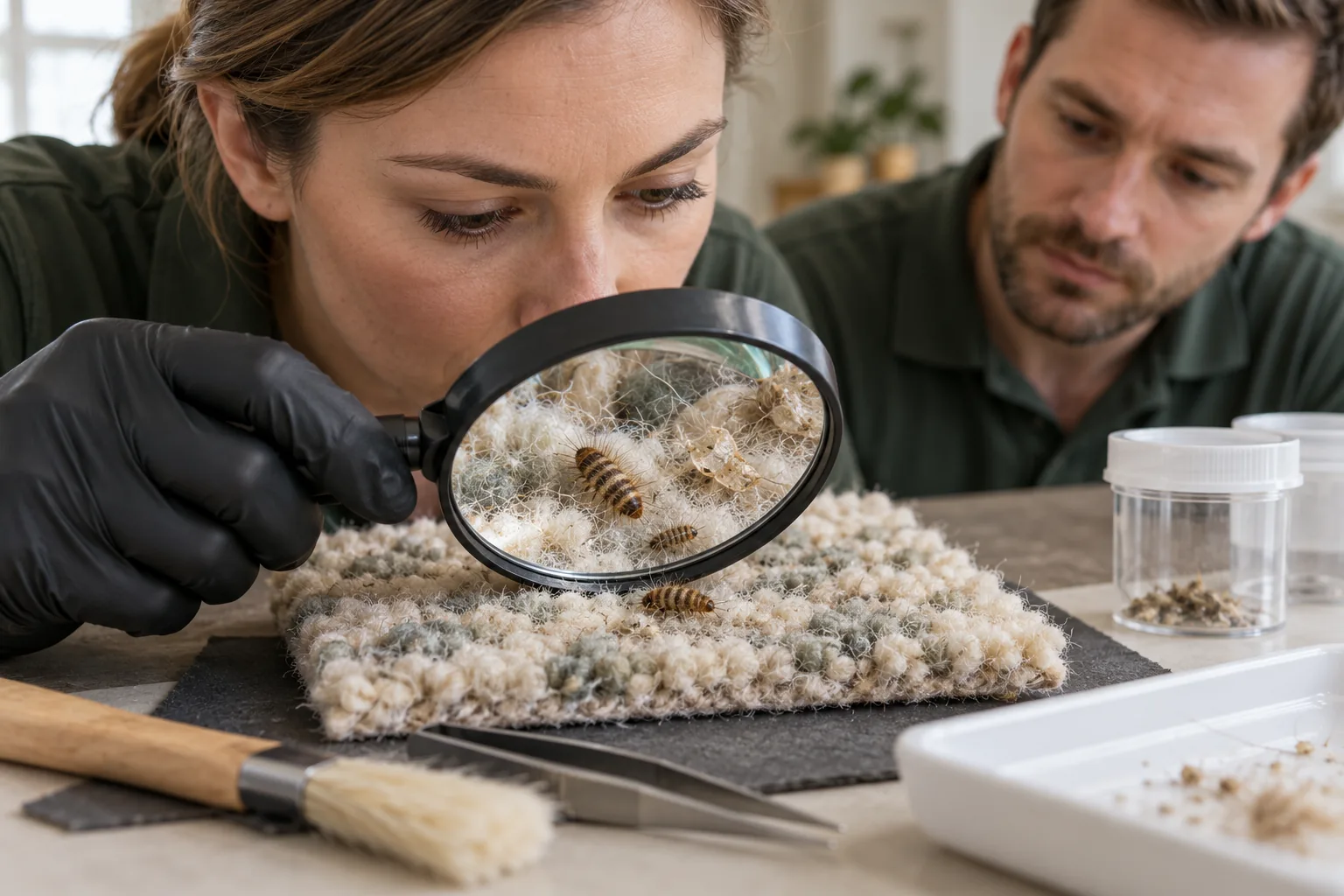
An adult beetle at a window does not establish the extent of larval activity. Larvae damage susceptible natural materials; adults are a different clue. The inspection follows feeding evidence rather than assuming every adult sighting proves a widespread infestation.
Tell us which items have damage and where they were stored. Larval cast skins, live larvae and the distribution of feeding help narrow the investigation. Moth damage can look similar from a distance; moth control is a separate service because webbing, cases and the pest involved may call for a different plan.
Start at the sheltered edge of the damaged material
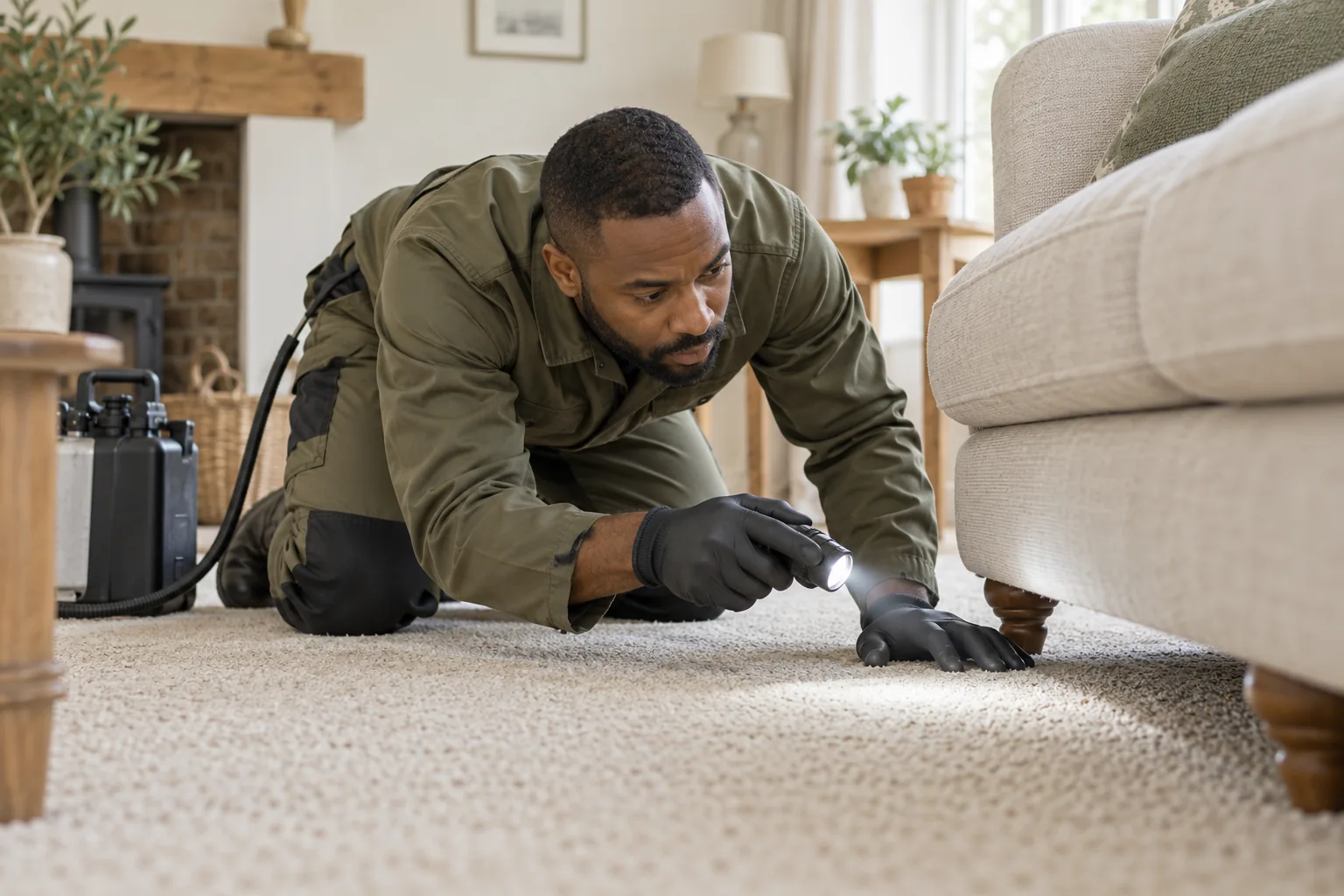
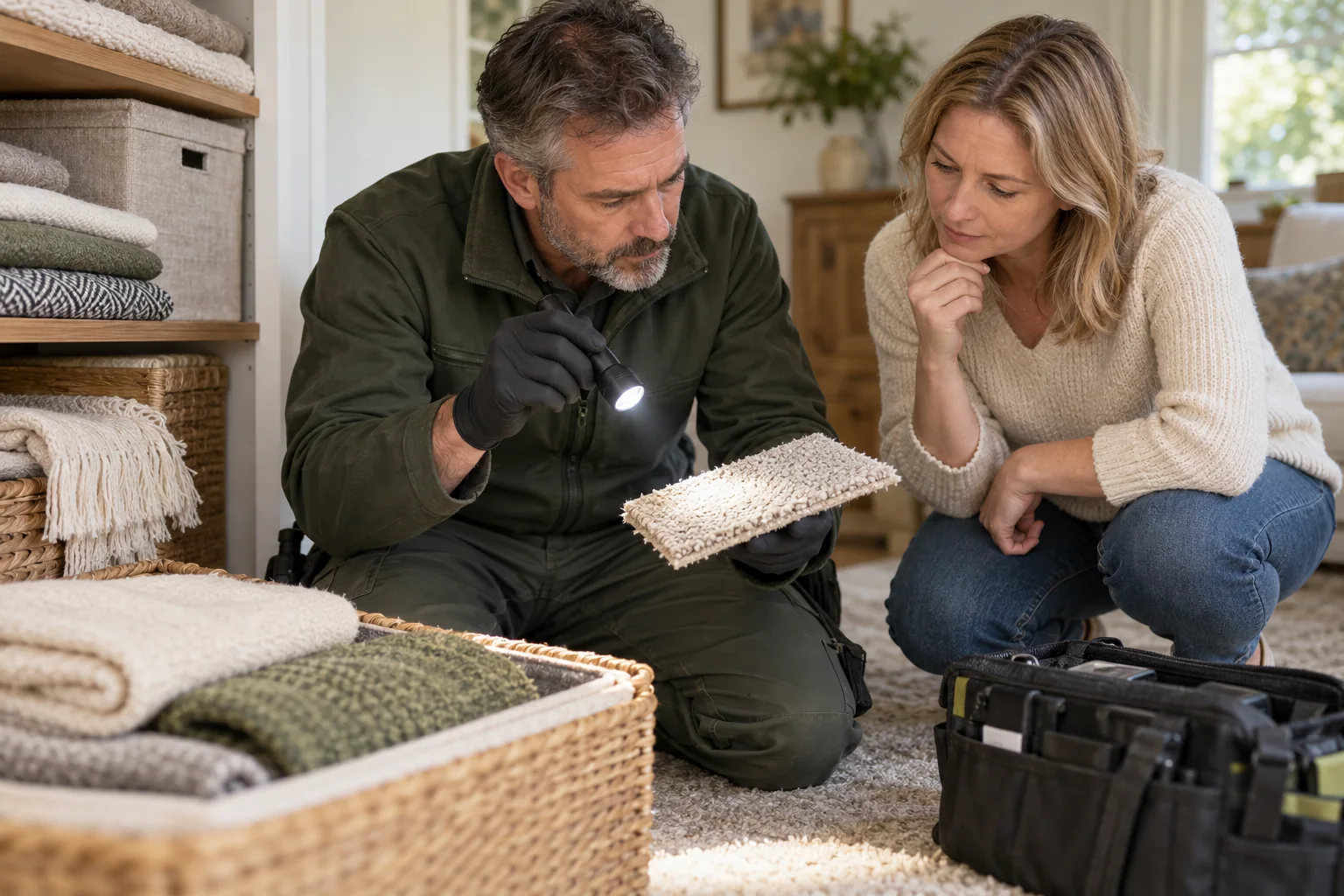
Carpet perimeters, rug undersides, upholstered seams and fabric beneath furniture can be more informative than a regularly walked area. The technician uses accessible visual checks and a torch to look for larvae, cast skins and debris associated with activity. Where a specimen is available, close identification can prevent treatment being directed at the wrong insect.
Access should be safe and agreed. We do not assume that every fitted carpet can be lifted or every heavy item moved during a standard inspection. Flag fragile flooring, fixed furniture and lifting restrictions when arranging the visit. The inspection record should distinguish areas checked from places that could not be reached without further work.
Options for larval source management
| Measure | Appropriate role | Limit | Follow-up |
|---|---|---|---|
| Cleaning and debris removal | Accessible larval food sources | Hidden material can remain | Inspect cleaned edges again |
| Item-specific care | Affected washable or specialist textiles | Material restrictions apply | Check before returning to storage |
| Targeted premises treatment | Suitable confirmed active harbourages | Not every possession can be treated | Review larvae and fresh damage |
| Monitoring and source review | Uncertain or recurring activity | Adult catches do not explain every source | Investigate the remaining pattern |
A source-led carpet beetle inspection
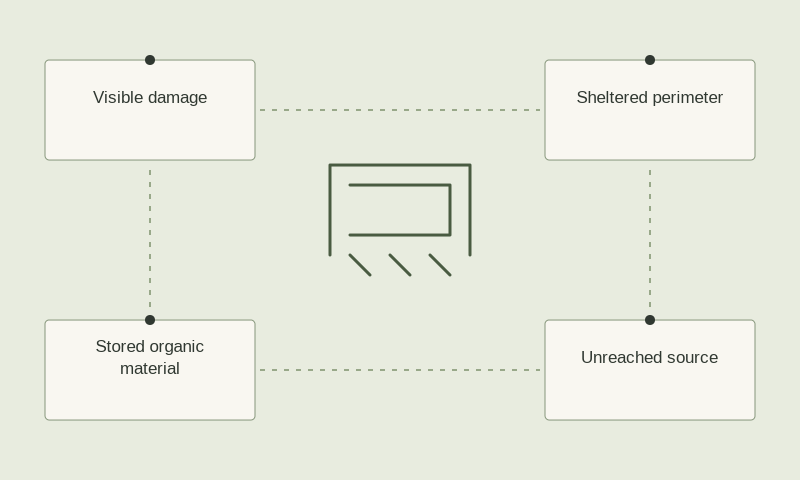
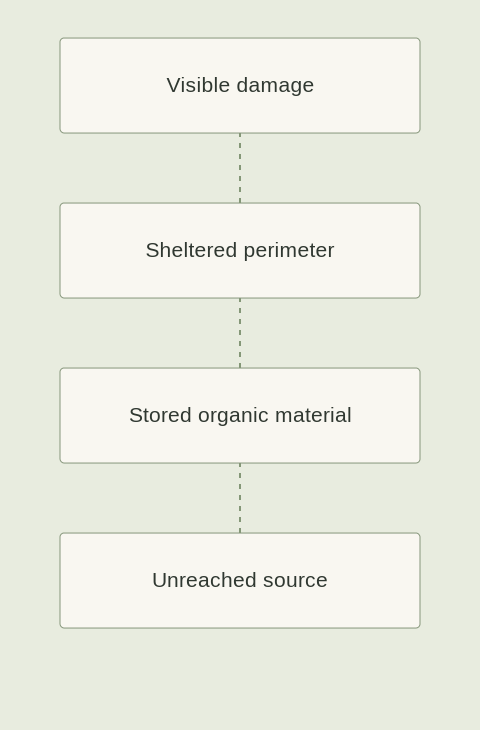
Visible damage
Map affected fibres and keep baseline photos.
Sheltered perimeter
Check carpet edges, rug undersides and accessible seams.
Stored organic material
Inspect relevant natural fibres and debris.
Unreached source
Record access limits before selecting further work.
Look beyond the carpet named in the service
Wool, fur, feathers and other susceptible material may be present in stored clothing, upholstered items, bedding or accumulated organic debris. A small forgotten item can matter as much as the visible carpet. We assess the material and surrounding storage together, rather than treating the floor while returning an affected garment to the same cupboard.
Concealed animal material or an inaccessible structural source may also need consideration where the pattern supports it. Do not disturb roof voids or wildlife nesting material yourself. Any protected wildlife issue, roof access or removal work requires the appropriate assessment and agreement. The inspection map explains why room edges and adjacent spaces are reviewed in context.
Separate old damage from current feeding
Before routine cleaning, photograph the affected item and keep a note of its location. Existing holes and thinning do not disappear when activity is controlled, so a baseline makes later comparisons more useful. A cast skin can remain after an insect has moved on; fresh findings and the wider pattern matter when deciding whether the problem is active.
Show a specimen without unnecessary handling of larvae. Explain when damage appeared and whether it has spread. Irritation alone cannot identify the cause. Physical evidence around a sleeping area may instead justify a bed bug inspection.
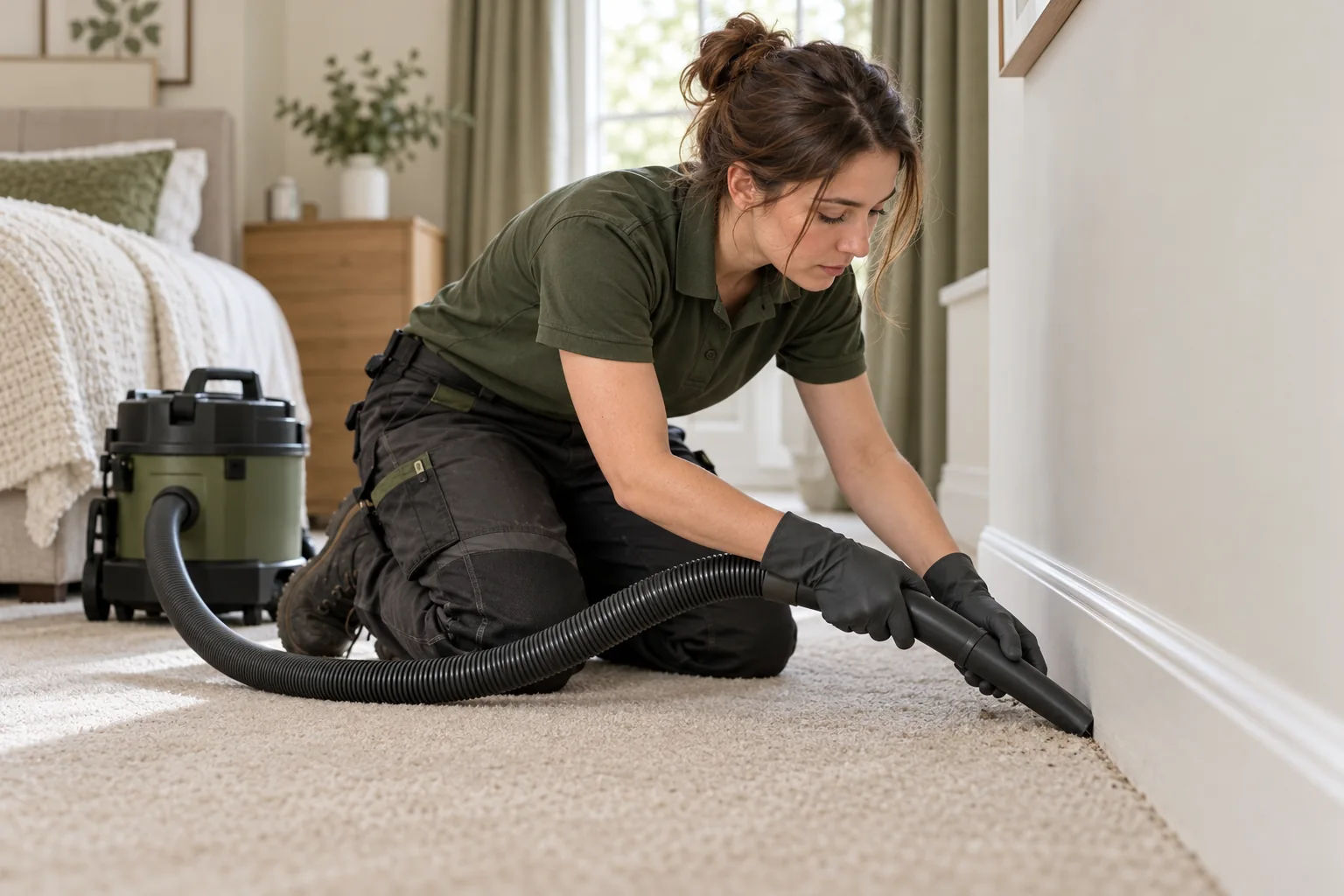
Prepare access while keeping affected items contained
Clear a safe route to the carpet edge, wardrobe or storage area identified for the visit. Ask which lightweight items need moving; do not carry suspect loose fabrics through clean rooms or place them into mixed storage. Mention delicate rugs, antiques, valuable garments and care-label restrictions before any treatment or cleaning decision.
Where cleaning or laundering is appropriate, it must suit the item. A specialist cleaner or conservator may be needed for valuable material. Do not spray clothing, bedding or precious textiles indiscriminately. Keep affected material identifiable so the inspection can establish what needs attention, what may be unaffected and which items require a separate handling plan.
Preparation for affected belongings
| Before the visit | Why it helps | Action |
|---|---|---|
| Keep material identifiable | Preserve the source pattern | Do not mix suspect and clean storage |
| Flag valuable items | Avoid unsuitable handling | Show care restrictions and construction |
| Clear safe access | Allow edge inspection | Move only agreed lightweight objects |
| Photograph existing damage | Support later comparison | Keep location and date with the photo |
Cleaning is part of source management, not a cosmetic finish
Removing accessible lint, hair, dead insects and other suitable debris can reduce material available to larvae and make follow-up inspection easier. The relevant locations are often undisturbed edges and sheltered spaces, rather than the most visible centre of the room. The cleaning scope and who is responsible should be agreed instead of assumed included in a treatment price.
Contain vacuum contents and affected material as instructed. Do not redistribute suspect items into clean storage. A clean open floor does not establish that concealed rug or furniture linings are clear; record inaccessible sources and agree any additional access.
Apply treatment where the evidence and surface allow it
A suitable insecticidal treatment may be recommended for confirmed active areas, alongside source removal and material care. The choice depends on the product’s authorised use, the surface, access and the people and animals using the room. Application should target appropriate harbourages rather than coat every possession on the assumption that more product gives a better result.
The technician explains the proposed sites, limits and precautions before work. Equipment may include inspection tools, a torch, suitable monitoring devices and application equipment selected for the method. Ask which areas are included, what cannot be treated and how the result will be assessed.
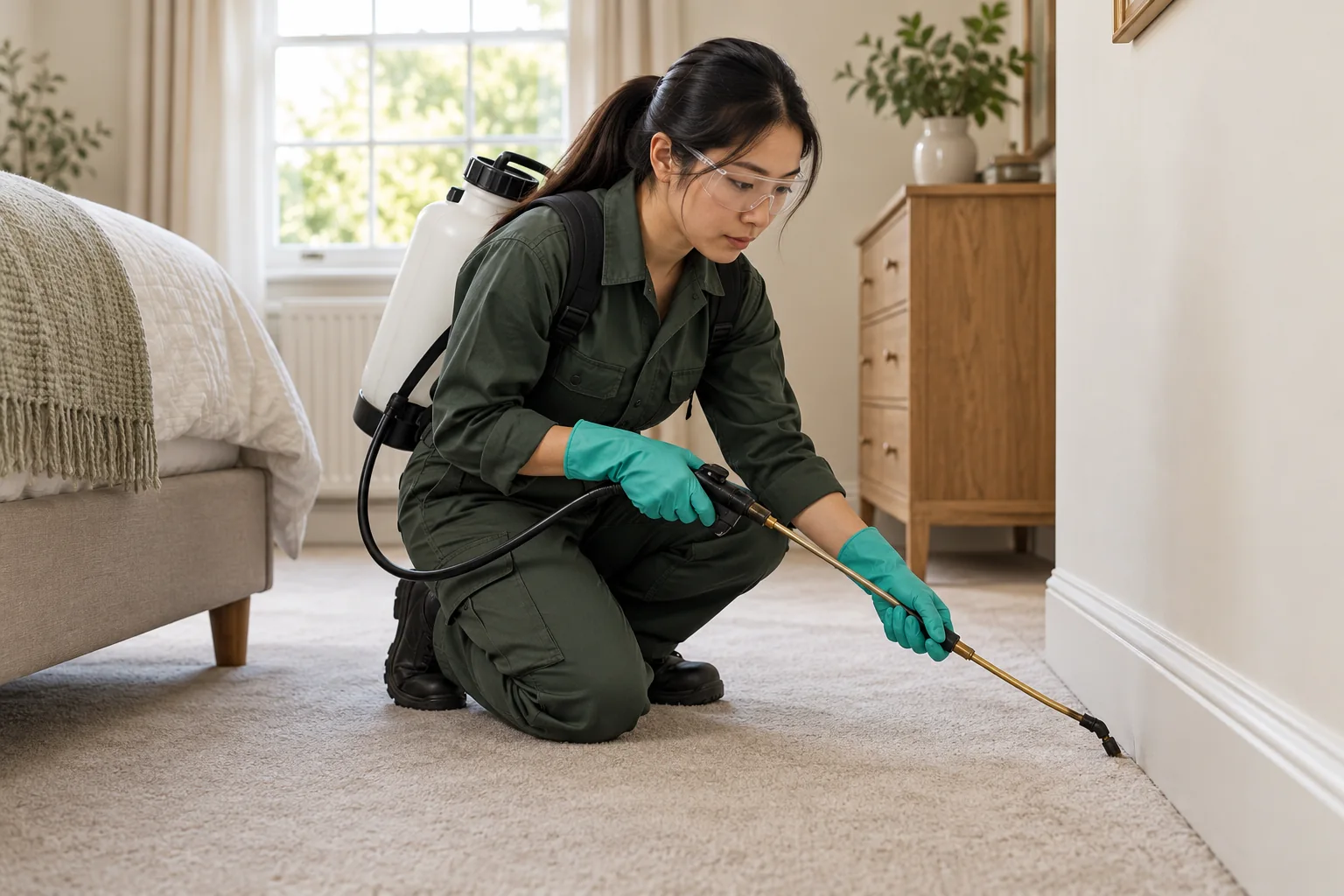
Keep people, pets and vulnerable materials protected
Tell us about children, pets, aquariums, relevant sensitivities and anyone who depends on continuous access to a room. The plan should identify exclusions, safe access routes, return conditions and restrictions on touching or cleaning treated areas. Follow the specific instructions rather than assuming that an apparently dry carpet is automatically ready for every use.
Food, toys, animal bedding and sensitive belongings may require protection or removal from the working area. Where an item cannot tolerate the proposed method, discuss an alternative before application. The preparation and aftercare need to be practical for your household; if they cannot be followed, raise the problem before work begins so the recommendation can be reviewed.
Review larvae and fresh damage, not just adult beetles
After treatment, record live larvae, new cast skins and fresh changes to susceptible material. Adult sightings should also be noted, but they do not alone show whether a hidden larval source has been addressed. Keep monitoring locations consistent where devices are used, and explain any storage changes or cleaning that could affect the comparison.
A return inspection may be appropriate if activity continues, a source is discovered later or a previously inaccessible area becomes available. Further action could involve reviewing identification, cleaning an overlooked area, adjusting the treatment scope or arranging another visit. The included follow-up and any additional charges must be clear before booking; no universal visit count or guarantee is assumed.
What the follow-up compares
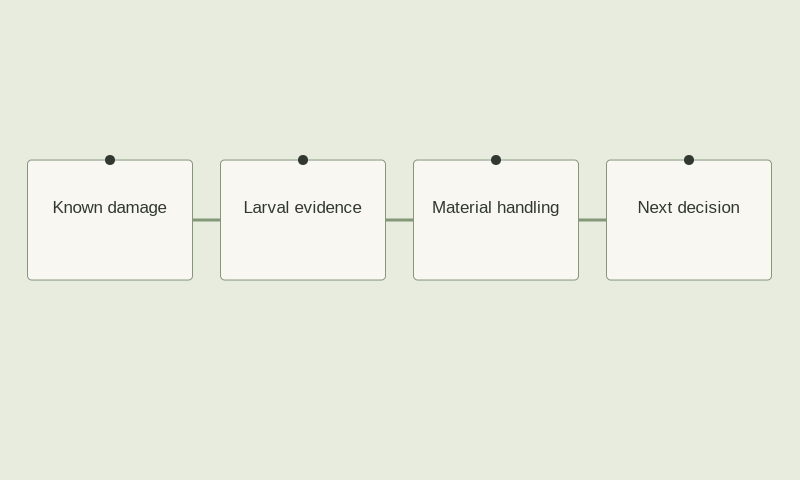
Known damage
Existing holes remain as a baseline.
Larval evidence
Look for live larvae and fresh signs.
Material handling
Check whether source cleaning and storage actions were completed.
Next decision
Review treatment or access only when evidence supports it.
From evidence to a treatment area
| Evidence | What we inspect | What it changes |
|---|---|---|
| Hairy larvae or cast skins | Nearby fibres and sheltered debris | Identify likely feeding sources |
| Adult at a window | Species and surrounding storage | Distinguish visitor from wider activity |
| Damaged material | Freshness and distribution of feeding | Define affected and comparison areas |
Price the investigation and handling, not just the floor area
The quotation reflects room size, larval distribution, stored materials, inaccessible sources and the method. Agree whether inspection, treatment, monitoring and handling are included. Textile repair, specialist cleaning and building access work require separate agreement.
If valuable materials appear to be suffering fresh damage, explain what is at risk when you make an urgent enquiry. Attendance is discussed according to the circumstances and appointment availability, without a promised arrival time. Contact us with the postcode, item types and locations so the inspection can be planned sensibly.
Store susceptible material so it can still be checked
Once the treatment and cleaning restrictions have ended, keep vulnerable items clean and appropriately enclosed, inspect stored natural fibres periodically and make sheltered edges accessible for routine care. Avoid returning suspect material to storage without the agreed assessment. These steps address the conditions found during the visit rather than suggesting a fixed routine for every property.
New material can introduce activity, while old concealed debris can allow it to continue. Report changes in the signs rather than repeating an old treatment on assumption. Jumping insects around a pet’s resting area need a flea investigation, not a carpet beetle diagnosis from the room name. Return to Harrow pest control for the wider inspection and service overview.
Questions about carpet beetle treatment
Does an adult beetle on a windowsill mean my carpet is infested?
Not by itself. The inspection looks for larvae, cast skins and damage in susceptible material. An adult may be an incidental visitor, while repeated sightings near affected storage justify a closer examination.
Are carpet beetles the same as woodworm?
No. Carpet beetle larvae feed on suitable organic materials, while wood-boring insects require a different identification and investigation. Do not select treatment from the word beetle alone; show the specimen and damage pattern.
Should I discard a damaged rug before inspection?
Ask first. Moving it can spread material and remove useful evidence. Keep it in the affected area, photograph the damage and discuss handling, treatment suitability and any eventual disposal before taking action.
Can every carpet be lifted during the visit?
Not automatically. Fitting methods, fragile edges, heavy furniture and tenancy restrictions can limit access. Explain these in advance and agree who will provide any additional lifting or building work.
Will treatment restore the fabric?
No. Controlling activity does not repair missing fibres or existing holes. Keep a baseline photograph and seek appropriate textile repair advice after the handling and pest management plan has been established.
Which signs matter most when reporting continued activity?
Describe live larvae, their exact location and any fresh damage to previously checked material. Include adult sightings and cleaning or storage changes, but avoid assuming that an old hole or cast skin proves new feeding.