

HARROW · INSPECTION · TREATMENT · PREVENTION
Bed Bug Treatment Harrow
Bed bug treatment starts with the evidence around sleeping and resting places. We inspect the affected rooms, discuss how activity has developed and explain a suitable plan. Targeted treatment may combine different methods; preparation and further checks matter as much as the application itself.
Signs spreading around sleeping areas? Discuss the rooms affected before moving belongings. ↗
Confirming what is in the room
It is understandable to suspect bed bugs after unexplained irritation, but bites alone cannot identify an infestation. The useful evidence is physical: live insects, shed skins, eggs and characteristic dark spotting around harbourages. Tell us where signs appeared, whether they have changed and which rooms are used for sleeping, including a sofa or occasional guest bed.
A clear photograph can support the discussion, although a specimen or close inspection may still be needed. Do not move furniture to another room while trying to find the source. Other insects can create a different problem; our flea treatment information explains why jumping insects and pet resting places require their own assessment.
Following the seams, joints and concealed edges
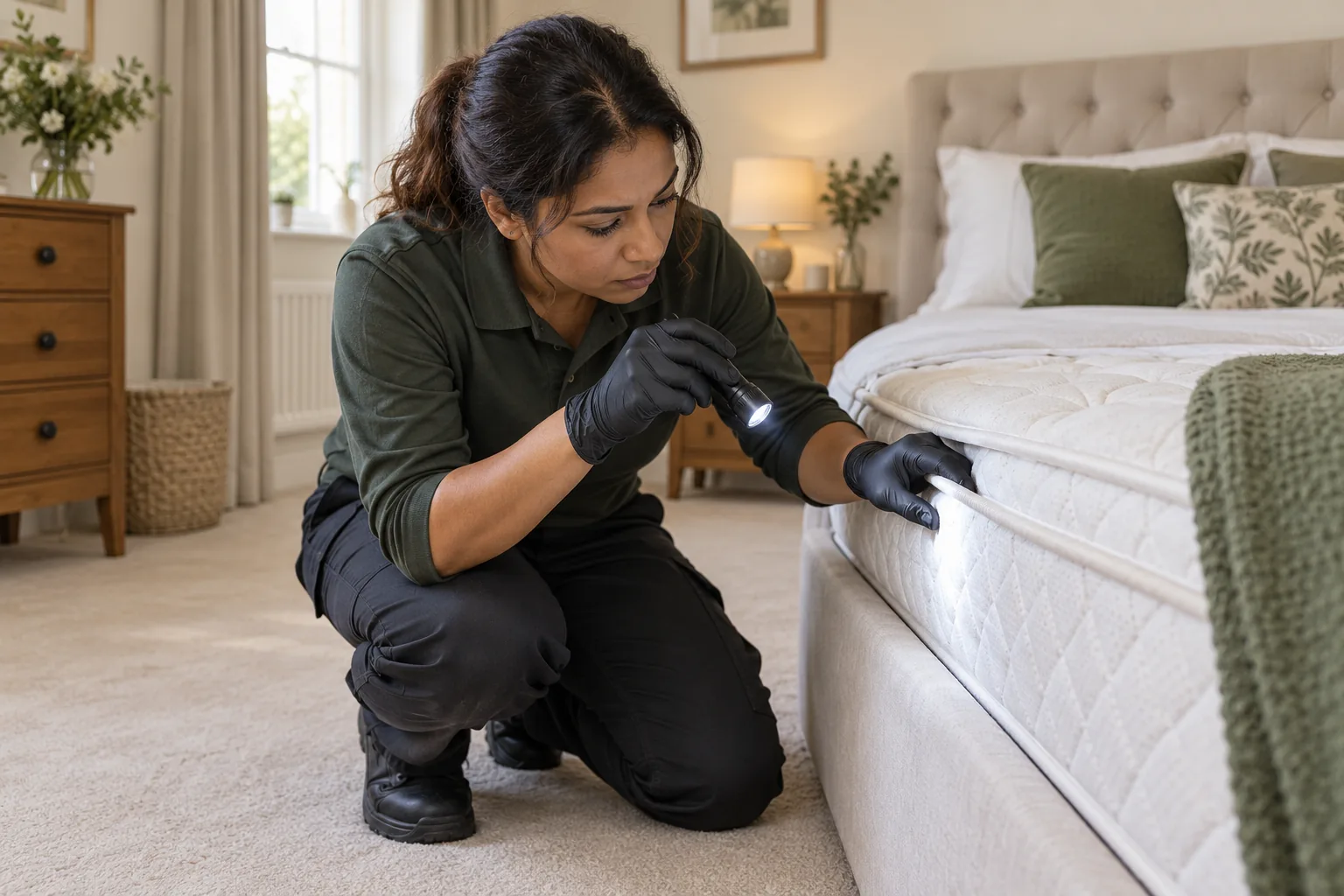
The inspection begins at the sleeping area and works outwards. Accessible mattress piping, labels, bed-frame joints, headboard fixings and divan edges are checked with a torch and appropriate inspection tools. Bedside furniture, upholstered seating and nearby skirting can hold evidence that is absent from the mattress surface. A clean-looking bed does not rule out activity in a hidden joint.
Access is discussed before heavy furniture is moved or fittings are removed. Opening electrical equipment, lifting fixed flooring or dismantling a built-in unit is not an automatic part of the visit. The technician records inaccessible areas so the plan does not suggest that an unexamined void has been cleared. See the property inspection guide for how rooms connect.
Search around the sleeping position
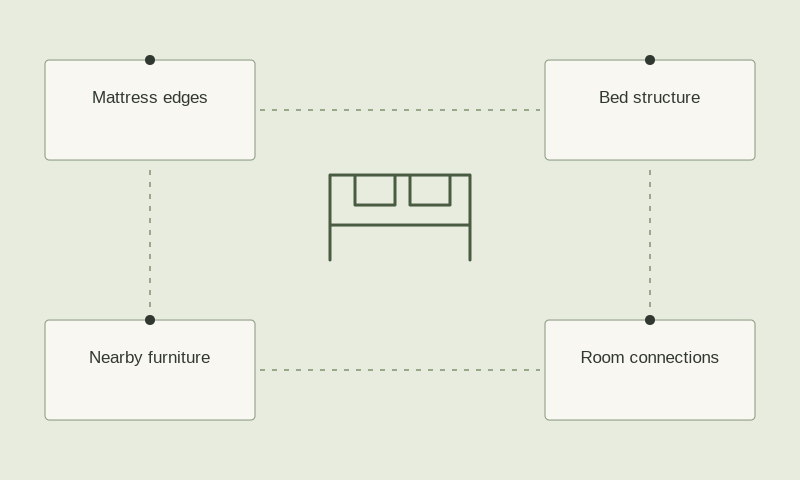
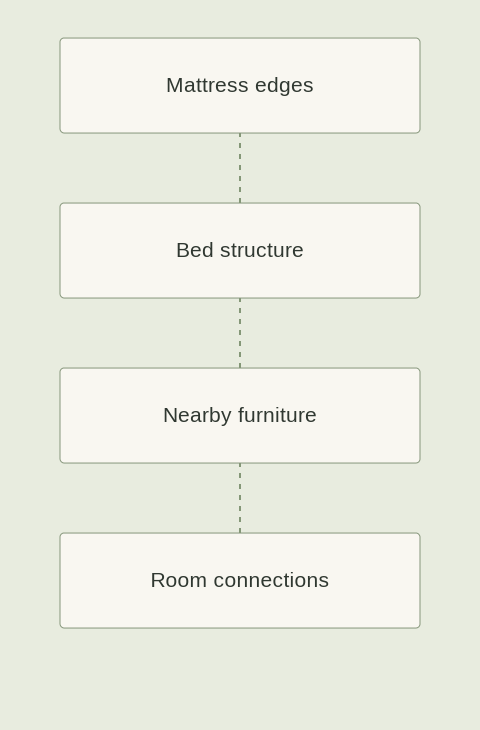
Mattress edges
Inspect piping, seams and labels.
Bed structure
Check joints and accessible headboard fixings.
Nearby furniture
Examine sheltered gaps before extending the search.
Room connections
Record adjoining areas and access limitations.

Establishing the likely extent
Treatment boundaries should follow findings rather than the room where the first bite was noticed. We ask about adjoining rooms, recent changes in sleeping arrangements, overnight visitors and second-hand furniture. These questions help direct the survey; they are not a judgement about housekeeping or a definite explanation of how the insects arrived.
In a flat, rented house or shared building, access to another room or neighbouring property may need the owner or managing agent's agreement. We can explain which uninspected connections could affect the plan. Tell us about previous sprays, foggers or professional work, including dates and treated locations. Concealing earlier applications makes it harder to interpret activity and choose compatible measures.
Approaches considered after inspection
| Approach | Possible role | Limitations | Review |
|---|---|---|---|
| Targeted insecticide | Suitable harbourage treatment | Label and surface restrictions apply | Check fresh activity |
| Physical removal / localised steam | Accessible evidence and hiding places | Direct access is required | Inspect missed or concealed sites |
| Specialist heat | Separate suitability-assessed option | Equipment, access and belongings require planning | Review the treated boundaries |
Preparing belongings without distributing activity
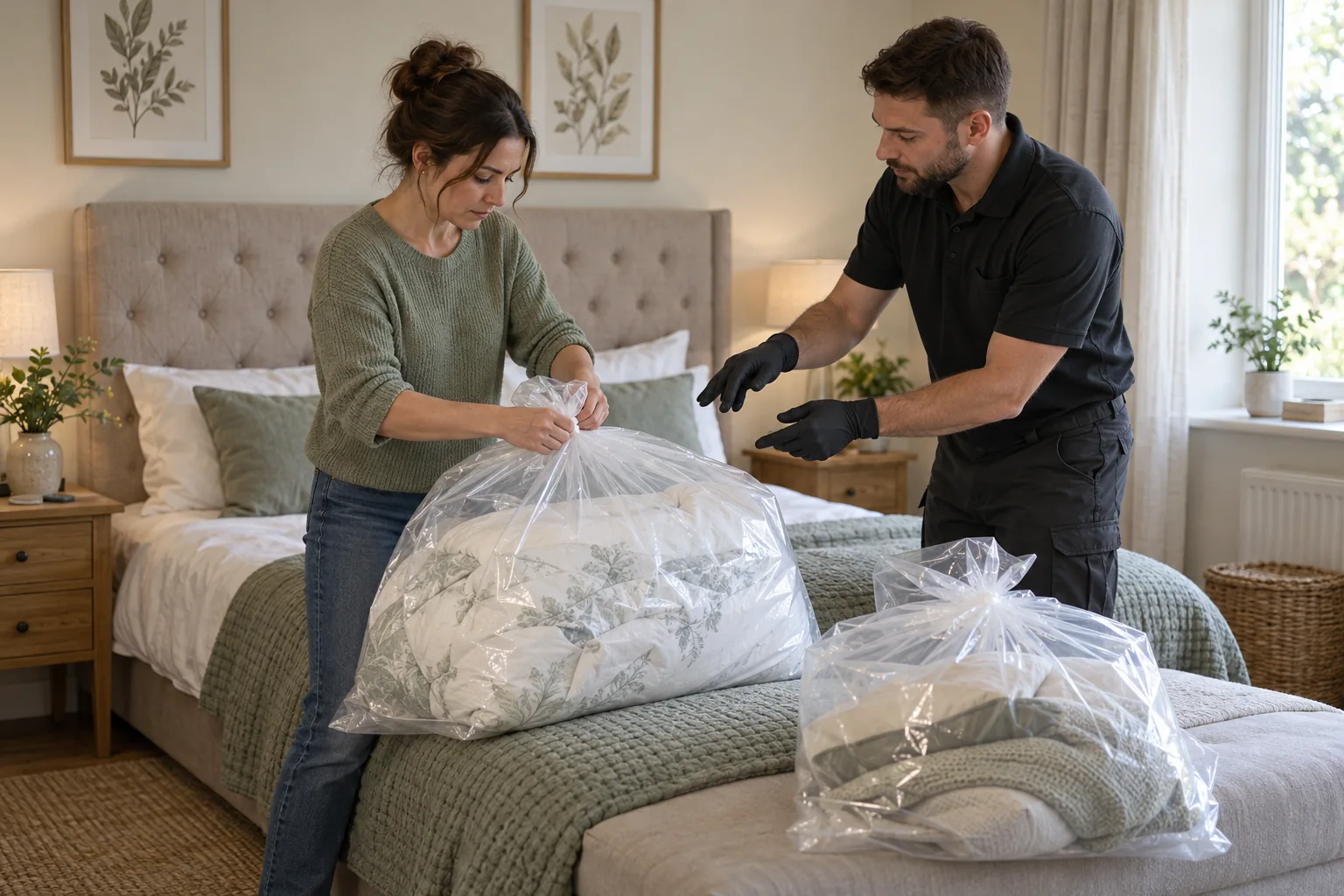
The preparation instructions depend on the selected method. Request the checklist before clearing the room. The aim is to expose relevant edges while keeping suspect belongings contained. Bagging items within the affected room before taking them for agreed laundering reduces the chance of dropping insects along a corridor. Check fabric-care guidance and the specialist's instructions rather than assuming every item tolerates the same process.
Do not empty wardrobes across the home, carry mattresses downstairs or discard furniture before discussing it. A heavily cluttered room may require a staged access plan. Explain any mobility or lifting restrictions when arranging the inspection, so preparation is achievable and nobody has to move an unsafe load on the day.
Selecting targeted methods rather than a blanket promise
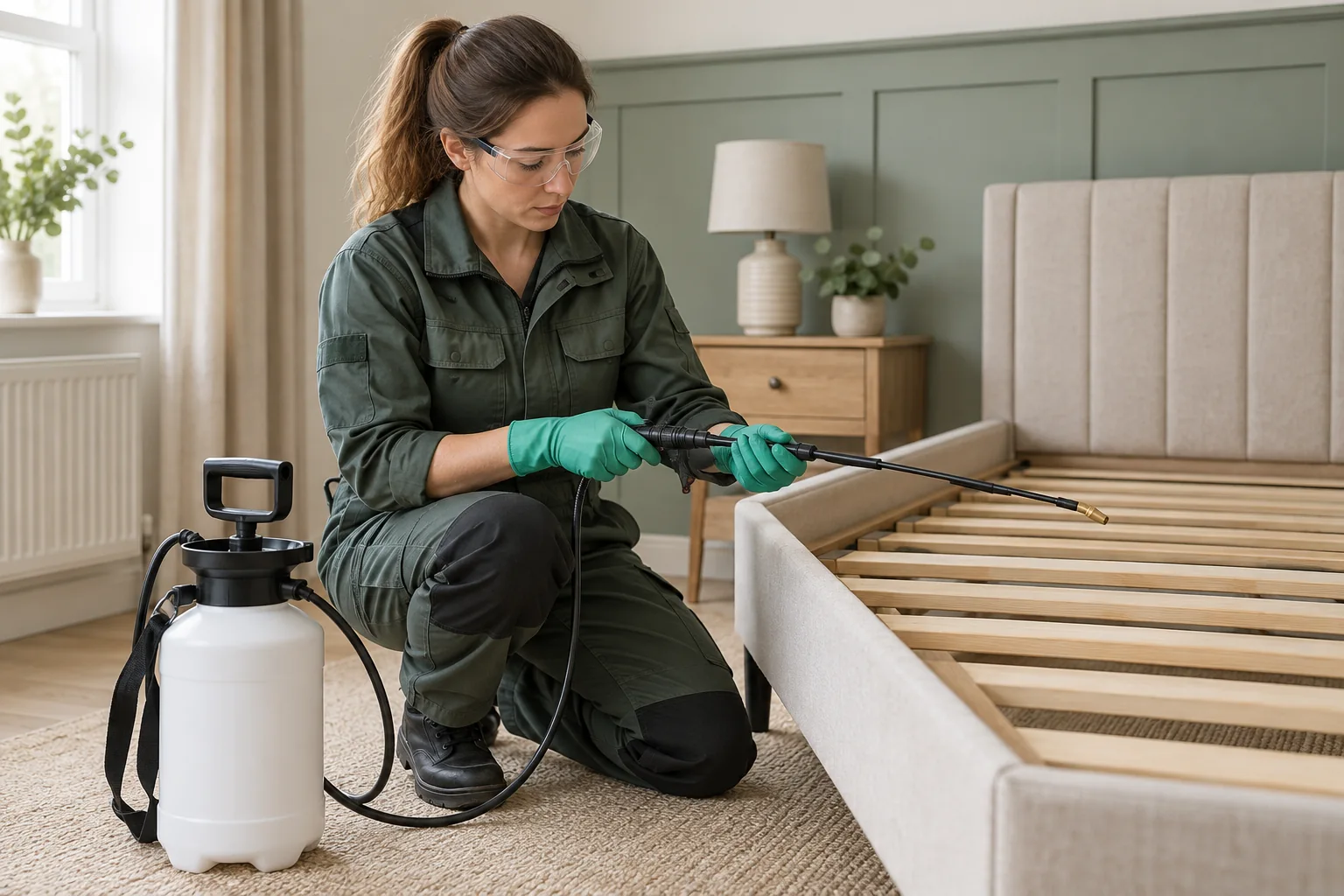
Conventional treatment can involve an authorised insecticide applied to suitable harbourages, with physical removal or localised steam where appropriate. Product selection depends on the evidence, surface, room use and safety assessment. A treatment directed into a bed-frame joint differs from spraying an exposed sleeping surface. The technician should explain where an application is permitted and why the proposed method suits that location.
Some hiding places may be inaccessible or unsuitable for a particular formulation. Eggs, overlooked harbourages and resistance can complicate control, so a single application is not presented as a universal answer. Specialist bed bug heat treatment is a separate option requiring its own suitability survey, equipment plan and belongings checklist; it is not simply a hotter version of a spray visit.

Preparing the affected room
| Before attendance | Why it matters | Action to agree |
|---|---|---|
| Belongings | Uncontrolled movement can distribute insects | Contain before moving for laundering |
| Bed access | Hidden joints need examination | Agree safe furniture movement |
| Household needs | Restrictions vary with method | Discuss pets, children and sensitivities |
What happens during the treatment visit
The working area is checked against the agreed plan before application begins. A torch, inspection aids, suitable application equipment and protective clothing may be used according to the task. Where a physical method is selected, the technician needs direct, controlled access to the relevant seam or joint. Equipment is used for the agreed treatment, not as a substitute for examining the room.
People and animals must remain outside restricted areas while work is in progress. Belongings that obstruct the application are addressed as agreed, and any unexpected limitation should be explained. The visit record should distinguish the rooms assessed, the areas treated, the method used and further access needed. Ask questions before the room is handed back.
Protecting occupants, pets and sensitive items
Tell us about children, pets, aquariums and relevant sensitivities before treatment is selected. Room restrictions and return conditions depend on the actual product or method, not a standard period copied from another property. Follow the instructions supplied for your visit, including any ventilation, drying or cleaning requirements. Do not rely on a room smelling normal as a safety test.
Keep children and animals away from treatment equipment and any retained monitoring devices. Food, medicines and personal items need to be protected or moved only as instructed. If an instruction cannot be followed, explain this before application begins; the plan may need to change rather than expecting the household to improvise afterwards.
Using the room after the visit
You should receive a clear explanation of the findings, treated locations and aftercare. Ask which areas can be cleaned immediately and which must remain undisturbed, because premature cleaning can remove a residual treatment. Advice about sleeping arrangements must follow the agreed plan; moving to an unaffected room without advice may complicate the distribution of activity.
Keep a simple record of new physical evidence: the room, location, date and, where practical, a photograph. Irritation can have more than one cause and is not an accurate measure of treatment progress on its own. Avoid adding household insecticides, essential oils or powders to treated areas. Mixing approaches without coordination can interfere with inspection and introduce avoidable exposure.
Evidence-led review loop

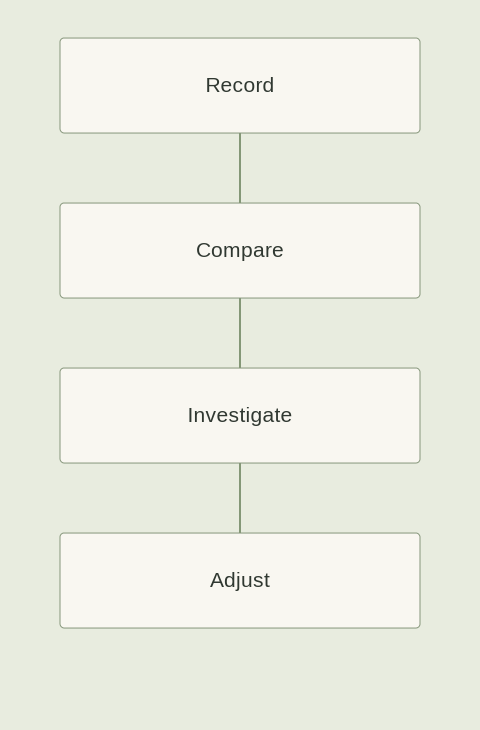
Record
Keep locations and dates of new physical signs.
Compare
Review findings against the treated area.
Investigate
Check overlooked access or a wider distribution.
Adjust
Agree further inspection or treatment if supported.
From evidence to a treatment plan
| Focus | What is examined | Decision |
|---|---|---|
| Sleeping area | Seams, frame joints and headboard edges | Identify active harbourages |
| Adjacent space | Nearby furniture and accessible skirting | Assess treatment boundaries |
| Previous work | Methods, dates and access restrictions | Plan compatible further action |
Reviewing fresh signs and planning further work
The review considers live insects, new spotting, monitor findings where used, preparation completed and areas that were previously inaccessible. A reduction in visible activity is useful information, but it does not prove that every hiding place has been reached. Follow-up timing follows the selected method, pest development and the evidence found during the review.
Further treatment may be recommended if activity remains, eggs hatch or evidence suggests a wider distribution. The technician should explain whether this falls within the agreed scope or needs a new quotation. If there is no reliable bed bug evidence, further identification may be more useful than applying another treatment. The cockroach service addresses a different insect and inspection pattern.
A clear quotation and a prompt conversation
The quotation depends on the rooms involved, access, infestation extent, selected method and proposed return visits. Ask whether the inspection, preparation support, materials and monitoring are included. Disposing of furniture, opening building fabric and major repairs should not be assumed to be part of a treatment price. The final price is confirmed against the treatment plan before you decide.
For a spreading problem, tell us if several rooms are used for sleeping or if occupants are moving belongings between rooms. Explain the postcode, access and any household restrictions when making an urgent pest control enquiry. Availability and inspection arrangements are confirmed by phone; no immediate arrival is promised. Contact us to discuss the next appropriate step.
Questions about bed bug treatment
Can bed bugs be present when the mattress looks clear?
Yes. Accessible bed-frame joints, headboards and nearby furniture can hold activity without obvious insects on the mattress top. Tell the technician which fittings cannot be reached so the survey records those limits.
Should I buy a new bed before treatment?
Do not replace or move it before assessment. A new bed can enter the same affected room, while carrying the old one through the building may spread insects. Handling or disposal needs a plan.
Will you dismantle a fitted headboard?
Access requirements are discussed first. A removable fitting may be inspected with permission, but built-in joinery, electrical components or heavy furniture may require separate access arrangements rather than unplanned dismantling.
What information helps if another company has treated the room?
Provide dates, product or method details if known, treatment records and the areas covered. Describe what changed afterwards. This helps the specialist avoid assuming that all remaining signs indicate the same untreated location.
Does each room need the same method?
Not necessarily. Evidence, furnishings, access and occupant needs can differ. A combined plan may use appropriate measures in different areas, with clear instructions for each, rather than automatically applying one method everywhere.
How will I know whether another visit is needed?
Use the agreed reporting instructions and record fresh physical signs. The review considers the inspection evidence and treatment history; the absence or persistence of skin irritation alone cannot reliably establish clearance.