Seeing one mouse in a kitchen does not tell you whether it is a visitor or part of an established problem. It does, however, justify a careful check. Some households see no further sign for days, then discover new droppings or damaged food. That does not necessarily mean treatment failed or the animal “came back”; the route, timing and evidence may not have been understood. This guide explains why activity can recur and how to respond without relying on a single sighting.
A sighting is a moment, not a count
Mice spend much of their time in sheltered spaces. One visible animal may be the only mouse present, or it may be one of several using a concealed route. You cannot count the population from a brief movement across a room. Record the time, where the animal appeared and where it went. A photograph is useful if available, but do not chase the animal through cupboards to obtain one. Look instead for independent signs along edges and near food or service gaps.
If a sighting happens in daylight, note it, but avoid treating the time alone as proof of a large infestation. Disturbance, building work and access to food can alter behaviour. A mice control inspection can combine the sighting with droppings, gnawing and entry-point evidence to assess the situation.
Routes can remain open after the animal disappears
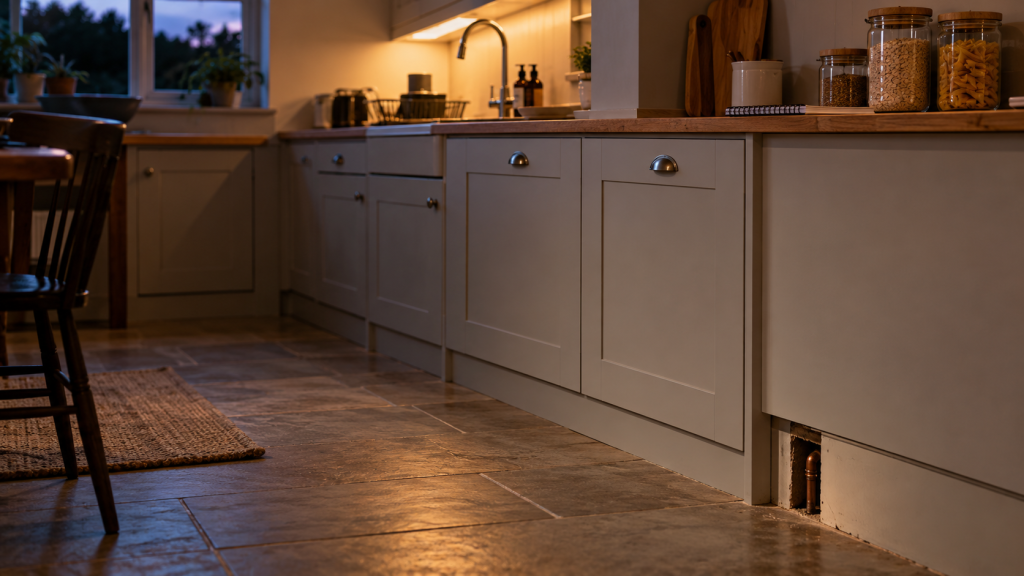
A mouse can travel beside pipes, beneath units and through wall or floor voids. If the opening remains, another animal may use it even after an individual is removed. In a flat, the route may connect to a shared riser or neighbouring space. A treatment confined to the cupboard where the mouse was seen may not address the source. An inspection should identify likely access points and recommend proofing at the right stage.
Do not fill a gap the moment you see a mouse enter it. An animal may still be inside the void, and forcing it to another exit can spread the problem. The opening may also have a service or ventilation purpose. Photograph it and ask how the route should be assessed and repaired. The rodent control service can explain the sequence of inspection, control, monitoring and proofing.

Food and shelter may still be available
Accessible dry food, pet food, spilled seed and household waste can keep a route attractive. Store sound food in lidded containers, clear ordinary spills and use a closed bin. Check low cupboards and behind accessible appliances. This is not a judgement about housekeeping; a tidy home can still offer warmth and a hidden entry point. Removing food access supports a wider plan but does not close the route.
Damaged or contaminated food packaging should be discarded. Clean suspect droppings using appropriate hygiene guidance, without dry sweeping or vacuuming. Photograph the original evidence first and note when the area was cleaned. New marks after that date are more informative than an undated mixture of old and recent material.
Why a quiet week can be misleading
Animal activity is not constant or equally visible. A mouse may travel at night, use a route behind units or spend time where no one is watching. A quiet period may follow a change in food access, a temporary disturbance or control activity. It is encouraging, but it is not proof that the opening has been sealed. Follow a sensible monitoring period agreed with the person assessing the property.
Use simple records: date, location, type of sign and photograph. If a clean shelf develops new droppings, that matters. If no signs appear and a confirmed entry point has been properly repaired, confidence increases. Avoid constantly moving objects or cleaning every speck before it can be documented, but maintain normal hygiene and protect food.
Could it have been a different animal?
A small rat, shrew or other animal can be misidentified in a fast sighting, although the building context may make some possibilities more likely. Dropping size alone can also mislead. Look for the full pattern: gnawing, route, tracks and, if possible, a clear image. If larger damage, burrows or drain concerns appear, discuss whether a rat control assessment is warranted. The treatment and proofing plan should follow identification, not the label used during the first phone call.
In a loft, a daytime animal may be a squirrel. If the sighting was outside and involved roof access, note climbing behaviour and the point of entry. The squirrel control service can assess that route. Avoid DIY trapping or releasing wildlife elsewhere; legal and welfare rules differ by species.
Why a single trap may not solve the route
A correctly placed device may catch an individual, but it cannot explain by itself how the animal entered or whether another route remains. Incorrectly placed traps may miss the travel line or create a hazard for children and pets. Loose bait in a kitchen can also be unsafe and difficult to monitor. A professional plan should state what is being used, where it is placed, how it will be checked and what happens afterwards.
If one mouse is caught, continue to review the building. Check whether there are new droppings, whether food remains protected and whether openings need repair. A return of signs may represent a new entrant through the same gap, an animal that was never caught or a different source. The evidence can guide the next step without guessing which story is correct.
Shared buildings need shared information
In a block of flats, inform the landlord or managing agent if activity appears around a service pipe or shared wall. Another resident may have useful observations. Share facts and photographs, not blame. The responsible party may need to arrange access to risers, bin stores or adjoining units. A repair only in one flat can leave a common route untouched.
Ask who will coordinate the building inspection and proofing. Fire stopping and service repairs may require specialists beyond pest control. Keep written appointment notes so the control and building work are linked. If signs recur, the record helps show whether the route was ever addressed.
What to ask during an inspection
Ask where evidence was found, whether the species is confirmed, which openings are likely and how activity will be monitored. Ask what you can safely clean, when any proofing should take place and who handles the repair. A useful report should distinguish observed facts from likely explanations. It should also tell you what new signs to report and when follow-up is due.
If the evidence is weak, monitoring may be appropriate. If there are repeated droppings or damaged food, waiting indefinitely is not. The plan should be proportionate to the evidence and the property. Keep children and pets away from any professional devices and follow the instructions given.
When to act again
New droppings after cleaning, another live sighting, gnawed packaging or sounds along the same route justify renewed assessment. Damaged wiring or a leak needs the relevant trade promptly. Do not assume that the problem has returned for the same reason as before; show the updated record so the route can be reassessed. The practical endpoint is no new activity together with resolved access, not merely one quiet night.
For a Harrow home, send the original sighting details, any dated photographs and what has been done since through the contact page. That history helps the next inspection focus on the reason activity may have continued or recurred.