

HARROW · INSPECTION · TREATMENT · PREVENTION
Moth Control Harrow
Moth control starts by finding what the larvae are feeding on. We inspect affected fabrics, concealed edges and nearby storage, distinguish the pest involved and recommend a treatment plan suited to the materials and extent of activity. Call to discuss moth control in Harrow and the evidence you have found.
Fresh textile damage? Discuss the affected materials before moving them between rooms. ↗
The moth you see is only part of the problem
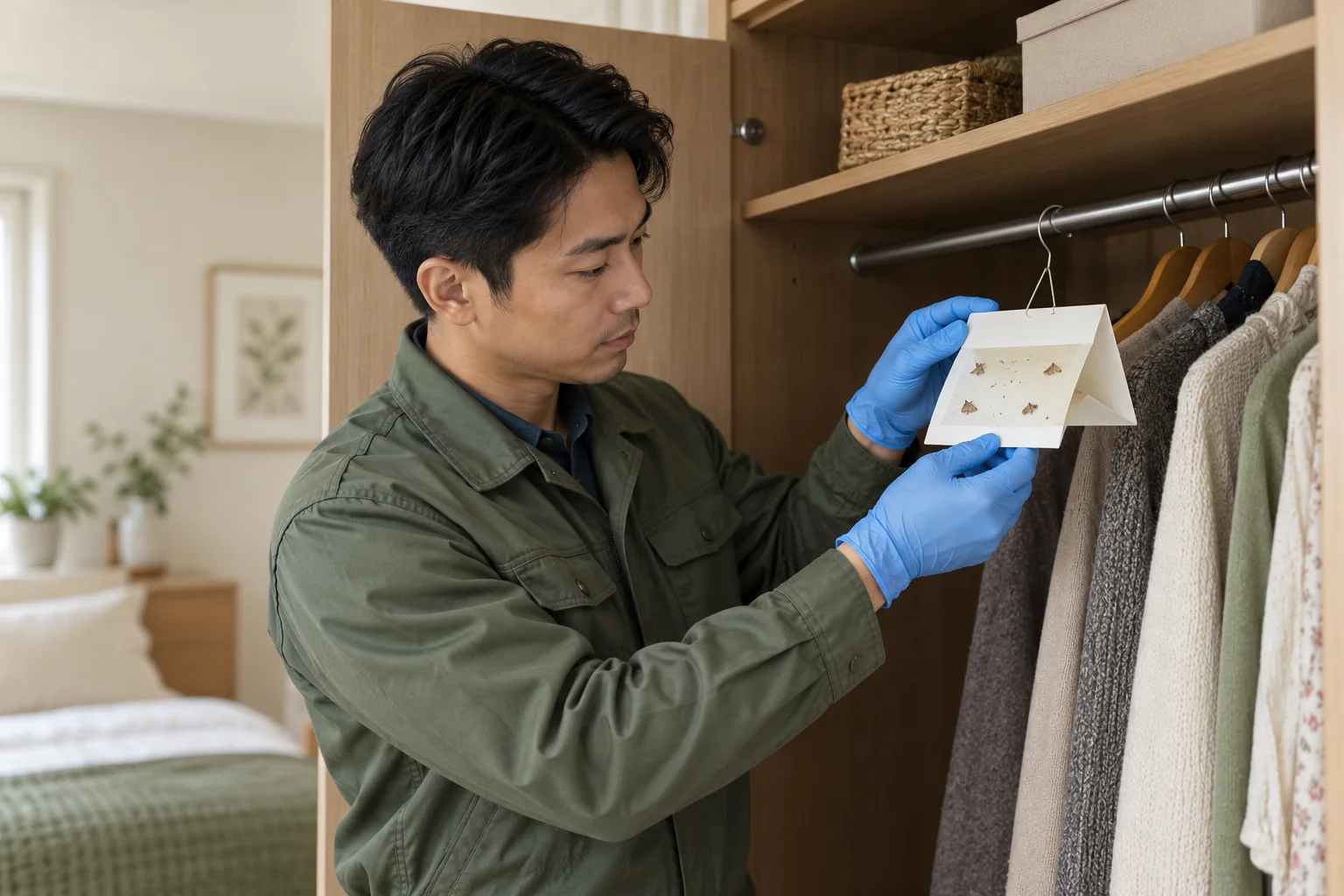
A small moth does not establish that clothing is being attacked. Clothes moths, food-associated moths and occasional visitors require different investigations. Photograph the insect without disturbing belongings; its appearance, location and the damaged material guide the inspection.
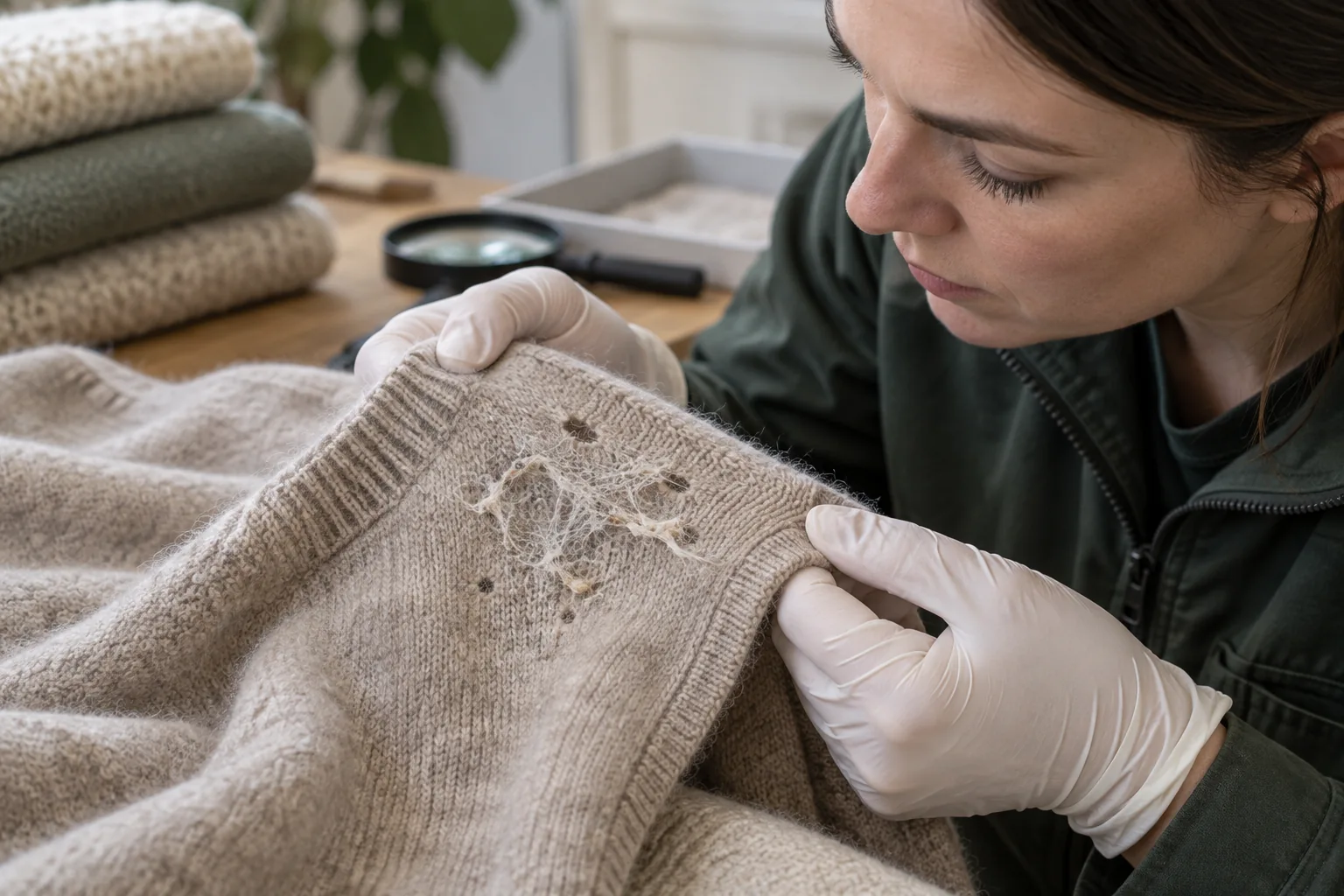
With clothes moths, larvae cause the feeding damage. Adults may be noticed after the source has been active out of sight. We look for larvae, webbing, portable cases where relevant, and damage to susceptible fibres. Hairy larvae or cast skins can instead justify a carpet beetle inspection; treatment should not be selected from a hole in fabric alone.
From a damaged item to the source
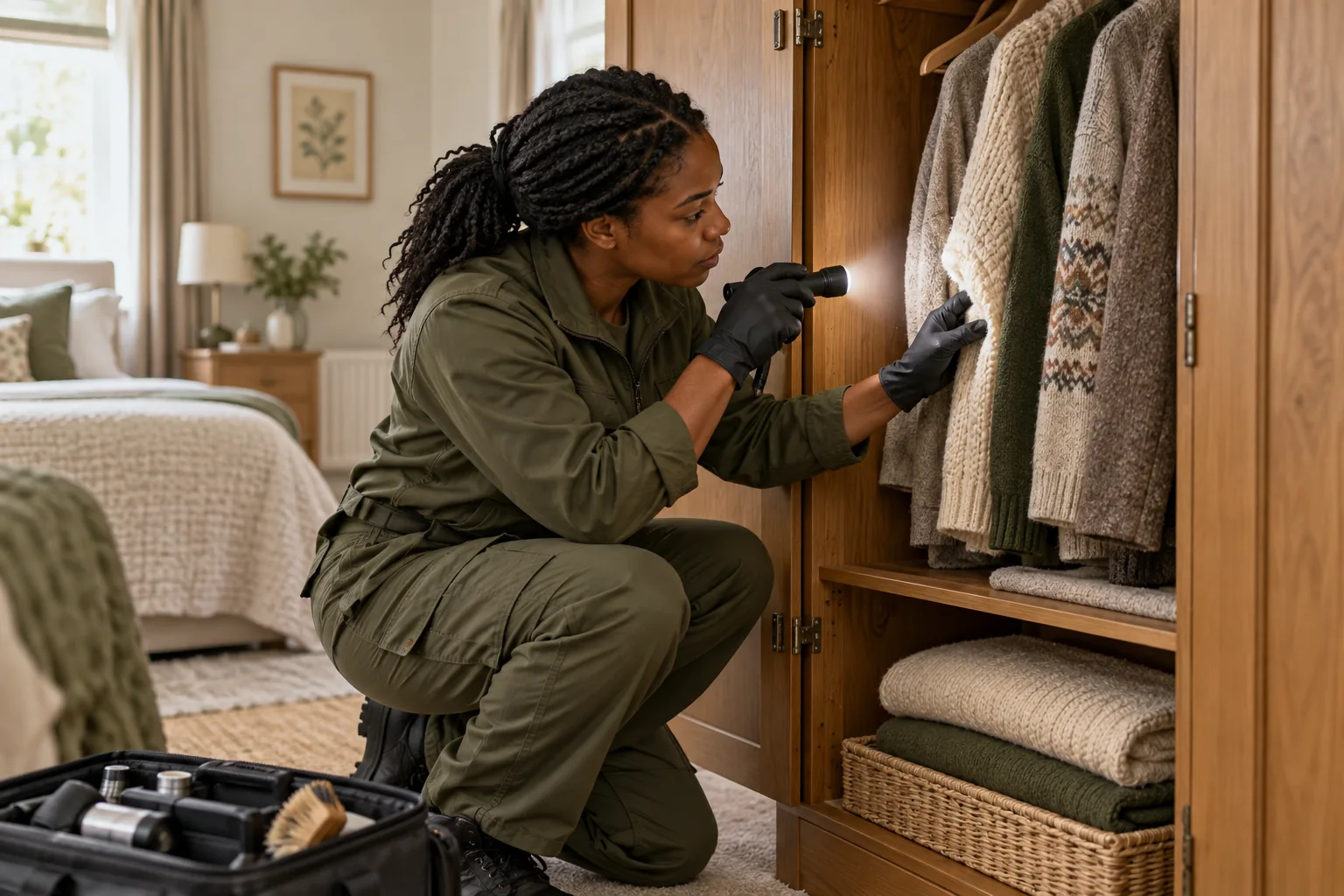
The inspection follows a pattern rather than checking the centre of every room equally. We start with the damaged item and its storage location, then examine adjacent shelving, wardrobe bases, carpet edges, rug undersides and accessible furniture seams. A torch and close visual examination help distinguish active larvae from old damage and ordinary lint.
Tell us when the item was last used, whether damage has developed recently and where other sightings occurred. Stored woollens, feather-filled items and textile-lined storage may need review. Not every object must be treated: separating confirmed activity from unaffected storage allows a more proportionate plan and reduces unnecessary handling of belongings.
Approaches for moth activity
| Approach | Useful circumstances | Limitation | Review |
|---|---|---|---|
| Cleaning and source management | Accessible infested material | Hidden sources may remain | Check the surrounding storage |
| Targeted room treatment | Suitable confirmed harbourages | Not every textile can be sprayed | Review larval signs and preparation |
| Monitoring | Species-appropriate adult activity | Does not prove absence of larvae | Compare catches with fresh damage |
| Controlled heat assessment | Suitable contents and access | Heat-sensitive materials need review | Agree monitoring and aftercare |
Follow the textile source
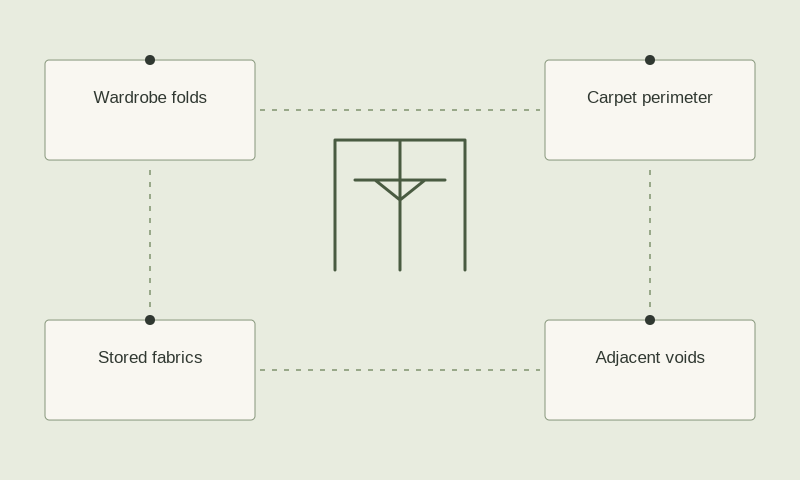
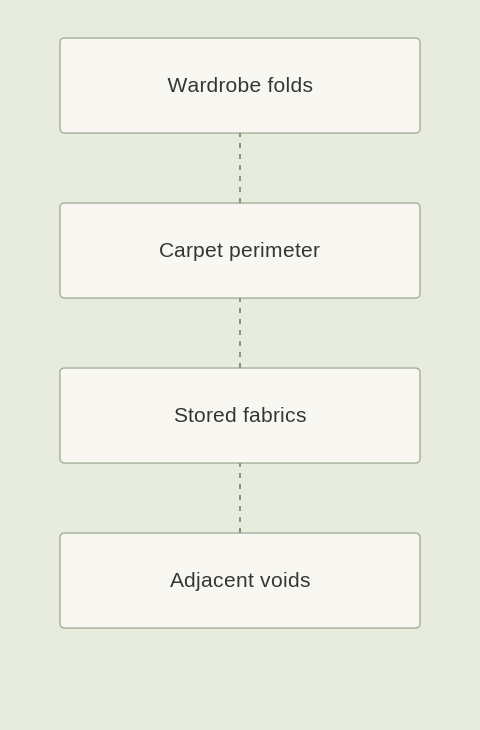
Wardrobe folds
Inspect seams, labels and rarely disturbed garments.
Carpet perimeter
Check edges and material sheltered by furniture.
Stored fabrics
Compare damage and larval evidence before moving items.
Adjacent voids
Record inaccessible areas and discuss further access.
Treatment follows the species and the material
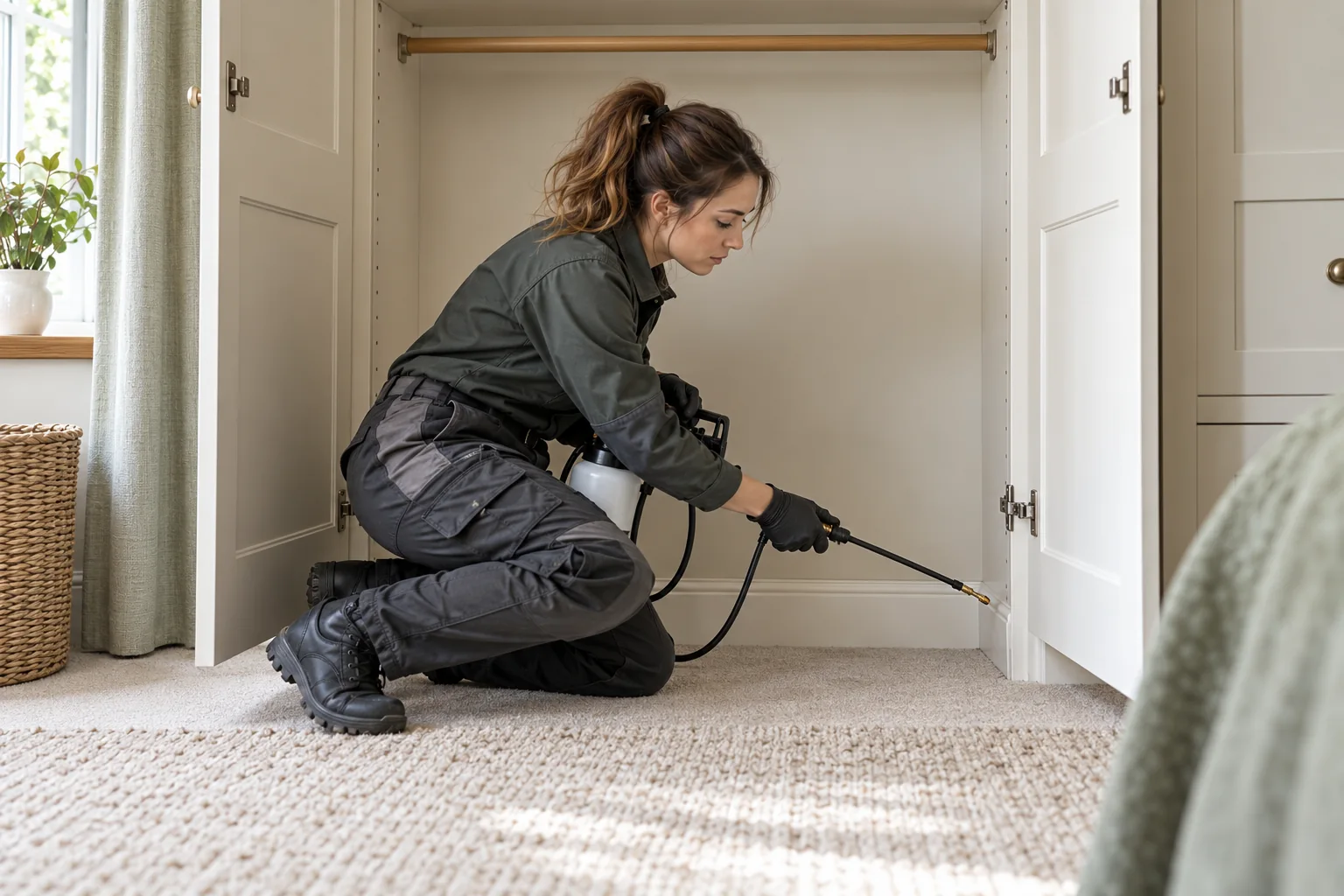
The plan may combine removal of infested debris, suitable cleaning, monitoring and targeted insecticidal treatment of appropriate harbourages. Products and application sites depend on their authorised use, the surface and the people or animals using the room. The technician explains why a proposed method addresses the evidence found and what it will not reach.
A whole-room approach is not automatically necessary for one affected item. Conversely, treating only the adult moths visible on a wall can miss concealed feeding larvae. Discuss the scope of item treatment and room treatment separately. If signs involve another insect, the pest identifier provides an initial comparison before a species-specific recommendation is made.
Textile preparation
| Before the visit | Why it matters | Customer action |
|---|---|---|
| Restrict movement | Loose material can spread activity | Keep suspect textiles in the affected room |
| Identify care limits | Some methods can damage items | Show labels and flag valuable pieces |
| Provide access | Edges may hide larvae | Clear a safe route without moving heavy furniture |
Where a controlled heat option may fit
Heat can be considered for suitable textile pest situations, but it needs a separate suitability assessment. The room, affected contents, equipment access and heat-sensitive materials determine whether it is practical. A professional plan defines how the treatment is monitored and how belongings are protected; no universal temperature or duration is promised from a telephone description.
For valuable or vulnerable items, a conservator or specialist cleaner may be more appropriate than a room treatment. Household heaters are not a substitute for a controlled process. If heat is proposed, obtain the specific preparation, exclusion and return instructions first. A method that suits bed bugs is not automatically the right moth plan, although controlled heat assessment illustrates the importance of preparation.
Using monitors without mistaking them for the whole treatment
Species-appropriate monitors can help establish where adult activity is occurring and whether it changes after treatment. Placement needs a reason: a monitor at a convenient empty wall is less informative than one related to the affected storage and the species involved. Where monitors are used, their location and checking arrangements should be recorded.
Trap catches are one part of the evidence, not a count of every egg or larva in the property. Do not relocate monitors or add consumer moth products without discussing them, as this can make later comparisons harder. We review catches alongside fresh damage, larval signs and the condition of previously affected material.
Protecting occupants and keeping the work controlled
Before treatment, identify who uses the space, any relevant sensitivities and whether children, pets, aquariums or food preparation areas are nearby. The technician selects appropriate precautions for the actual method and explains which areas must remain unoccupied. Keep people and animals outside the working area until the stated conditions for return have been met.
The equipment used may include a torch, inspection tools, suitable monitors and application equipment for the agreed product. Ask what is being applied, where it is being placed and which surfaces should be left undisturbed afterwards. Safety instructions take priority over a general cleaning routine.
Checking for fresh damage after the visit
After treatment, keep a simple record of new sightings and the condition of the affected items. Existing holes and old webbing do not disappear, so mark or photograph known damage rather than assuming every later observation represents new feeding. Follow the agreed cleaning and storage advice for each item and avoid disturbing treated sites prematurely.
A further inspection may be needed when larval activity continues, another source is discovered or part of the original problem could not be accessed. The follow-up arrangement should state what is included and which work would need a new quotation. A reduced number of adult moths alone is not sufficient evidence that every source has been resolved.
Evidence after treatment
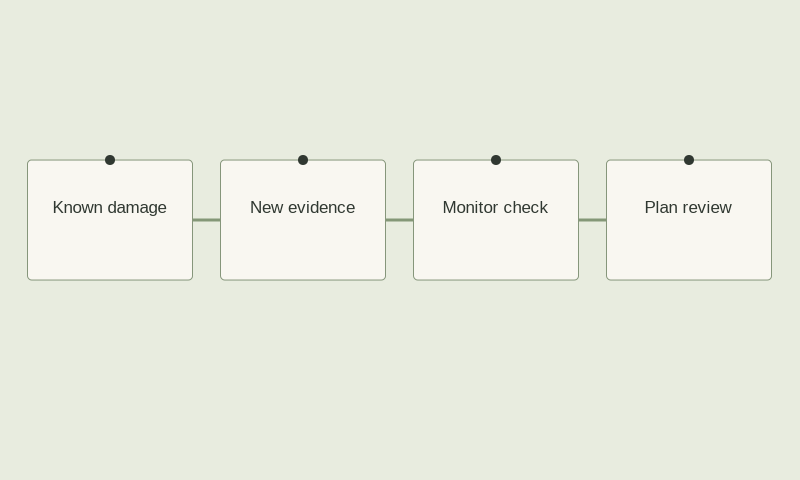
Known damage
Keep a baseline photograph.
New evidence
Record larvae, fresh webbing or additional feeding.
Monitor check
Review species-appropriate catches in context.
Plan review
Address an overlooked source or further treatment if indicated.
Reading the evidence
| Evidence | Inspection focus | Decision it supports |
|---|---|---|
| Adult moth | Species and nearby material | Select the right investigation |
| Larvae or webbing | Affected fibres and concealed folds | Define active treatment areas |
| Old holes only | History and fresh evidence | Avoid assuming current activity |
Make the storage less favourable afterwards
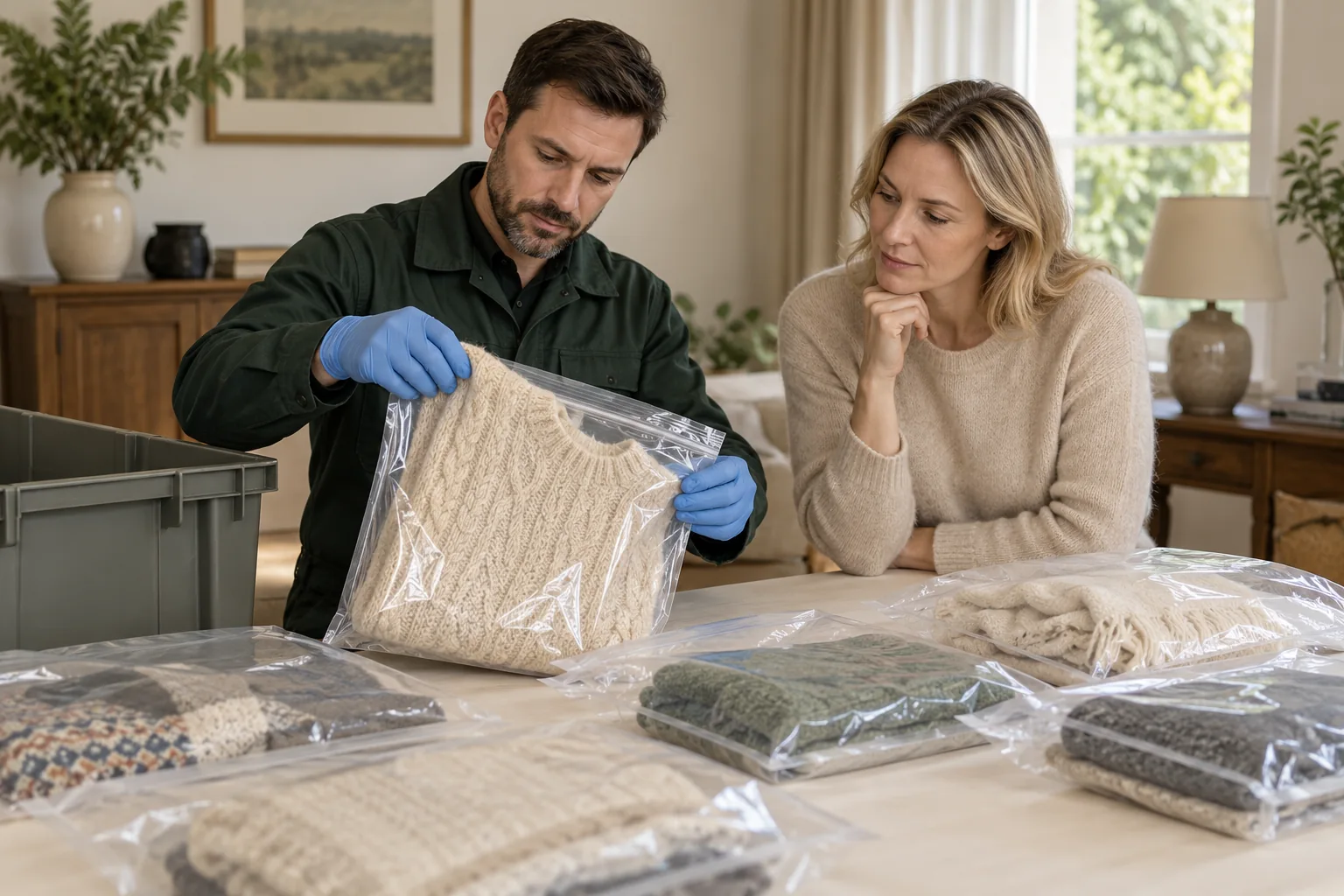
The prevention plan focuses on the conditions found in your home: cleaning undisturbed edges, reviewing rarely used woollens and storing suitable clean items in securely closed containers. Keep access to problem areas possible so that later checks are realistic. An inaccessible pile of stored textiles is difficult to inspect even after a well-planned treatment.
Repeat activity can come from overlooked material, newly introduced items or access to an external source. Inspect second-hand textiles before bringing them into regular storage. Where insects are seen around damp paper rather than natural fibres, silverfish control may be a more relevant investigation than repeated moth treatment.
Discuss the affected material before accepting a quotation
The cost depends on the number and size of affected rooms, access to concealed areas, the volume of belongings needing assessment, the method and the agreed monitoring plan. Ask whether the quotation includes inspection, room treatment, any item handling and return checks. The quotation should identify the affected areas, the method and the agreed return checks.
If damage appears to be spreading through valuable textiles, explain this when calling and keep the material in place pending advice. We can discuss the next available inspection through urgent pest enquiries, without promising a particular attendance time. Have your postcode and observations ready when you contact the Harrow service.
Questions about moth control
Is a moth flying near a light definitely a clothes moth?
No. Its appearance and the evidence in stored fabrics matter more than its presence at a light. Keep a photograph and note where it was seen; the inspection can distinguish a textile pest from a food-associated moth or an incidental visitor.
Should every garment be removed before the inspection?
Ask first. Emptying all storage can move evidence and mix affected material with clean items. Clear safe access and identify the damaged garments, then follow the item-handling plan agreed for the visit.
Can moth treatment repair holes in a rug?
No. Pest treatment addresses activity, not fibre repair. Photograph the existing damage and discuss any repair with a suitable textile specialist after the source and handling arrangements have been assessed.
Will a pheromone trap remove the larvae?
A species-appropriate trap can inform monitoring of adult activity, but it does not replace inspection of the feeding material. Larval sources and affected belongings still need a suitable management plan.
Can the same method be used on a valuable antique textile?
Not automatically. Mention its value, construction and care restrictions before work. A specialist conservation or cleaning process may be preferable to a room product or heat exposure.
How should I report moths after treatment?
Record the room, date and whether the evidence is a live adult, larva, fresh webbing or new damage. This is more useful than a general report that moths remain and helps decide whether a source or method needs review.