

HARROW · INSPECTION · TREATMENT · PREVENTION
Flea Treatment Harrow
Flea treatment needs to address the property as well as any animal host. We investigate where activity is occurring, discuss the relevant preparation and select suitable premises treatment. The aftercare plan explains how to monitor further emergence and when the findings need review, rather than promising that every flea disappears at once.
Jumping insects in occupied rooms? Explain where they appear and which spaces pets use. ↗
First establish what is jumping
Jumping insects or specimens from a carpet can help identify fleas; irritation alone cannot. Tell us where activity occurs, whether the property is occupied and which current or previous animals may be relevant. A photograph can help, although close identification may need a specimen.
We consider other explanations before recommending premises treatment. Problems centred on a bed require a different investigation, and a bed bug inspection may be appropriate if physical evidence points that way. Avoid treating several suspected pests at once with household products, because this can obscure the evidence and complicate the eventual plan.
The inspection follows the animal’s resting pattern
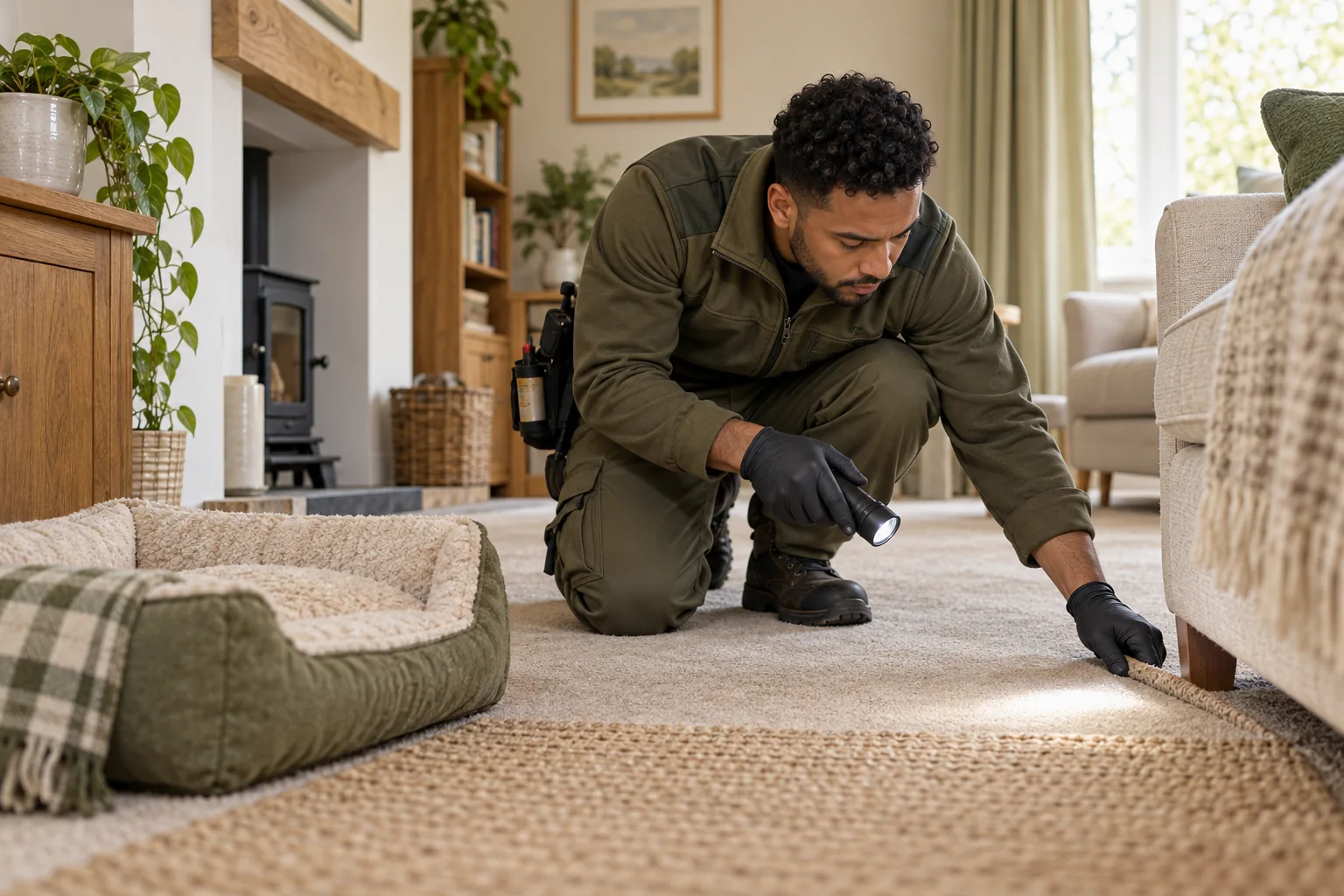
The room map starts with places where an animal rests or spends time, not just the location where someone first noticed an insect. Carpets beside a sofa, upholstered seams, floor edges, pet bedding locations and sheltered spaces beneath accessible furniture may all require inspection. Tell the technician which rooms animals enter and whether bedding has already been moved.
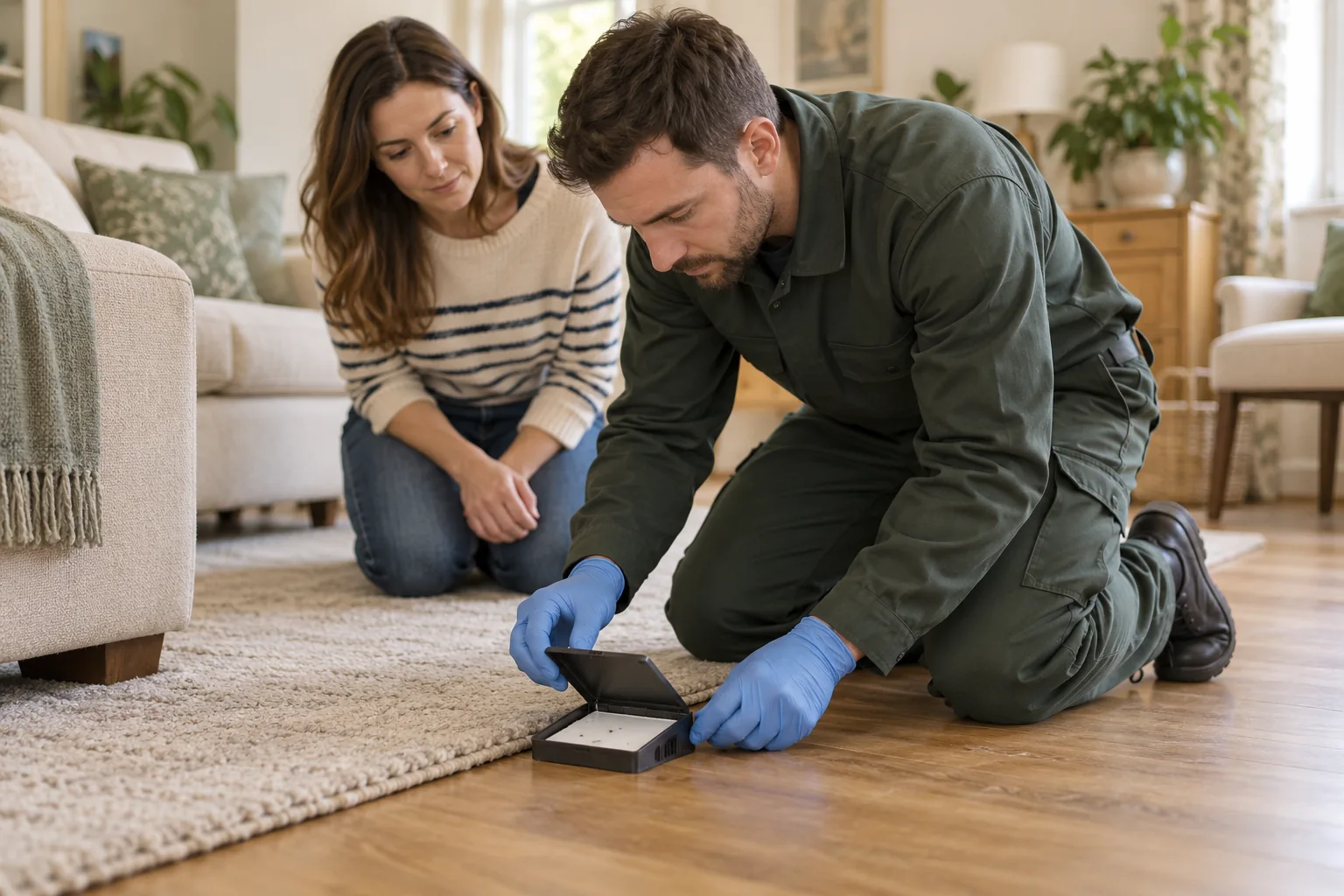
A torch and close inspection help identify insects and the areas that could support immature stages. Monitoring may be useful where the pattern is uncertain. The property inspection diagram explains why adjacent areas matter, but the actual scope follows the room use and evidence in your home rather than a standard floor plan.
Resting places shape the inspection

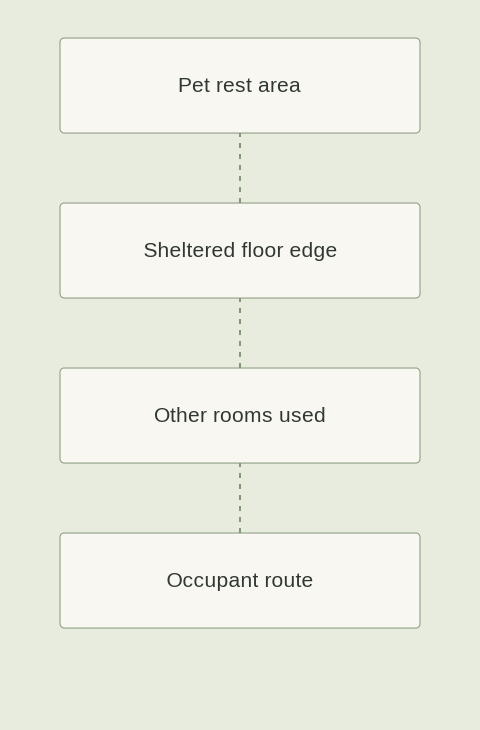
Pet rest area
Check the immediate bedding or soft furnishing location.
Sheltered floor edge
Inspect accessible perimeter and nearby gaps.
Other rooms used
Extend the scope where animal use or sightings justify it.
Occupant route
Agree safe access and treatment exclusion areas.
Why premises work and pet care need coordination
Adult fleas can be associated with a host, while immature stages develop within the surrounding environment. Treating a visible patch of carpet without considering the animal and other resting locations can leave part of the problem unresolved. Equally, pet treatment alone may not immediately remove every developing stage already present in the room.
Animal treatment belongs with a vet or an appropriate animal-care professional. Tell them about the premises problem and tell the pest technician what pet treatment has been advised. Do not apply a premises insecticide to an animal or assume a product intended for one species is suitable for another. Agree the sequence of actions so that the property and host issues are not managed separately by accident.
Managing different parts of flea activity
| Approach | Where it helps | Limit | Follow-up |
|---|---|---|---|
| Cleaning | Accessible resting areas and debris | Cannot establish that all stages are absent | Resume in line with aftercare |
| Premises insecticide | Suitable confirmed activity areas | Product and surface restrictions apply | Assess later emergence |
| Veterinary pet care | Animals that can sustain the cycle | Does not treat the room by itself | Follow the vet’s plan |
| Monitoring | Uncertain or continuing sightings | One observation does not describe the whole property | Compare locations and dates |
Prepare floor space without emptying the whole house
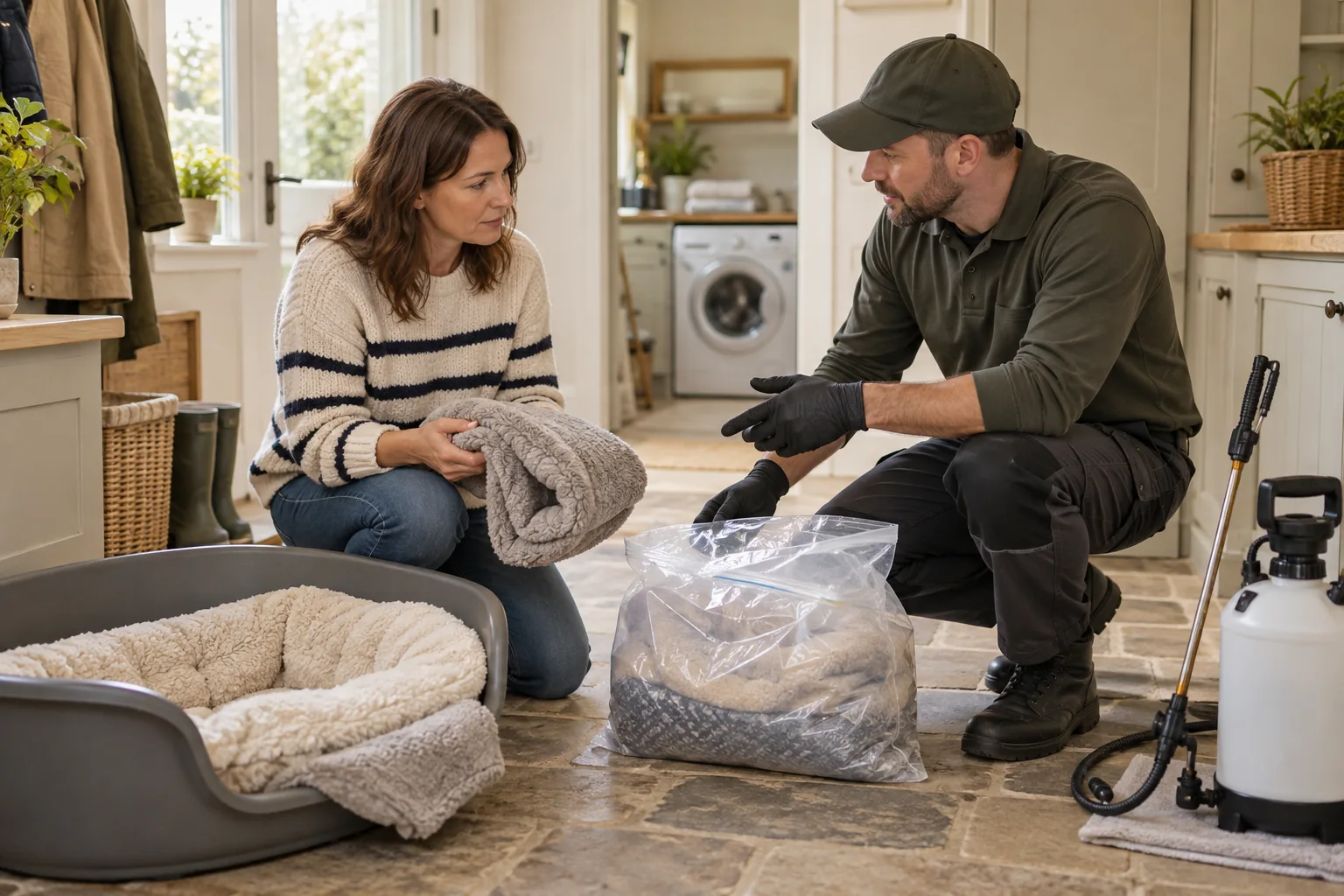
Before attendance, identify the rooms with sightings and clear small loose objects from the floors where advised. Shoes, toys, laundry and other moveable items can block access to edges and sheltered areas. Keep the route safe for the technician, but do not move heavy furniture or lift flooring without discussing what is needed and who will do it.
Bedding and washable fabrics may need cleaning in accordance with their care labels and the agreed flea plan. Ask how to contain affected material during movement rather than carrying it loose from room to room. Explain any delicate rugs, electrically adjustable furniture or inaccessible areas before treatment is priced, because these can change the working scope.
Cleaning helps, but its timing matters
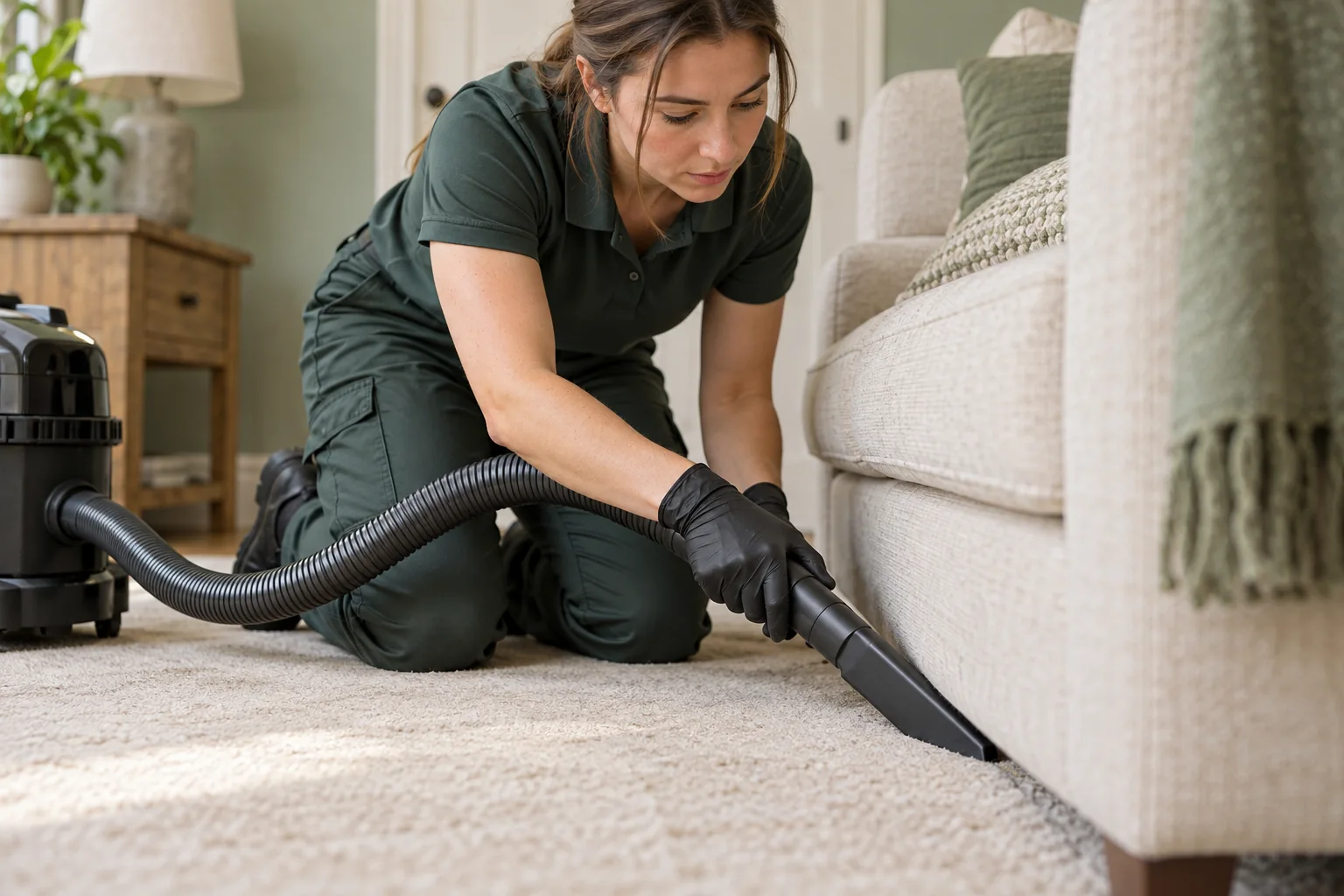
Vacuuming can remove material that shelters developing fleas and improve access for subsequent work. Which areas to clean, how to handle the vacuum contents and when to stop should be established before treatment. Do not assume that the same cleaning routine is appropriate immediately before and immediately after an application.
Where a residual treatment is selected, premature washing or disturbance of treated sites can interfere with the intended approach. The technician should give the cleaning restrictions for the actual product and surfaces, rather than a generic fixed number of days. Keep those instructions with the visit record and check before changing your normal vacuuming routine.
Before a flea visit
| Preparation | Purpose | What to agree |
|---|---|---|
| Clear loose floor items | Access to relevant edges and surfaces | Which rooms need clearing |
| Handle washable bedding | Reduce affected material safely | Care-label-compatible cleaning |
| Protect occupants and pets | Meet method-specific precautions | Exclusion and return conditions |
Treat the relevant surfaces with a reason
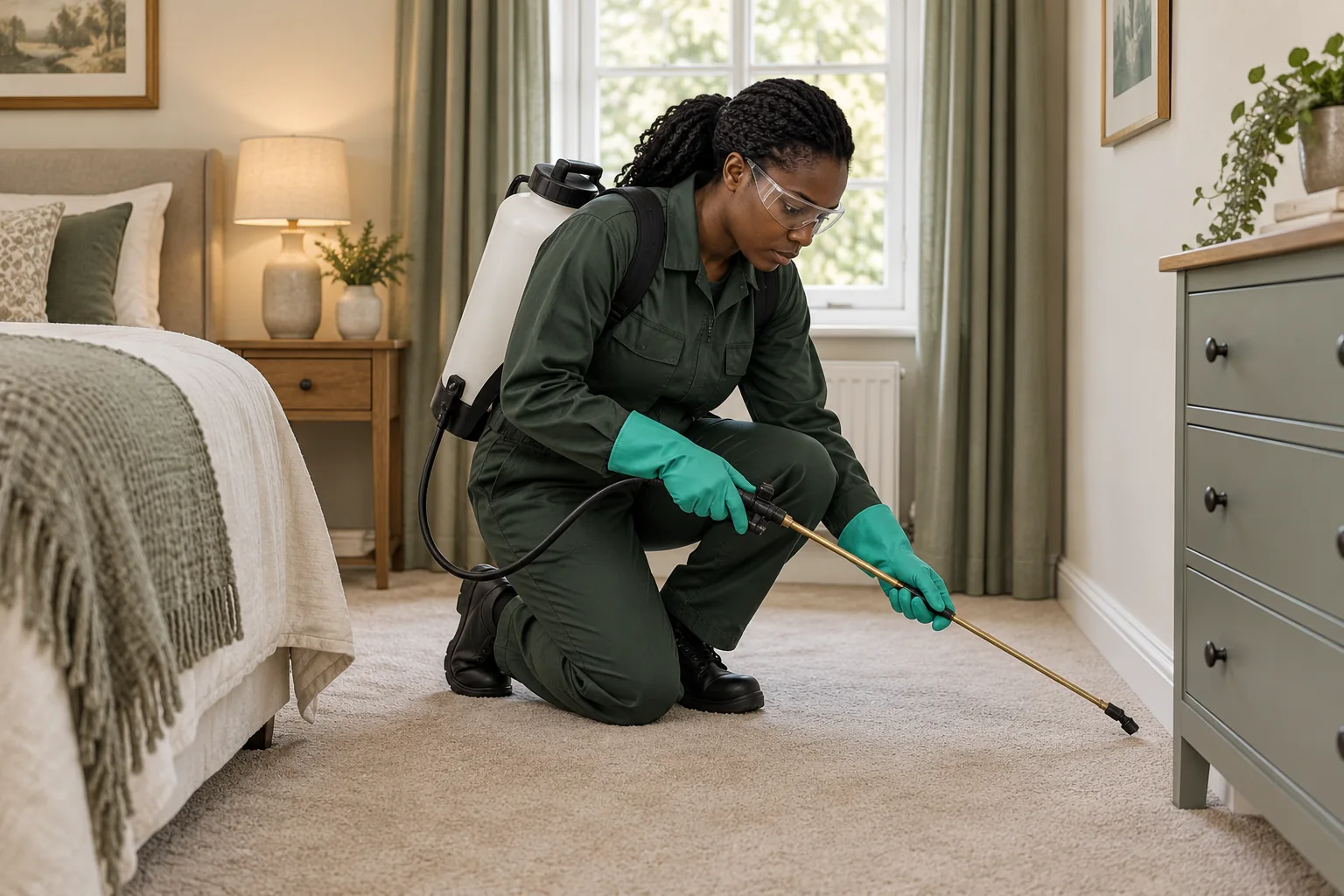
The treatment recommendation depends on confirmed activity, room use, surface types and access. It may include a suitable authorised insecticidal application to relevant premises areas, alongside preparation and host management. An insect growth regulator may be considered where appropriate to the product and plan; it is not a substitute for finding the affected locations.
Application should follow the product’s authorised use and the risk assessment, not a blanket assumption that every possession needs spraying. Food, utensils, toys, animal equipment and sensitive materials need the specified protection. Ask which surfaces are included and which cannot be treated. Photographs can illustrate the work, but the method for your property must be explained before it starts.
Know who must leave the working area
Discuss children, pets, aquariums, relevant sensitivities and anyone unable to leave a room easily. The precautions, exclusion areas and return conditions depend on the selected method and setting. Arrange somewhere suitable for occupants and animals before treatment if they must be kept away. Do not bring them back simply because the technician has finished applying a product.
Obtain the re-entry conditions and cleaning restrictions before the visit ends, including any differences between rooms. If the arrangements cannot be met, explain this before work starts so the plan can be reconsidered.
Further sightings need context, not an instant verdict
Immature fleas protected within the environment can complicate the response after premises treatment. A later sighting does not automatically show that the original work was ineffective, nor should persistent activity be dismissed without checking the pattern. Record where insects are seen and whether the number and distribution appear to change.
Use the monitoring and room-use advice provided for the specific treatment. Do not deliberately expose yourself to bites to test the result. Contact us if observations fall outside the expected pattern explained at the visit, if the preparation could not be completed or if pet care and premises work have not been coordinated. A review can distinguish continued emergence from an untreated source or new introduction.
Interpreting the period after treatment

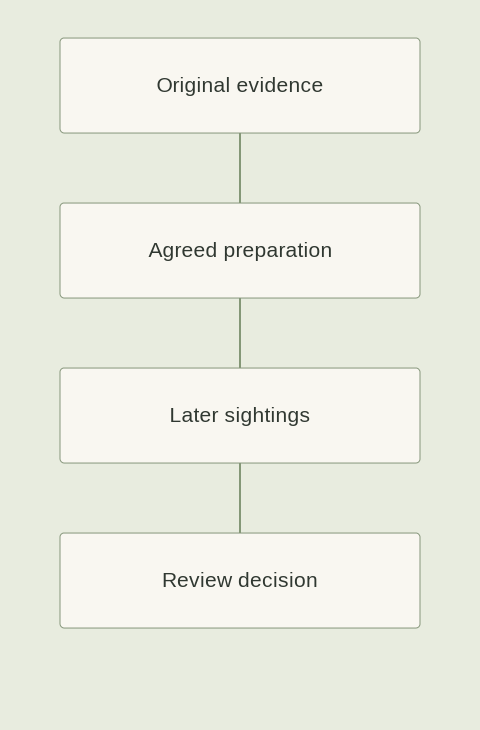
Original evidence
Record affected areas before work.
Agreed preparation
Complete the property and host actions.
Later sightings
Log dates and locations without deliberate exposure.
Review decision
Reinspect if the pattern or access leaves questions unresolved.
Property and host coordination
| Part of the problem | What is checked | Next action |
|---|---|---|
| Animal contact | Current and previous pets or visiting animals | Discuss suitable veterinary care |
| Room environment | Resting areas, edges and furnishings | Define premises treatment scope |
| Aftercare | Sightings and preparation completion | Review evidence before further work |
A vacant room can still need a careful assessment
Tell us if the home has recently become empty or if activity appeared after moving in. The history of former pets, unused soft furnishings and which rooms were closed helps interpret the evidence. A lack of regular occupants does not prove that developing stages are absent, and a quick visual check in the centre of a clean floor can miss the relevant edges.
For a tenancy, agree who authorises access, pays for the visit and receives the instructions. If communal routes or adjoining accommodation are relevant, coordination may be needed. The plan should identify accessible areas and any restrictions, rather than treating a tenancy change as proof that every problem has a single known source.
Agree the visit plan and its cost drivers
The quotation depends on affected rooms, furnishings, access, method and planned return checks. Agree whether inspection, treatment and follow-up are included, how to report ongoing activity and what would require additional work.
If activity is widespread or a vulnerable occupant cannot use a room, explain this through the emergency enquiry section. Attendance is discussed according to availability and the circumstances. To start, call with your postcode, property history and the locations where insects have been observed.
Reducing the chance of the problem returning
After treatment restrictions end, follow the agreed cleaning plan for pet resting places and bedding, alongside your vet’s advice. Discuss visiting animals and inaccessible sources. Repeated room spraying without fresh evidence is not a substitute for coordinated host and property management.
Different insect signs need different follow-up. Textile holes with hairy cast skins suggest a carpet beetle investigation, rather than evidence that flea treatment failed. For an overview of the services and inspection approach, return to Harrow pest control. Keep the visit instructions so future observations can be compared with the original findings.
Questions about flea treatment
Can fleas remain in a property after the pet has left?
Developing stages can remain in the environment, so the history of animal use is relevant even in a vacant home. Tell us about previous pets and unused rooms; the inspection can focus on former resting locations.
Will the pest technician apply flea medicine to my pet?
Premises treatment and animal treatment are separate tasks. Arrange suitable pet care with a vet or appropriate animal-care professional and let the technician know what has been advised. Never use a premises product on an animal.
Does a bite prove that I need flea treatment?
No. Reactions can have several causes. A specimen, clear insect sighting and location history provide stronger evidence. If you have a health concern, seek appropriate medical advice rather than relying on a pest identification guide.
Should I vacuum straight after the application?
Follow the cleaning instructions for the actual treatment. Immediate vacuuming or washing may disturb the intended application. Ask for a clear schedule before the technician leaves and keep it with your visit record.
Why does the technician ask where my pet sleeps?
Resting locations help identify where immature stages may develop within the environment. A pet’s usual sofa, bed or floor area can be more relevant than the room where a person first noticed a jumping insect.
What is useful information for a return inspection?
Record the date, room and type of sighting, any changes in room use and whether the preparation and pet-care plan were completed. This helps assess emergence, missed sources and possible new introductions without assuming one explanation.