

HARROW · HA1 & HA2 / INSECT TREATMENT
Silverfish Control Harrow
Silverfish control should explain both the insects and the conditions supporting them. We inspect the areas where they are seen, consider species differences and recommend suitable monitoring, targeted treatment and environmental changes. A plan for a damp bathroom may differ from one for activity across dry rooms and stored papers.
Repeated sightings in several rooms? Tell us where they occur and about any moisture problems. ↗


One familiar name can cover different insects
Silverfish are wingless insects with a tapered body, long antennae and three tail filaments. A brief sighting disappearing under skirting may not establish the species. Photographs or specimens help, particularly where insects occur across rooms with different conditions.
Species identification changes the investigation. Common silverfish are closely associated with damp conditions, while long-tailed or grey silverfish can occur more widely within buildings. It is therefore unhelpful to assume every sighting proves a plumbing leak. If the insect has a different body shape, a cockroach inspection or another identification route may be needed instead.
Trace the silverfish harbourage

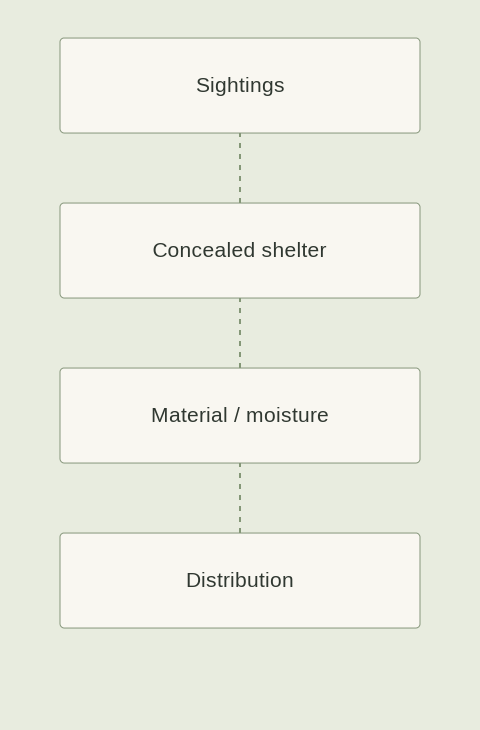
Sightings
Mark the room and edge where an insect was seen.
Concealed shelter
Inspect accessible cracks, cupboards and service entries.
Material / moisture
Check relevant paper storage and damp history.
Distribution
Decide whether adjoining rooms need monitoring.
Build a room pattern before applying a product
Tell us where and when insects are noticed: beside a bath, in a kitchen cupboard, around book storage or in a dry bedroom. Record whether sightings are isolated or recurring and whether small insects or shed skins have been seen. A simple room record helps separate a local harbourage from a wider distribution that needs further checks.
The technician examines accessible skirting joints, plumbing penetrations, cabinet bases and sheltered gaps. Paper, cardboard and stored materials may also be relevant. The home inspection map is a starting point for understanding these routes; the actual survey follows the evidence and the safe access available in your property.
Look at moisture without promising a building survey
Condensation, persistent damp and a leak history can be important where common silverfish are involved. We discuss ventilation, recent water problems and locations that stay humid. Accessible surfaces and nearby service routes may explain why a particular gap offers shelter, but a pest inspection is not a substitute for a plumbing or structural damp investigation.
If an unresolved building defect is suspected, record it and arrange the appropriate trade assessment. Do not seal a wet cavity or cover a leak simply to hide insects. Reducing suitable conditions supports control, while treatment alone cannot repair a damaged pipe. Where identification indicates a species less dependent on damp, the plan may need broader monitoring instead of focusing only on the bathroom.
What the room pattern suggests
| Observation | Inspection question | Possible next step |
|---|---|---|
| Bathroom sightings | Species and damp-associated shelter? | Check gaps and moisture history |
| Several dry rooms | Wider distribution or long-tailed species? | Identification and mapped monitoring |
| Damaged paper storage | Fresh feeding and concealed insects? | Material-sensitive inspection |
Paper storage can be as relevant as a tiled floor
Silverfish can feed on starchy and other suitable materials, including some papers, bindings and adhesives. We check accessible stored material in relation to the sightings, looking for insects, shed skins and fresh surface damage rather than assuming every mark is caused by the current pest. Valuable documents and delicate finishes should be identified before any handling or application is considered.
Cardboard stacks and undisturbed cupboards can make inspection difficult. Ask which materials need moving and how to contain or inspect them before placing them in another room. If the main evidence is holes in wool rather than activity around papers, moth control may be the more relevant service to investigate.
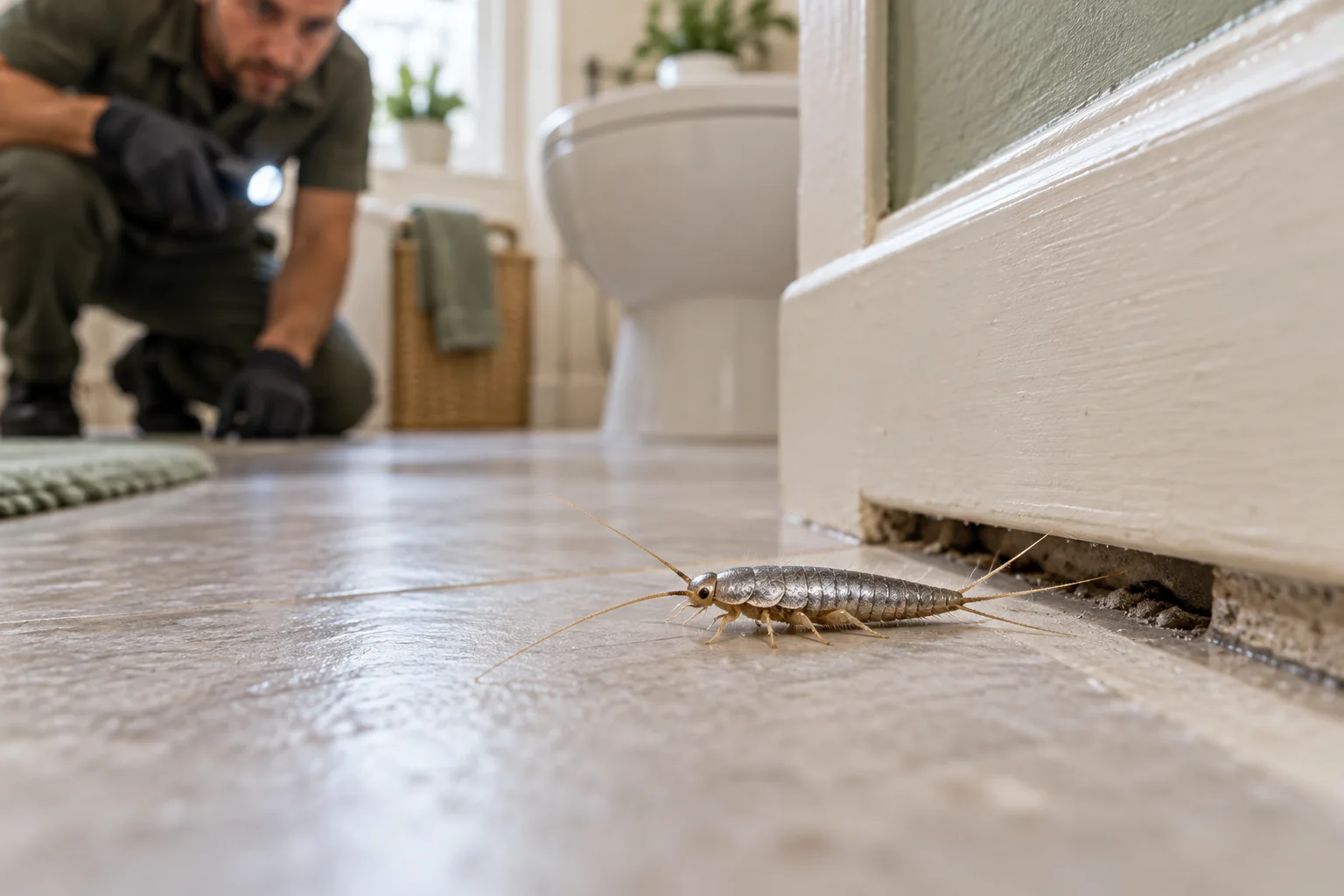
Prepare the useful access points, not every cupboard
Before attendance, clear safe access to the affected floor edges and plumbing areas requested in the preparation plan. Remove small loose objects where necessary, but do not detach bath panels, appliances or fixed units without agreement. Let us know about difficult access, electrical equipment, fragile surfaces and any items that cannot be moved.
Protect food, utensils, medicines, toys and pet equipment as instructed for the selected method. Tell us about children, pets, aquariums and relevant sensitivities before treatment. Do not add household sprays to the gaps while waiting for advice. Explain any previous product use, because it can affect how findings are interpreted and which later approach is appropriate.
Silverfish management options
| Measure | Useful role | Limitation | Review |
|---|---|---|---|
| Moisture improvement | Reduce suitable damp conditions | Species and building defects still matter | Track repairs and sightings |
| Monitoring | Map distribution and trends | Not proof of total absence | Keep locations and check dates |
| Targeted treatment | Address suitable active harbourages | Authorised uses and access limit placement | Review evidence and precautions |
| Suitable bait approach | Selected species and circumstances | Not appropriate in every setting | Assess uptake and continuing activity |
Target the harbourage rather than the whole room
An appropriate plan may use monitoring, suitable targeted insecticidal treatment and environmental management. Application sites are chosen from the evidence, surface type and authorised product use. Cracks and crevices may need a different approach from an open tile surface; areas that cannot be reached safely must be recorded as limitations rather than assumed treated.
The technician explains why the method suits the identified insect and where it is intended to work. It is not necessary or appropriate to coat every book, cupboard or possession. The quotation should distinguish the accessible treatment area, any monitoring and work outside the agreed scope. Equipment may include a torch, magnifier, suitable monitors and application tools selected for the actual plan.
Drying, monitors and products do different jobs
Moisture reduction can make conditions less favourable for damp-associated silverfish, but it does not by itself prove that insects are absent. Monitoring can reveal activity and distribution, yet a low catch is not a complete census of every concealed void. A treatment product also has limits: it must be suitable for the species, surface and use setting.
For wider long-tailed silverfish activity, a species-specific approach may be needed across the relevant rooms or service routes. Suitable baiting may be considered where an authorised product and the circumstances support it; this should not be promised before assessment. The plan should explain why selected measures complement one another and which observations will trigger a review.
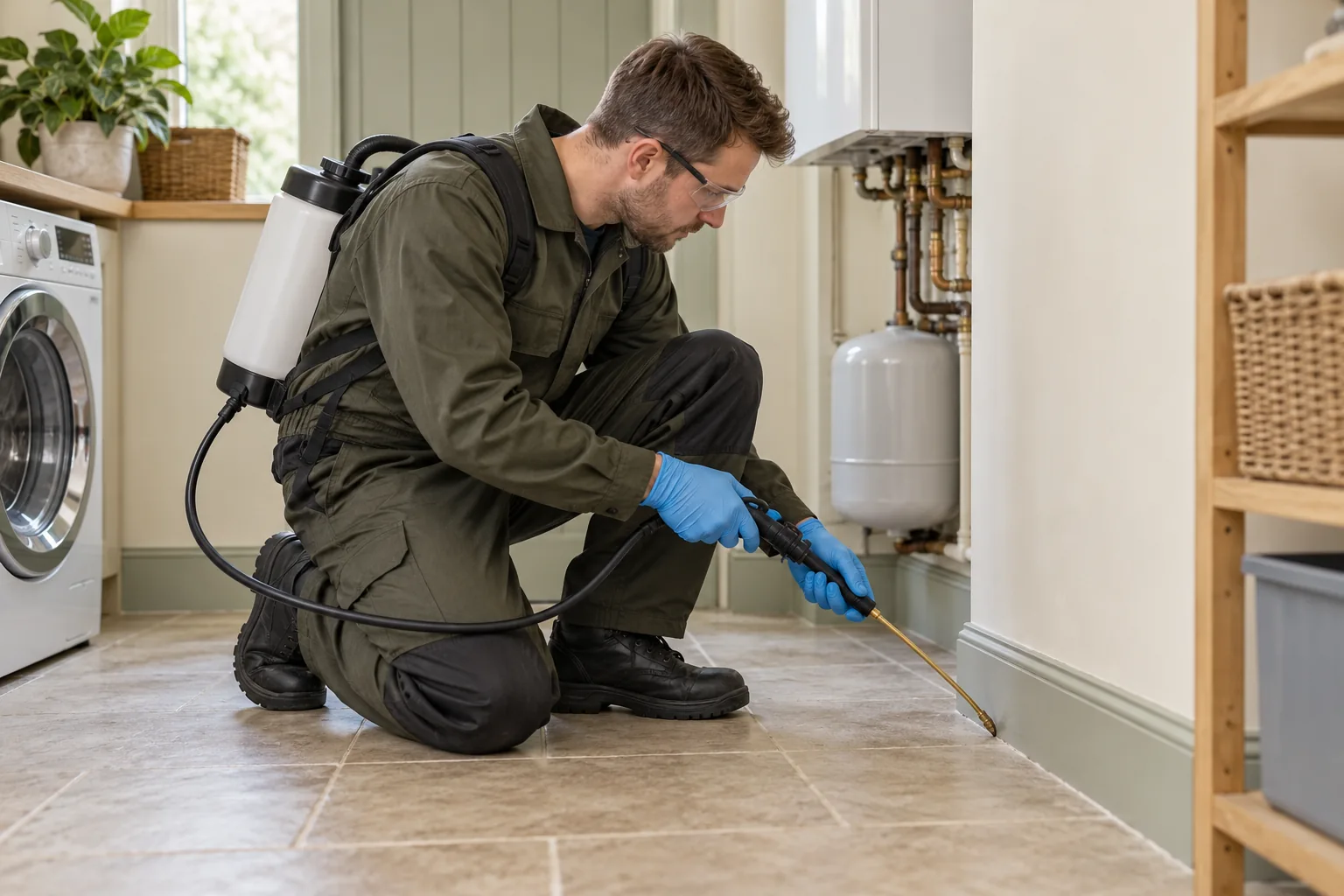
Keep the restrictions clear for each room
Before any application, agree who can access the work area and when. The technician should explain exclusions, drying or return conditions and which surfaces must not be washed or disturbed. A general assumption that a bathroom can be used immediately is not a replacement for the instructions for the actual method and product.
If you need continuous access to a particular room, raise this when arranging the visit. Different areas may need separate planning, especially where a child, pet or person with limited mobility uses the space. If the precautions cannot be followed, treatment should be reconsidered before it starts. Keep the written instructions so later cleaning does not unintentionally remove or spread a treatment.
Preparation around concealed gaps
| Before attendance | Reason | Customer action |
|---|---|---|
| Clear accessible edges | Allow targeted inspection | Move only safe lightweight items |
| Flag valuable papers | Avoid damage during handling | Identify items before any product use |
| Explain previous sprays | Inform method selection | Provide the product name and location |
Two linked control tracks

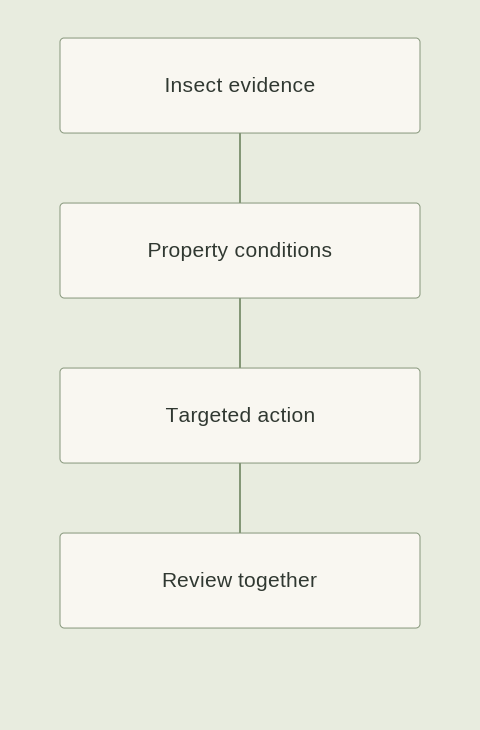
Insect evidence
Identify and define active locations.
Property conditions
Arrange relevant moisture or access improvements.
Targeted action
Apply the agreed suitable measures.
Review together
Compare sightings with treatment and repair completion.
Monitoring should answer a specific question
Where monitors are used, agree their locations and the checking arrangement. They may help show whether insects are concentrated around one wall, present in several rooms or continuing after work. Avoid moving them to a new position simply because a sighting occurs elsewhere; the old and new locations may both matter for interpreting the pattern.
Report the date, room and type of evidence, and note any change to ventilation, leaks, storage or access. Do not judge the result solely from a single insect. Continuing activity may justify further identification, an overlooked harbourage check, an adjustment to environmental measures or a later treatment visit, depending on what the evidence shows.

A quotation based on access and distribution
The price depends on affected rooms, activity distribution, accessible harbourages, method and monitoring. Ask what inspection, treatment and follow-up include, and whether access behind fixed units or into shared routes needs separate authorisation.
For repeated activity in sensitive storage or a room that cannot be used normally, explain the practical impact through urgent pest enquiries. A specific arrival time is not promised without confirmation. Call with your postcode, room pattern and any leak history so the next available inspection can be discussed.
Reduce shelter while keeping the evidence useful
After any treatment restrictions have ended, follow the cleaning and storage recommendations related to your findings. Keep accessible edges manageable, review unnecessary cardboard and arrange repairs for confirmed moisture problems. Inspect materials before transferring them into clean storage. These actions reduce favourable conditions without treating every object as a source.
If the signs change, seek a fresh assessment rather than repeating the same product indefinitely. Bristly larvae and fabric damage need a carpet beetle investigation, while a different room pattern may change the silverfish plan. The broader Harrow pest control service can help direct the enquiry to the right inspection.
Questions about silverfish control
Does one silverfish mean there is a leak?
Not necessarily. Common silverfish can be associated with damp, but species and location matter. Repeated sightings near plumbing justify a closer look; insects in dry rooms may require identification and broader monitoring.
Are long-tailed silverfish treated in the same way as common silverfish?
The plan should reflect the identified species. Long-tailed silverfish can be distributed beyond damp rooms, so a bathroom-only approach may miss relevant activity. The technician explains why the recommended scope is appropriate.
Should I remove a bath panel before the visit?
Only if this has been agreed and can be done safely by the appropriate person. Fixed panels, electrical fittings and inaccessible plumbing need an access discussion; do not damage the property to make a pest inspection possible.
Can all of my books be sprayed?
No blanket application should be assumed. Paper, bindings and finishes can be sensitive, and products have authorised use restrictions. Mention valuable documents before work and ask about inspection and material-handling options.
What makes a monitor useful?
Its position and checking history need to relate to a question, such as whether activity is localised or continuing. A monitor moved between rooms without a record is much harder to interpret.
Can pest treatment fix condensation?
No. Environmental recommendations may accompany treatment, but ventilation, plumbing or building defects require appropriate investigation and repair. The pest plan should identify this limitation rather than promising that an application resolves damp.