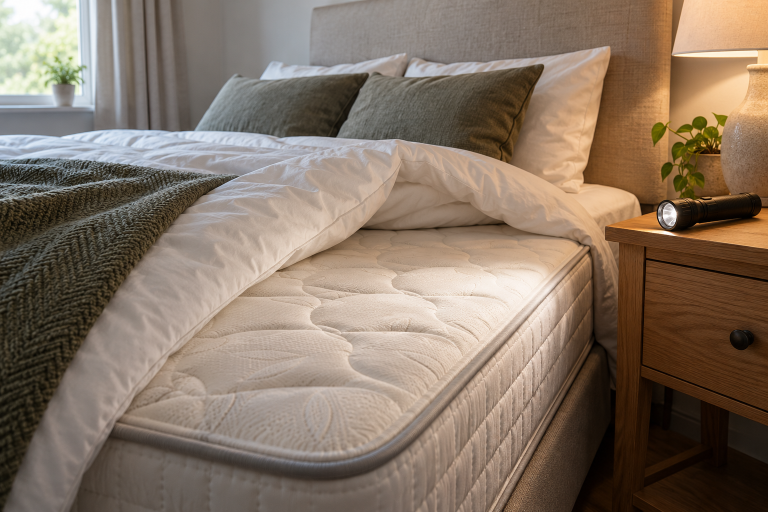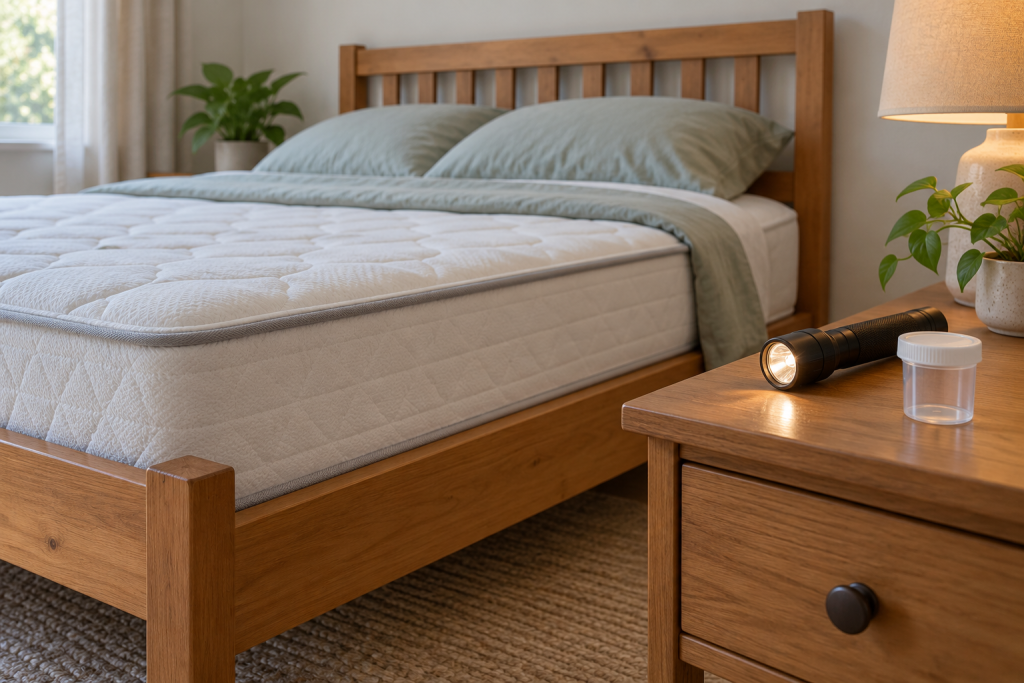
A bed frame contains many of the narrow joints that bed bugs can use as shelter. Inspecting it can therefore be more informative than checking a mattress alone. The challenge is to look carefully without carrying suspect belongings into other rooms or dismantling the bed so thoroughly that evidence is lost. This guide sets out a measured inspection for a home where bed bugs are suspected but not yet confirmed.
Prepare the room before touching the bed
Choose a time when you can inspect slowly with good light. Have a torch, phone camera, small clear container for a suspect insect and sealable bags for items that must be moved. Keep children and pets out of the work area. Photograph the bed as it stands, including the frame, headboard and nearby furniture. Do not spray insecticide before checking; it can disturb insects and obscure evidence.
Leave the bed in its room. Do not carry the frame, mattress or loose bedding to a hallway for better light. If bed bugs are present, moving untreated items can create new hiding places. The bed bug treatment service can advise what preparation is suitable after identification.
Start with accessible joints
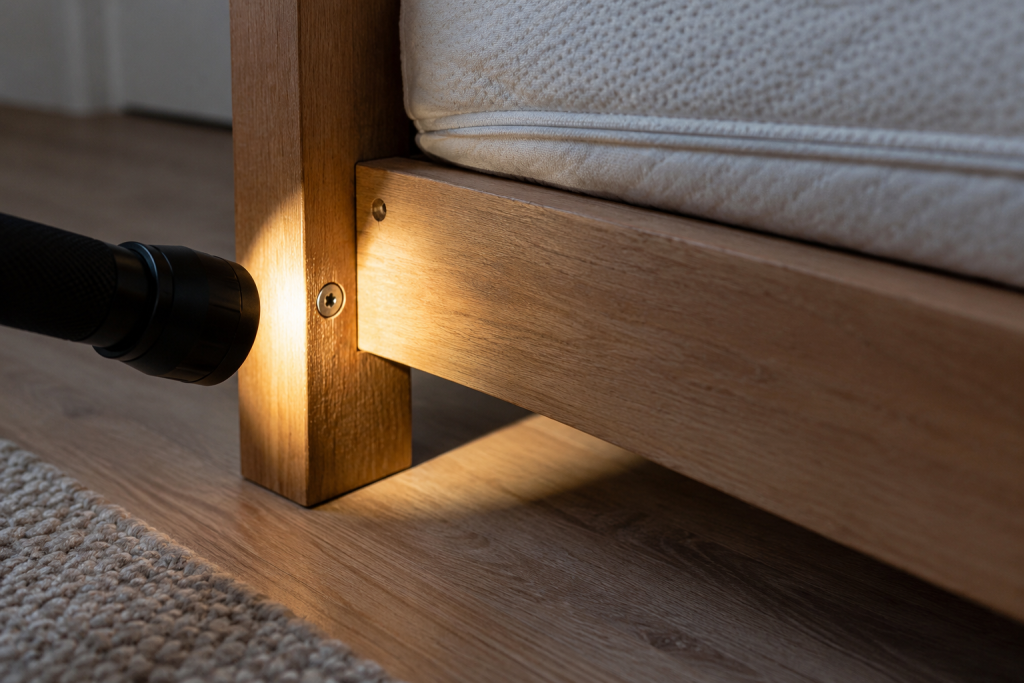
Use the torch to examine the headboard edges, frame corners, screw holes, slat ends and joins where wood or metal meets fabric. Look for a live insect, dark spotting or pale shed skins in protected crevices. Take a wide photograph showing the position, then a close photograph with scale. Do not scrape or wipe away a mark until it has been recorded. A dark speck alone may be dust, paint or unrelated insect debris.
Bed bugs are flat and can shelter in very narrow places. That does not mean every joint needs to be forced open. Check what is visible and note which areas a professional may need to access. Avoid putting fingers into blind cracks or lifting a heavy frame alone. A broken slat or loose fitting can be a physical hazard unrelated to pests.
Handle bedding in a controlled way
Fold back bedding on the bed so the mattress edge and frame are visible. Do not shake sheets over the floor or carry them loose to another room. If laundering is needed, place washable items in a sealed bag in the bedroom and carry the bag directly to the machine. Follow care labels and suitable laundering guidance. Keep cleaned items separate from anything still awaiting assessment.
A mattress cover or encasement should not be removed casually if it was installed as part of a previous treatment plan. Ask the provider what its role is. If there is no cover, inspect mattress seams and labels without cutting the fabric. A clear mark on a seam can guide the frame inspection, but the frame may still contain the main harbourage.
Check nearby items without spreading them
Bedside tables, fabric headboards, skirting and luggage near the bed may also need inspection. Work from the bed outward, photographing each location before moving objects. Place a small suspect item into a sealed bag if it needs later examination. Avoid transferring an open pile of clothing into another bedroom. If a drawer must be checked, open it in place and use a torch rather than emptying it across the floor.
Keep a simple list of items moved and where they are now. This helps a professional plan treatment and prevents clean items being returned to an untreated area too soon. Clutter makes inspection harder, but hurried disposal can be worse. Many belongings can be handled through laundering, suitable heat or other planned methods after assessment.
Should you take the frame apart?
Limited disassembly may be appropriate when the design allows it and a professional has advised how to handle the parts. Before confirmation, avoid dismantling a large frame unnecessarily. It can dislodge insects, damage the bed and hide the original location of evidence. Do not unscrew electrical fittings in an adjustable bed or open a powered component. Seek the manufacturer’s or a competent technician’s advice for those areas.
If you do remove an easily detachable headboard, keep it in the room, support it safely and photograph both sides and the fixing points. Do not lean it against a sofa or place it in a communal corridor. If it is too heavy, leave it for a professional visit. Safe access matters more than a complete DIY examination.
What does convincing evidence look like?
A live insect identified as a bed bug is strong evidence. Several characteristic signs in protected joints, such as dark spots and shed skins, may also support identification. A single blood spot or unexplained bite is weaker. An adult bed bug is small, flat and oval when unfed, but other insects may resemble it at a glance. If possible, retain a suspect insect in a sealed clear container rather than crushing it.
Carpet beetle larvae and their shed skins can appear in bedrooms, especially where natural fibres are present. Their bristly appearance and habits differ from bed bugs. If that is what you find, a carpet beetle assessment may be relevant. The point of inspection is to find the right cause, not to confirm the first suspicion.
Avoid unplanned chemicals and heat
Do not pour boiling water onto a frame or use a domestic heater in an attempt to treat it. Uneven heat can damage furniture, create a fire risk and leave sheltered insects untouched. Household sprays may be unsuitable for bedding or children and pets. Professional bed bug heat treatment involves equipment, monitoring and a plan for sensitive items; it is not the same as warming a room.
If bed bugs are confirmed, ask which method is proposed, what preparation is required and what follow-up will establish the result. Do not throw away a bed frame without advice. Disposal can be necessary in some cases, but careless movement may transfer insects to shared areas or another home.
Document the result
Make a short record of the joints checked, the evidence found and the date. If the inspection is inconclusive, do not repeat a disruptive full search every night. Agree a monitoring plan and review it if a live insect or new characteristic signs appear. A professional may use additional methods to inspect inaccessible joints. Your photographs of the frame before items moved will help.
Label photographs by position, such as “left headboard fixing” or “front slat joint”, rather than relying on a gallery of similar close-ups. If you find several marks, an overview image showing their relationship is valuable. Keep the original image files so a specialist can zoom in. A blurry image of a tiny object cannot reliably establish its shape, so a specimen or in-person check may still be needed.
In a flat or shared house, tell the relevant manager if bed bugs are confirmed or strongly suspected, especially when adjoining rooms may need access. Share observations rather than attributing the problem to a person. Coordinated handling reduces the chance that items are moved between rooms without a plan.
When to request assessment
A live suspect insect, repeated dark spotting in frame joints, cast skins or signs on more than one bed warrant prompt assessment. If the only concern is itchy skin, seek medical advice for the symptoms and continue gathering room evidence. A pest professional can identify the insect and explain the appropriate treatment. For a Harrow property, send frame photographs and any specimen details through the contact page.