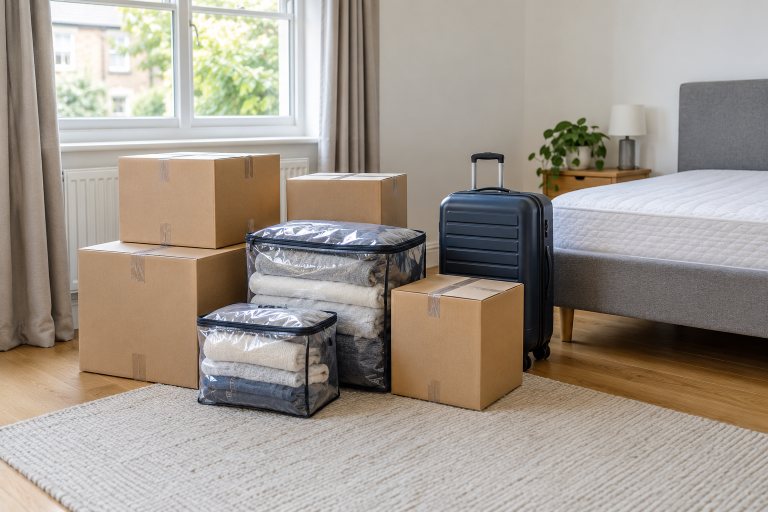
Finding a small insect in a suitcase or waking with unexplained marks after a trip can make the journey home stressful. Bed bugs can travel with belongings, but bites alone cannot prove that they are present or where they came from. The best response is a calm, contained check of luggage and sleeping areas. This guide explains what to do on arrival, how to handle washable items and when to ask for identification.
Keep luggage in a controllable place
On returning home, avoid placing a suitcase directly on the bed or upholstered furniture while you inspect it. Choose a hard, well-lit surface where you can see the seams and clean afterwards. If you are already home and the bag has been in a bedroom, do not drag it through several rooms to search. Work where it is and contain any items you need to move. The aim is to avoid scattering a possible hitchhiker.
Photograph any suspect insect in place before touching it. If practical, capture it in a sealed clear container for identification. Do not crush it into a stain that cannot be assessed. A bed bug assessment can determine whether it is the relevant species before treatment decisions are made.
Inspect the suitcase carefully
Use a torch to examine zip seams, piping, pockets, handles and the folds around wheels. Open compartments one at a time. Look for a live insect, pale shed skins or dark spotting, but remember that one dark mark is not conclusive. Photograph both the overall bag and close details with scale. Avoid shaking the suitcase over a carpet or using a brush that may scatter material.
If the bag is soft-sided, take care with its folds. A hard case is easier to wipe, but insects can still shelter in joints. Do not spray an unverified chemical into every pocket. Product suitability and contact time matter, and residues may damage belongings. If evidence is strong, ask a professional how to treat or isolate the particular bag.

Handle clothing without spreading it
Keep worn and unworn clothing together only long enough to sort it in the inspection area. Bag washable items before carrying them to the washing machine. Follow the garment care label and use an appropriate hot wash or tumble-dry cycle where the item can tolerate it. The precise method should be suitable for the fabric; a delicate item may need professional advice. Keep processed clothing in a clean, closed container away from the unprocessed bag.
Do not shake garments to “dislodge” insects. A visual check is helpful, but small stages can be hard to see. Do not assume that a cold rinse or brief exposure to sunshine is reliable treatment. If an item cannot be washed or safely heated, isolate it and ask what options are appropriate. Unplanned heating with a household appliance can damage property or create a fire risk.
Check the room where you unpacked
If the suitcase was on a bed, inspect the mattress seams, bed frame and nearby floor edge. Record the date you returned and where the bag was placed. A single visit to a hotel or other accommodation does not mean the home is infested. If an insect is found, focus on identification and the immediate area first. Do not move to a different bedroom solely because you are worried; changing sleeping locations can complicate an inspection if bed bugs are present.
Look for environmental evidence over time: a live insect, dark spots in protected joints or cast skins. Skin reactions can be delayed and differ between people, so new marks do not establish the exact place of exposure. Seek medical advice if symptoms need care, and pursue a separate pest identification for the home.
Do not blame the venue without evidence
Travel timing is a useful clue, but it is rarely possible to prove a source from bites alone. A suspect insect found in a bag may have entered before, during or after the trip. Keep receipts and dates if needed, but describe what you observed rather than making a certainty claim. Clear photographs and a retained specimen help more than a dramatic account of symptoms.
If you found a confirmed insect at accommodation, alert the provider through its usual channel with factual details. This article is concerned with protecting the home after travel; any report to a venue should be accurate and limited to what you can verify. Avoid moving suspect luggage to someone else’s home while you wait for a response.
When is home treatment warranted?
A confirmed bed bug in luggage does not automatically mean a widespread home infestation, but it warrants a careful check and professional advice. A live insect in the bed area, repeated characteristic signs or multiple locations may call for treatment. Ask the specialist what rooms were inspected, how the species was identified and what monitoring is appropriate. The chosen approach depends on the evidence, property and belongings.
Professional bed bug heat treatment is an option in some circumstances, but sensitive objects and room conditions must be assessed. Heat is not a substitute for identification. Chemical or other methods may also be considered by a competent provider. Avoid DIY room heating or unlabelled sprays.
What if the insect is something else?
A tiny insect found after travel may be a carpet beetle, flea or another species. Their control needs differ. An insect that jumps might prompt consideration of flea treatment, while bristly larvae in fabric may point towards carpet beetle treatment. Appearance in a poor photo is not enough for certainty. Keep the specimen where practical.
If no insect or environmental signs are found, do not treat every room because of one skin mark. Continue measured monitoring and seek medical advice for the symptoms. Repeated inspections should focus on the same likely harbourages so changes can be noticed. A dated record is more helpful than a nightly search of the entire home.
Planning for future trips
Inspect a bed and headboard briefly before placing luggage on it, use a luggage rack or hard surface where available and keep bags closed when not in use. On return, check seams and handle laundry in a contained way. These habits reduce uncertainty, but no routine guarantees that an insect cannot travel. Avoid treating luggage with products that are not labelled for that use.
Travel routines should be practical enough to repeat. You do not need to discard a suitcase after every trip or wash belongings that cannot tolerate a hot cycle. Focus extra attention when a live insect or characteristic signs were actually found. If uncertain, ask for professional identification before taking disruptive measures.
Keep a small torch and a few sealable bags with luggage if you travel frequently. They make a controlled inspection easier without turning packing into a complex ritual. Check the bag again before putting it into long-term storage, especially around wheels and zip folds. Store it in a location where a later check is possible, rather than burying it beneath loose clothing.
When to request help
Request an assessment if you find a suspect insect, see repeated signs in luggage or discover evidence in the bed area after returning. Provide the travel dates, where luggage was placed, photographs and any retained specimen. For a Harrow home, you can send those details through the contact page. The most useful outcome is a reliable identification and a plan proportionate to the evidence.