

HARROW · HA1 & HA2 / RODENT CONTROL
Mice Control Harrow
Mice control begins by finding where activity is occurring and how mice can reach the affected space. We inspect accessible areas, discuss suitable treatment and explain what monitoring and proofing may be needed.
Mouse activity near food? Explain the affected rooms and any immediate access concerns. ↗

Start with evidence, rather than noise alone
A mouse seen in the kitchen, small droppings or newly gnawed packaging provide different clues from a sound behind a wall. Tell us which signs appeared first, where they were found and whether activity has spread. Do not handle droppings or disturb contaminated material to obtain a picture.
The inspection considers whether the evidence points to house mice or another animal. Larger droppings or external runs may need a rat control assessment; repeated daytime roof activity may require a separate squirrel inspection. Identification affects the control options.

Following activity through cupboards and service gaps
Accessible kitchen units, skirting edges, stored-food areas and pipe penetrations are examined with a torch and suitable inspection tools. The specialist looks for droppings, gnawing, nesting material and routes between concealed and open spaces. A cupboard front can appear clear while activity continues behind a service panel or beneath a unit.
Access limitations are recorded. Moving a freestanding item may be reasonable, but dismantling fitted kitchens, opening electrical equipment or lifting fixed flooring needs separate agreement and appropriate trades. The purpose is to identify likely routes without implying that every hidden void has been examined. Our home inspection guide shows how adjoining spaces can connect.
Distinguishing current signs from an old problem
Old droppings or historic damage do not establish how many mice are currently present. The specialist compares the distribution of signs with recent sightings, accessible food and the property layout. Monitoring may be needed where evidence is uncertain or a route cannot be seen directly.
Keep a simple observation log: the room, date, approximate time and what was noticed. Share any previous pest treatments and the location of existing devices. Do not move another contractor’s equipment yourself. Knowing what has already been tried helps avoid incompatible work and makes the first inspection more useful.
A mouse inspection follows connected routes

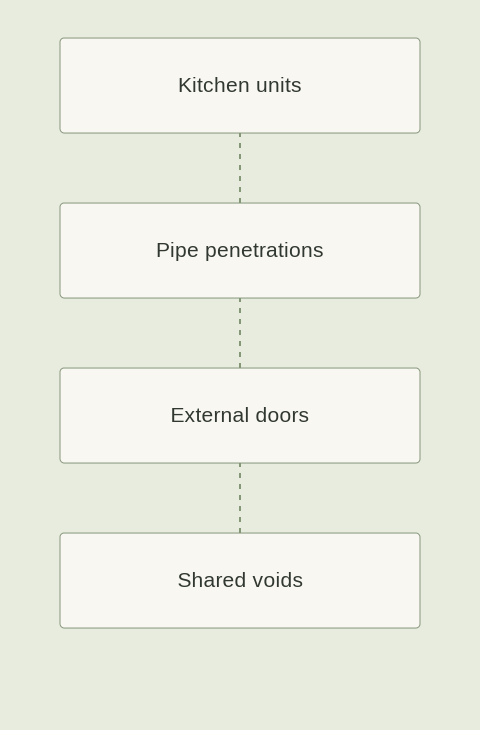
Kitchen units
Check accessible rear edges, plinth areas and stored-food signs.
Pipe penetrations
Inspect the gap and the space it connects to; do not obstruct services.
External doors
Assess low-level gaps and damaged seals.
Shared voids
Record access limits and arrange permission before further opening.
The evidence-to-action record
| Inspection focus | What it can show | Next consideration |
|---|---|---|
| Cupboard and pipe edges | Activity and likely travel routes | Accessible monitoring and proofing |
| Food and stored materials | Available food or nesting opportunities | Protection and housekeeping changes |
| Hidden or shared voids | Limits to the initial survey | Agree additional access or coordination |
Prepare access without losing the inspection context
Before the visit, agree which cupboards or floor edges need access. Remove ordinary clutter only where it is safe to do so, keep food in closed containers and make sure the specialist can reach the relevant areas. Keep children and pets away from suspected contamination. Explain any mobility or access restrictions when arranging the appointment.
Photograph signs before routine cleaning, if this can be done without contact. Ask how contaminated areas should be handled rather than sweeping or vacuuming suspect material dry. Do not pull out heavy appliances or enter an unboarded loft to help the inspection. The preparation plan should protect occupants as well as expose the relevant evidence.
Agreeing a practical control plan
The recommendation considers the species, activity, accessible routes and risks to people and other animals. Inspection, food management, physical exclusion and monitoring belong in the same plan. Control measures may include suitable enclosed traps, non-toxic monitoring or authorised rodenticide where the assessment supports it. Poison is not an automatic response to every sighting.
The specialist should explain what will be placed, where it can be accessed and what you need to leave undisturbed. Any chemical method must follow the authorised product conditions. The quotation should distinguish inspection and treatment from larger repairs. The wider rodent control category explains why different rodents require different assessments.
Controlled placement and equipment on site
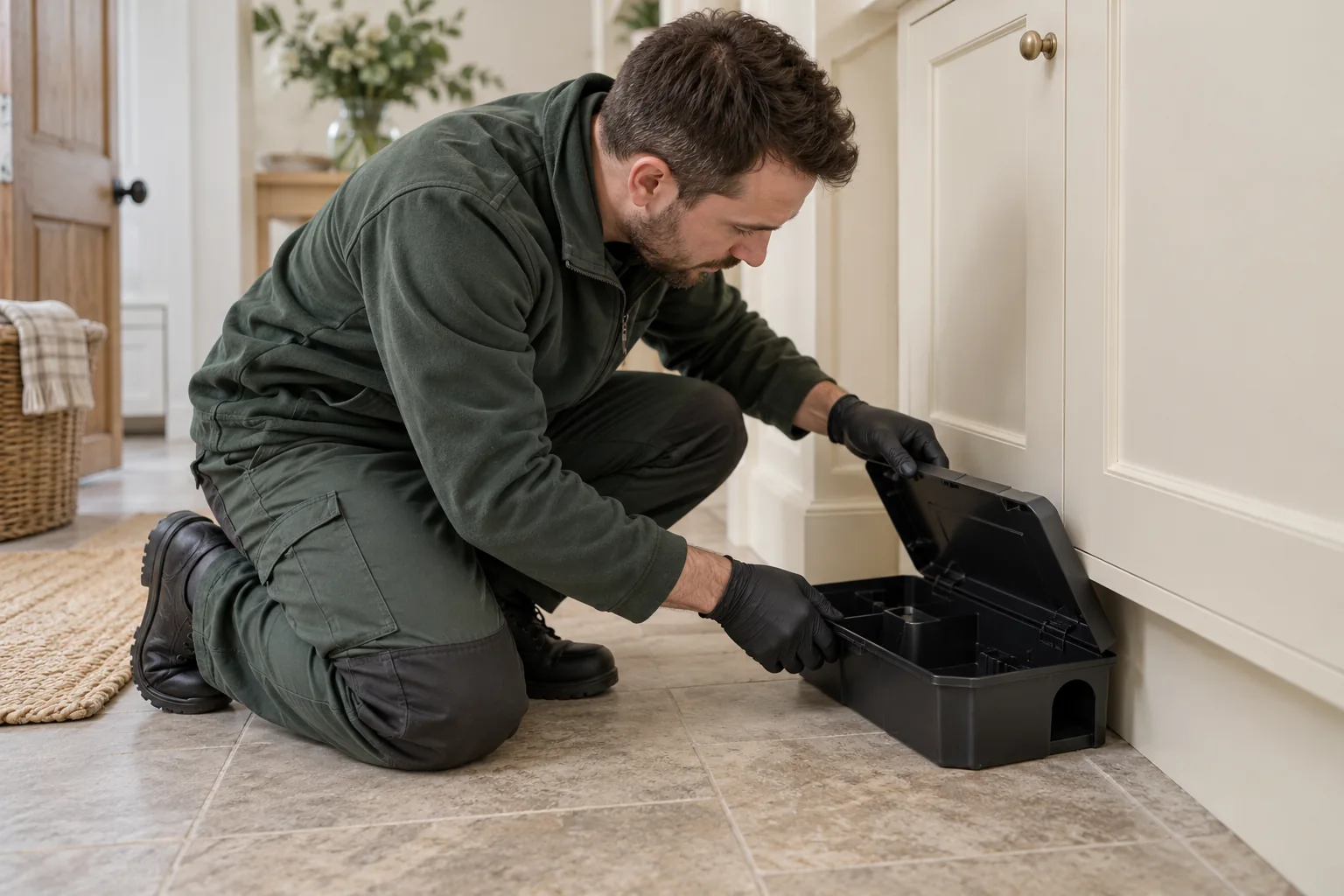
A torch, mirror or other suitable inspection tools may be used, with protective equipment selected for the conditions. Monitoring devices or protected control points can then be positioned in relation to the activity found. Location matters: placing a device where it cannot be checked, where it can be disturbed or where non-target animals can reach it undermines the plan.
The equipment selected depends on the assessment, rather than a fixed kit promised for every property. The technician records control locations and explains restrictions around them. Do not open, reposition or add material to a control station. Tell other occupants, cleaners and contractors where access must remain restricted, without inviting anyone to handle the device.
Keeping treatment separate from everyday use
Discuss pets, children, visiting carers and any relevant sensitivities before treatment is selected. Food, utensils and surfaces used for food preparation must be protected as instructed. Equipment placement should account for how rooms are used, including places where a pet can squeeze behind furniture or a child can reach into a cupboard.
Ask what to do if a device is damaged or moved, and whom to contact about a dead rodent or suspected exposure. Keep people and animals away from the affected item while seeking advice. Mouse control is not a reason to overlook a separate hazard: suspected damaged wiring or another building defect may require an appropriate trade.
Access and preparation for a mouse visit
| Before the visit | Why it matters | Customer action |
|---|---|---|
| Affected cupboards | Enables a useful survey | Agree what to clear without disturbing signs |
| Pets and children | Changes placement and access risks | Explain routines and keep affected areas restricted |
| Previous devices | Prevents confusion or interference | Give locations and contractor details |
| Shared building areas | May require permission | Arrange the owner or manager’s access approval |
Proofing the routes that remain
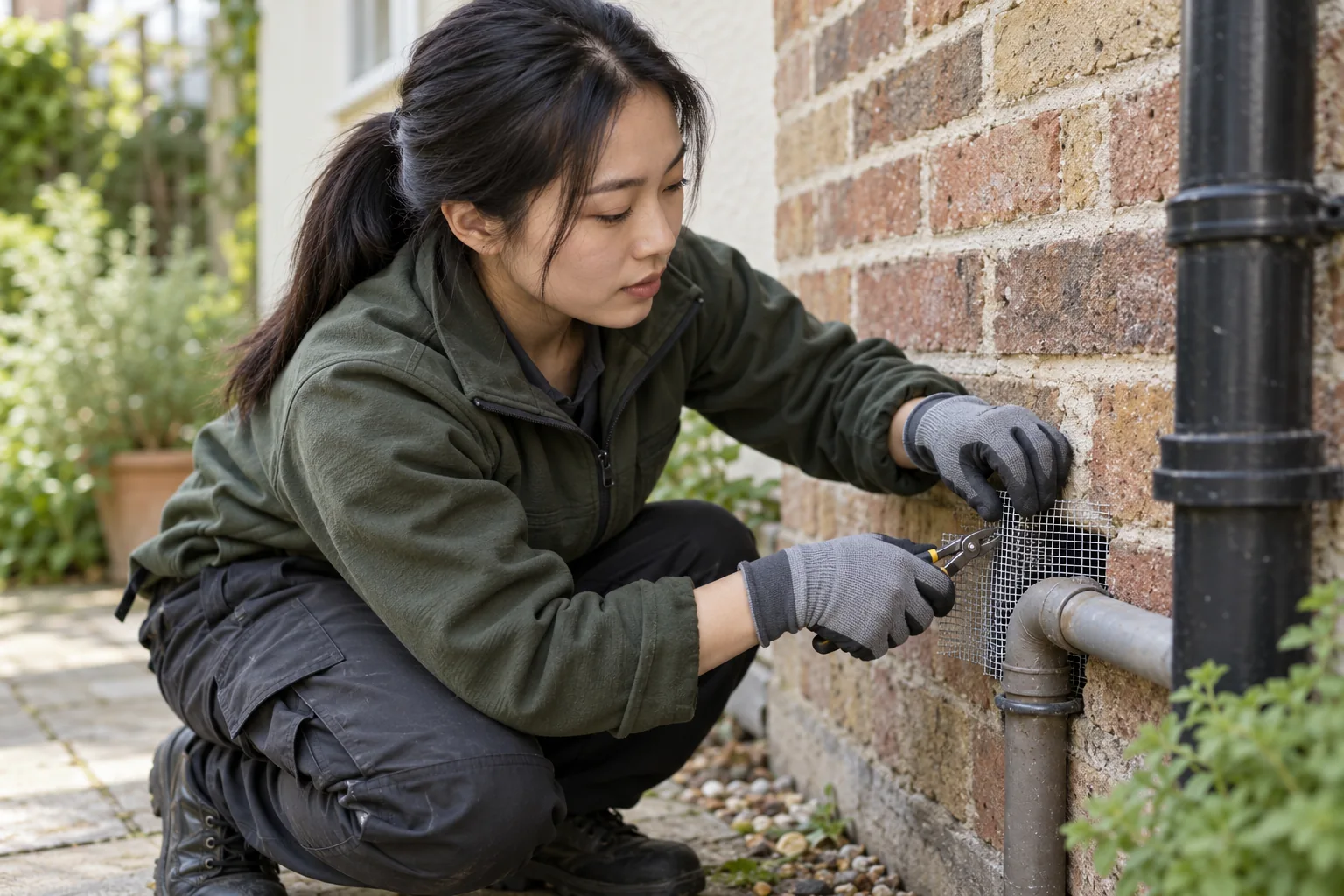
Accessible gaps around pipes, external doors, vents and damaged building fabric are reviewed. Recommended proofing needs to resist gnawing and suit the surface. Metal mesh, appropriate seals or repairs may be considered, but ventilation, drainage and required service access must remain functional. Simply covering a visible hole without understanding the route can leave other entry points untreated.
The sequence is agreed with the control plan. Some accessible gaps may be addressed during the work; extensive defects or inaccessible routes may need separate repairs. In a flat, a shared riser or adjoining unit can change what one occupier can achieve. Permission from the owner or managing agent may be needed before common parts are altered.
What the follow-up is intended to establish
A return inspection compares new observations with the original record, checks control locations and reviews whether recommended changes have been completed. It may reveal ongoing activity, a newly accessible route or a device that has been disturbed. Further work follows that evidence; it should not be a repeat application without a reason.
Agree the visit plan and any further charges before accepting the quotation. The number and spacing of checks depend on the circumstances, method and access. Tell us about fresh sightings promptly and keep the record consistent. When treatment ends, ask what happens to remaining devices and how to report activity that appears after the agreed programme.
What monitoring changes in the plan
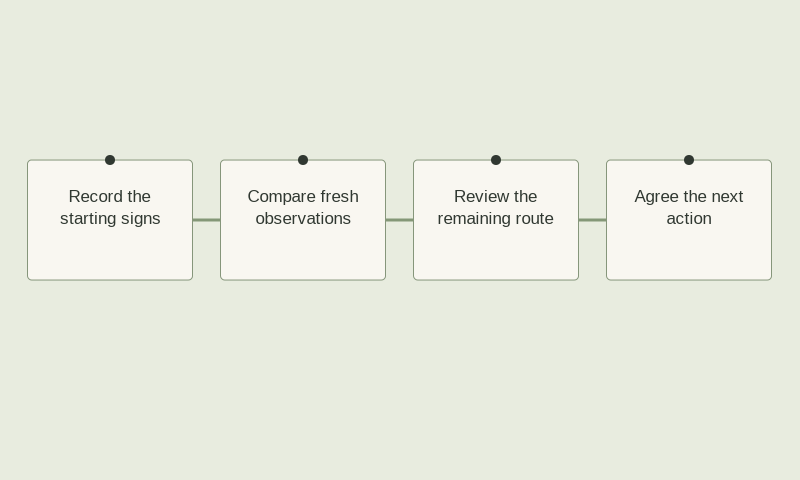
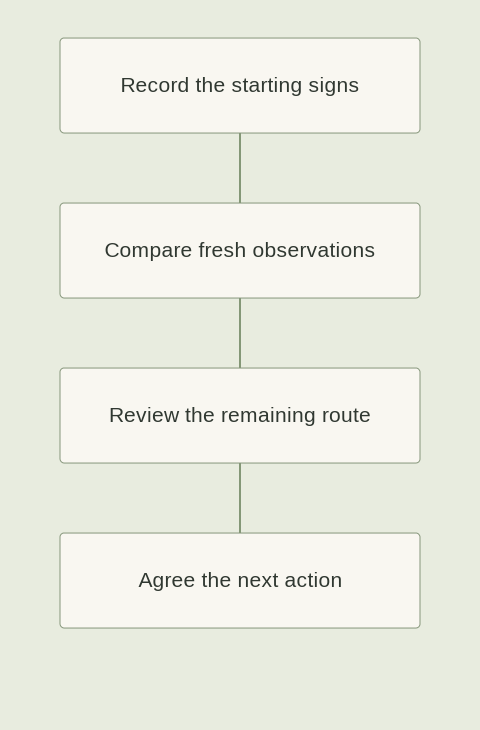
Record the starting signs
Map sightings and accessible evidence before control.
Compare fresh observations
Check devices and the location of any renewed activity.
Review the remaining route
Reassess proofing, food access and disturbed devices.
Agree the next action
Continue, adjust or conclude work according to the findings.
Control approaches and their limits
| Approach | When considered | Limitations | Review |
|---|---|---|---|
| Protected trapping | Suitable confirmed activity and safe placement | Needs correct positioning and checks | Examine devices and fresh evidence |
| Authorised rodenticide | Only where the assessment supports use | Product conditions and non-target risks apply | Review uptake, activity and remaining material |
| Proofing and food management | Identified access or attractants | Does not replace assessing mice already inside | Check repairs and renewed signs |
Harrow homes, rented properties and food premises
A terraced house may have connected voids; a flat can have shared service routes that are outside one occupier’s control. Neither property type proves the source of an infestation. Give the full postcode, occupancy and access details so the visit can focus on the relevant rooms rather than assumptions about a neighbourhood.
For rented accommodation, establish who authorises the work. For a shop or food business, explain operating hours, stock protection and any visit records needed. A treatment plan can require cooperation across adjoining units. Arranging that access is different from promising to inspect a neighbour’s property without permission.
A quotation based on the work required
The price depends on the extent of activity, property layout, inspection access, chosen control method and follow-up scope. Describe inaccessible areas and previous attempts when calling. Ask whether the quote includes the initial inspection, treatment materials, monitoring, accessible proofing and return visits, and which items would require a separate price.
Use the contact section to discuss the signs and arrange an assessment before deciding.
When mouse activity needs a prompt conversation
Repeated sightings where food is prepared, fresh damage or activity affecting vulnerable occupants deserve a prompt call. Tell us what makes the situation time-sensitive, where the signs are occurring and whether access or a food operation is affected. We can discuss the concern and the next available inspection; an arrival time is confirmed rather than assumed.
While waiting, protect food, restrict access to affected spaces and avoid adding pest products. For the information to have ready, see emergency pest control enquiries.
Questions about mice control
Do all kitchen cupboards have to be emptied?
Not automatically. Explain where signs were found so access can be agreed. The specialist may need selected cupboards cleared; extensive moving or dismantling should be discussed beforehand.
Can the source be confirmed from droppings alone?
Droppings support identification but need context. Their location, other signs and current observations help distinguish an old problem from ongoing activity. A hidden entry route may require monitoring.
Should I seal a gap before the appointment?
Take a photograph and discuss it first. A visible opening may connect to a larger route, and closing it without assessment can make inspection or control more difficult.
What if a mouse is seen after the first treatment?
Record where and when it appeared and contact the specialist. Continued activity needs assessment against the method and visit plan; do not move stations or add another product.
Will proofing cover major building repairs?
Only the agreed work is included. Defective floors, fitted units, roof access or extensive masonry repairs may need a separate quotation or an appropriate trade.
Can mice return from another flat?
Connected voids and shared services can allow movement. An inspection can identify possible routes, but common-area work or adjoining access requires agreement with the responsible owner or manager.