

HARROW · HA1 & HA2 / RODENT CONTROL
Rat Control Harrow
Rat activity needs a plan that connects the signs inside a building with the routes outside it. We inspect accessible areas, assess where rats are travelling and discuss suitable control before treatment begins. The aim is to reduce the activity and identify what is allowing it to continue. Tell us whether the problem is in a kitchen, loft, garden or business premises so the visit can be arranged around the actual evidence.
Fresh rat signs around an occupied or food area? Discuss the urgency and available inspection. ↗

Follow the evidence, not just the noise
A rat seen crossing a garden does not establish that it is nesting inside your home. Equally, damage found behind a cupboard can reveal activity that has stayed hidden. We bring sightings, droppings, gnawing, rub marks and possible runs together before deciding what needs attention.
Note the exact location and when the signs were first noticed. Photographs taken without disturbing the area can help. Do not handle droppings or a trapped animal. Smaller droppings or a brief glimpse may need comparison with mouse activity; choosing a control method before identification can miss the real problem.

A survey that connects the outside and inside
The inspection starts with your account of the problem and a check of safe access. Outside, relevant areas can include bin storage, shed edges, vegetation, accessible wall openings and the route of pipes into the building. Inside, we examine accessible floor edges, cupboards, service penetrations and any area where you have reported signs.
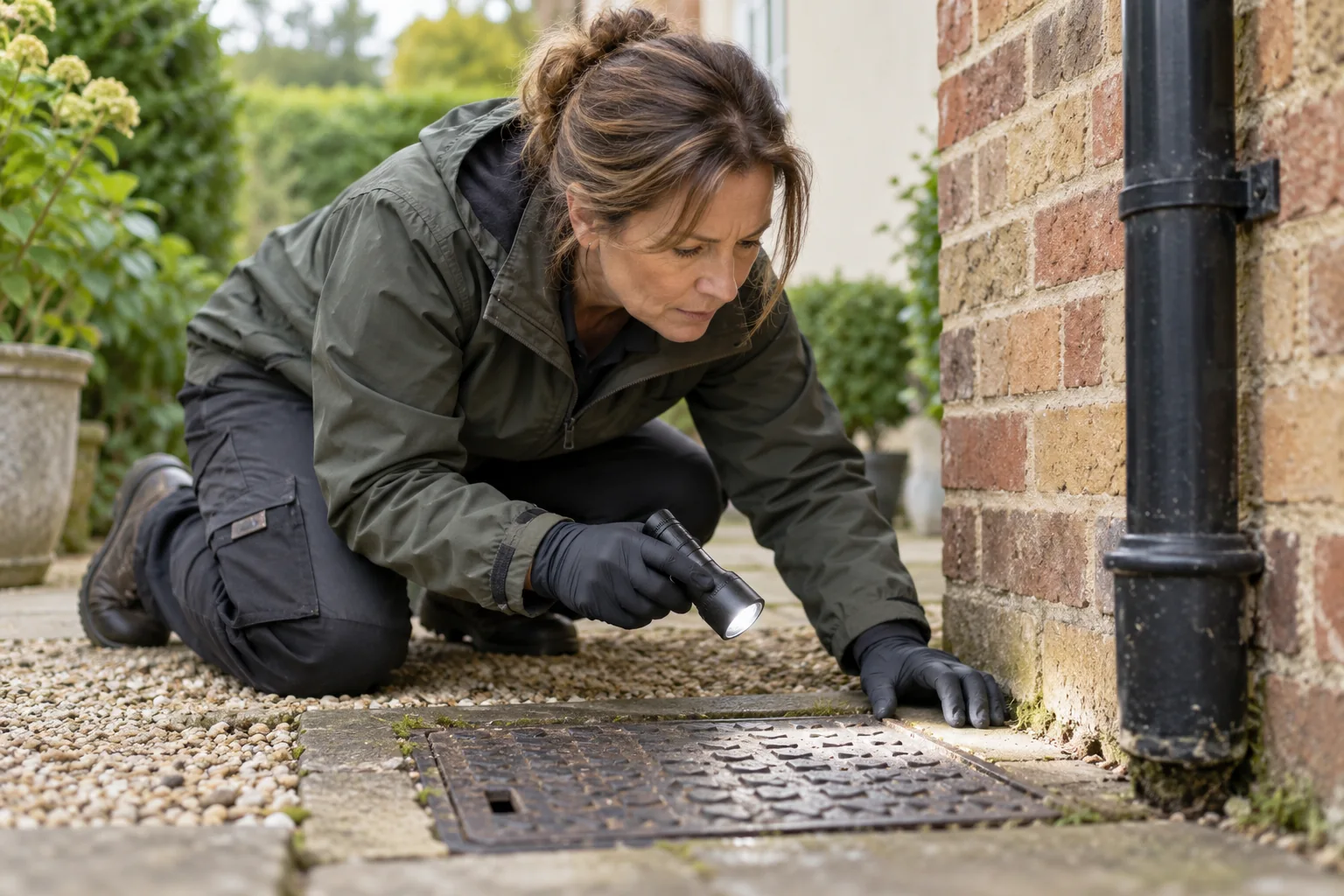
A torch and inspection mirror may help view a concealed edge without dismantling fittings. Moving appliances, entering a cramped void or lifting building materials needs agreement and a safe method. The property inspection guide shows why one room can be only part of the route. Any areas that cannot be checked are recorded as limitations.
When a drain or shared route needs attention
Rats can exploit defects that are outside the scope of a normal room inspection. A repeated pattern near drainage or a service duct may justify further investigation, but a rat sighting alone does not prove a drain defect.
A specialist drainage survey, building repair or access to a neighbouring property may need a separate contractor or authorisation. In flats and terraces, tell us about shared cupboards, recent plumbing work and recurring reports next door. A control plan can fail to hold if an active route remains open beyond the area we can inspect.
How external routes can connect with an indoor sighting

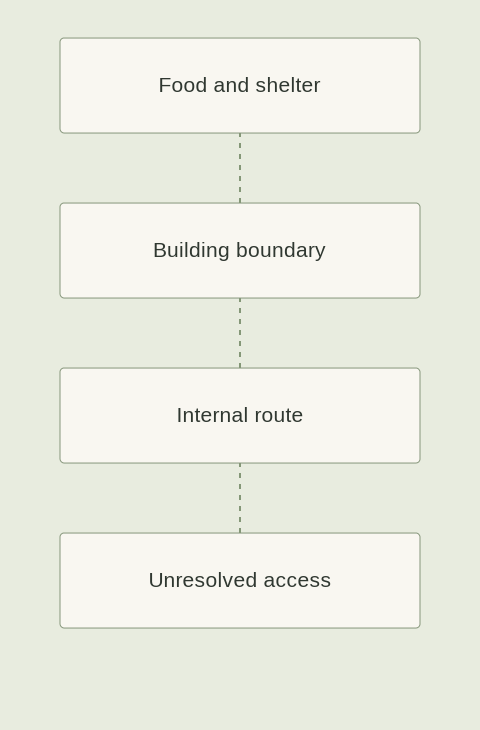
Food and shelter
Bins, storage and covered edges are assessed as possible supporting conditions.
Building boundary
Accessible doors, masonry and service openings are checked for actual evidence.
Internal route
Cupboards, floor edges and voids are connected to reported signs.
Unresolved access
Shared services or suspected drain defects may need separate investigation.
What the inspection can establish
| Evidence or area | What is checked | Possible next action |
|---|---|---|
| Garden runs or burrows | Relationship to shelter, food and building access | Identify active routes; assess control location |
| Kitchen or service void | Droppings, gnawing and accessible pipe gaps | Select protected control points; record inaccessible areas |
| Repeated activity near drainage | Pattern of entry and visible building defects | Discuss a separate drainage investigation if justified |
Agree the method and the boundary of the work
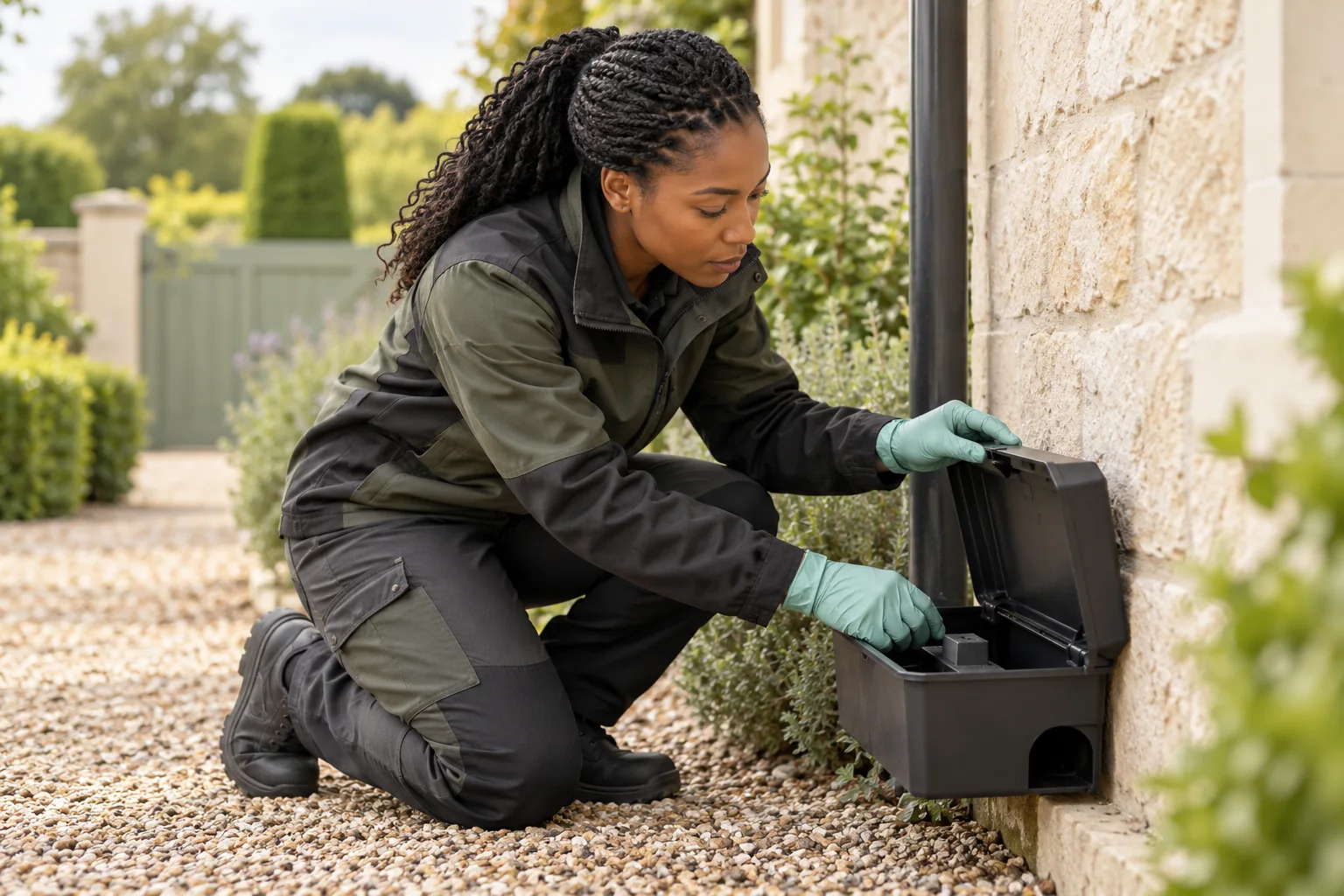
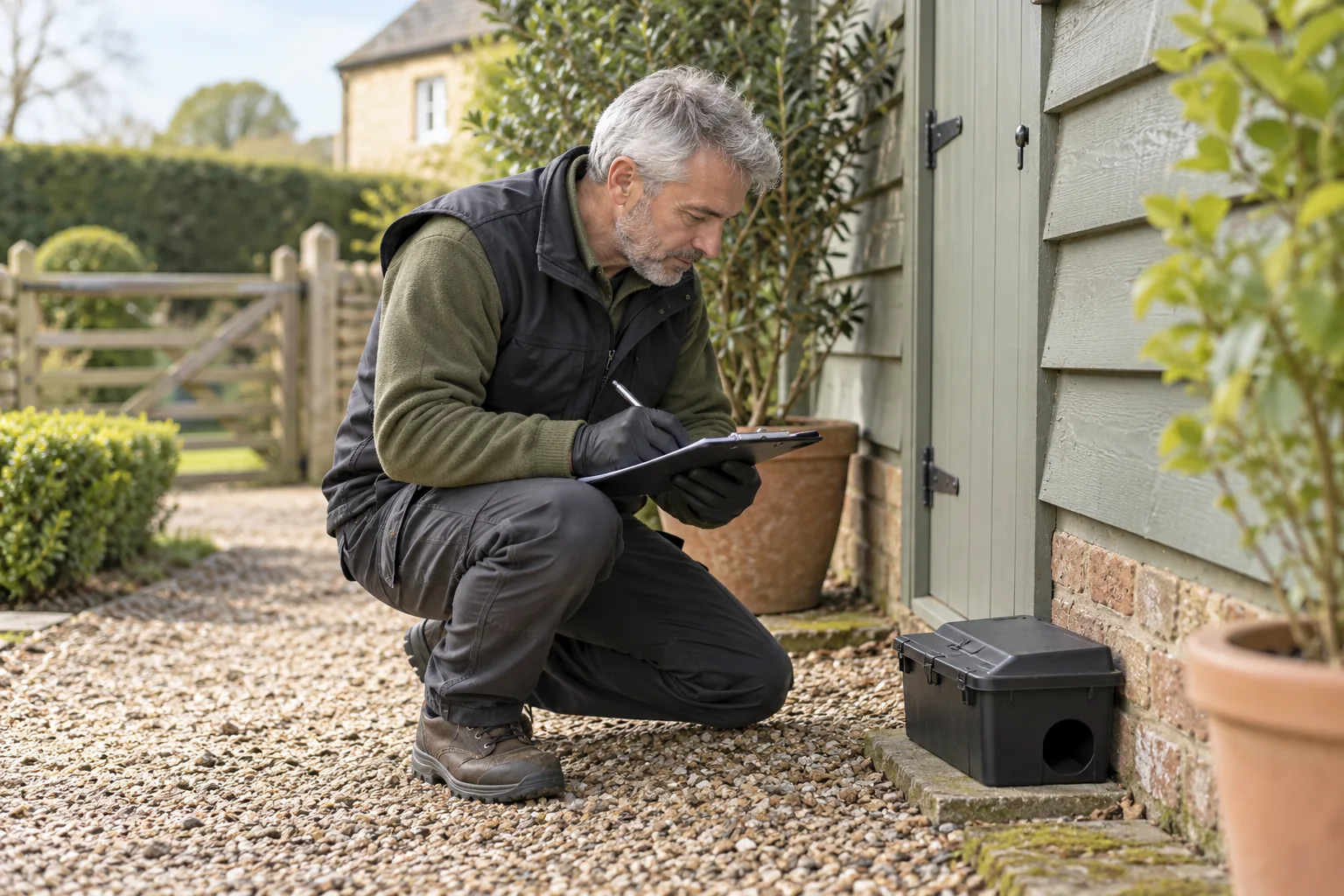
Before devices are placed, the technician assesses the locations, people and animals using the space. Suitable trapping, secured baiting where justified, or a combination of control and exclusion may be considered. Rodenticide is not a default answer to every rat problem.
The plan should identify the affected areas, the purpose of each measure and how results will be checked. Ask what the quotation includes: inspection, control materials, return checks and proofing can have different scopes. Structural work, extensive contamination removal or specialist drain investigations require their own agreement.
Controlled placement, with the property in mind
Where traps are appropriate, they are positioned to intercept identified movement while reducing access by children, pets and other wildlife. Where bait is justified, the product, placement and protection must match its authorised conditions. A secured station reduces access; it does not make a hazardous product harmless or remove the need for careful positioning.
You are told which areas must remain undisturbed and what to report. Never move a station to a location where you have seen a rat, open it, or add another product.
Make the next visit easier to investigate
Clear a safe route to the reported area and move ordinary stored items only where this can be done without disturbing contamination or suspected nesting. Keep food and pet feed in closed containers. Secure waste and explain when bins are collected, whether birds are fed and where outdoor food is stored.
Tell us about children, pets, livestock, vulnerable occupants and any previous control products. Keep their packaging or product names available. Do not dry-sweep a heavily contaminated area, pull out fixed kitchen units or block a suspected active opening immediately before the inspection. Describe any electrical damage without touching it; damaged wiring needs assessment by a suitable professional.
Working around homes, shops and tenancies
Food, utensils and stock must be protected as instructed, and access to treatment points must remain possible. For a business, explain the use of each area, food handling, cleaning routines and the visit records you need. Treatment timing and any interruption are agreed rather than assumed.
For a rented property, establish who can authorise treatment and repairs. Access to shared spaces may need the landlord or managing agent. If scratching comes mainly from the roof, the evidence may instead call for a squirrel assessment.
Preparation for a rat inspection
| Before the visit | Why it matters | Customer action |
|---|---|---|
| Food and feed storage | Accessible food can sustain activity | Close containers; explain outdoor feeding |
| Cupboards and access | The technician needs a safe view of affected edges | Clear ordinary items without disturbing contamination |
| Children and animals | Control points must suit the occupied space | Explain where people and animals can reach |
| Existing pest products | Earlier treatment changes the evidence and risk | Provide product names and application locations |
Monitoring turns treatment into a decision
A return check looks at fresh signs, device condition, catches where applicable and changes to the property. Activity can shift when access, food or shelter changes, so an empty device or one quiet night is not enough by itself to establish that the problem has ended.
Tell us if cleaning, building work or another pest product has changed the area between visits. Further action may involve adjusting the plan, investigating an unchecked route or considering a different suitable method. Do not dispose of equipment or unused bait yourself unless specifically instructed.
Close the route without losing sight of the cause
Proofing recommendations are based on identified access rather than sealing every visible gap. Durable materials and a suitable fixing matter around doors, pipe entries and damaged masonry. Ventilation and other building functions must be maintained. Filling an opening with a convenient soft material may not provide lasting protection and can conceal an unresolved defect.
The timing of exclusion needs assessment while rats may still be inside. Major repairs are separate from pest treatment, and inaccessible defects may remain the property owner’s responsibility. Ask for priorities: an active entry route, a damaged door edge and a remote cosmetic crack do not carry the same significance.
The monitoring decision loop
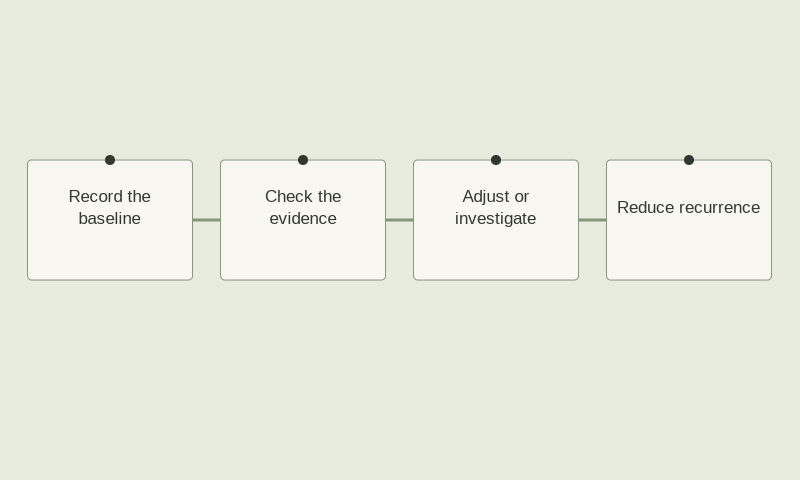
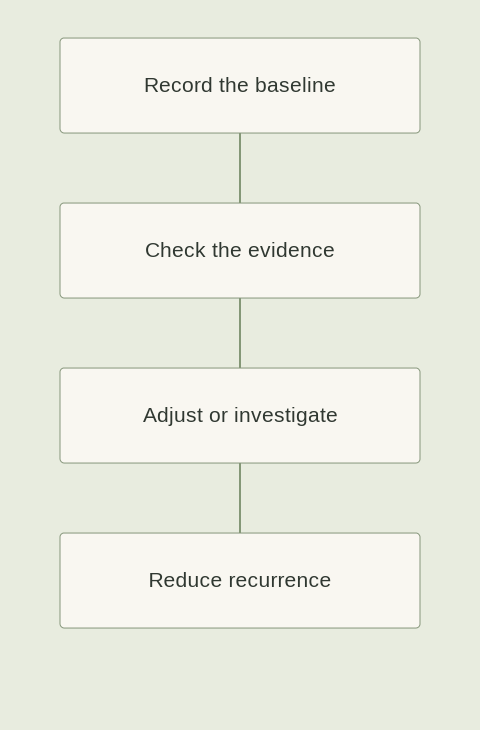
Record the baseline
Map the signs and safe control locations.
Check the evidence
Review devices, fresh signs and changes between visits.
Adjust or investigate
Consider access, competing food and unchecked routes before changing method.
Reduce recurrence
Agree repair priorities and the end of temporary control.
Choosing a rat control approach
| Approach | When considered | Limitation | Review |
|---|---|---|---|
| Protected trapping | Identified movement in suitable accessible positions | Position and non-target access need assessment | Check catches, signs and device condition |
| Secured baiting | Where justified by inspection and product conditions | Requires careful risk assessment and monitoring | Review uptake, evidence and continued need |
| Proofing and repair | Confirmed or strongly supported building access | May need separate trades or shared-area permission | Inspect the completed repair and renewed signs |
Rat activity around food or occupied rooms
Call to explain if rats are entering food areas, appearing repeatedly inside or causing damage in an occupied room. Give the full postcode, type of property, exact location, recent sightings and any children or animals that could reach the area. Keep people away from visible contamination and avoid trying to corner an animal.
We discuss urgency, access and the next available inspection. The emergency enquiry information explains what helps that conversation. If there is damage to electrical or building services, tell us so that pest control and any necessary repair can be considered separately.
A quotation based on access and the visit plan
Rat control costs depend on the spread of activity, the inspection area, access and the control measures required. A small accessible room and a property with several voids, external runs and an unresolved shared route need different plans.
Before accepting a quotation, ask which materials and visits are included, whether proofing is separate, and how additional work would be authorised. Contact Local Pest Controllers Harrow with your observations and postcode, or review the inspection-led approach on our homepage before calling.
Questions about rat control
Does a rat in the garden mean the house is infested?
Not necessarily. A passing sighting is different from repeated runs, burrows or signs inside. Give us the location and frequency so the inspection can focus on the right areas rather than assuming the entire building is affected.
Can the technician inspect my drains during a rat visit?
Accessible observations can help assess a suspected route. A specialist drain survey, lifting heavy covers or investigating concealed drainage is not automatically included. The scope and any additional contractor are discussed if the evidence justifies further work.
Will I see the traps or bait stations?
You should be told where control points are located and which areas must remain undisturbed. Their position depends on activity and safety, rather than concealment alone. Do not move or open them to check progress yourself.
Should I seal a hole before the rat inspection?
Tell us about it first and take a photograph if safe. Immediate sealing can hide evidence or alter movement while animals remain inside. The technician assesses whether, how and when exclusion should form part of the plan.
What information helps if rats keep returning?
Keep a dated note of fresh signs, locations, building work and changes to food or waste storage. Mention any earlier treatment or repairs. This helps distinguish continued activity from a route that has reopened or remained beyond the original access.
Is cleaning rat contamination included?
Do not assume it is part of treatment. The extent, materials affected and safe access determine whether specialist cleaning or removal is required. Ask for a separate scope before disturbing extensive droppings or damaged insulation.