A few dark marks at the back of a kitchen cupboard can be unsettling. They may be mouse droppings, but the colour alone is not enough to identify them. Crumbs, seeds, insect debris, fragments of damaged packaging and marks left by a leaking pipe can all look similar at a glance. The safest useful first step is to leave the area undisturbed, record where the marks are, and compare several pieces of evidence rather than deciding from one photograph.
Mouse droppings matter because they can indicate activity close to stored food and utensils. They also help an inspector follow a route: a line of marks along a cupboard edge tells a different story from an isolated speck on an open worktop. This guide explains what you can observe without handling suspect material, what commonly causes confusion, and when a mouse control inspection is sensible.
What mouse droppings usually look like
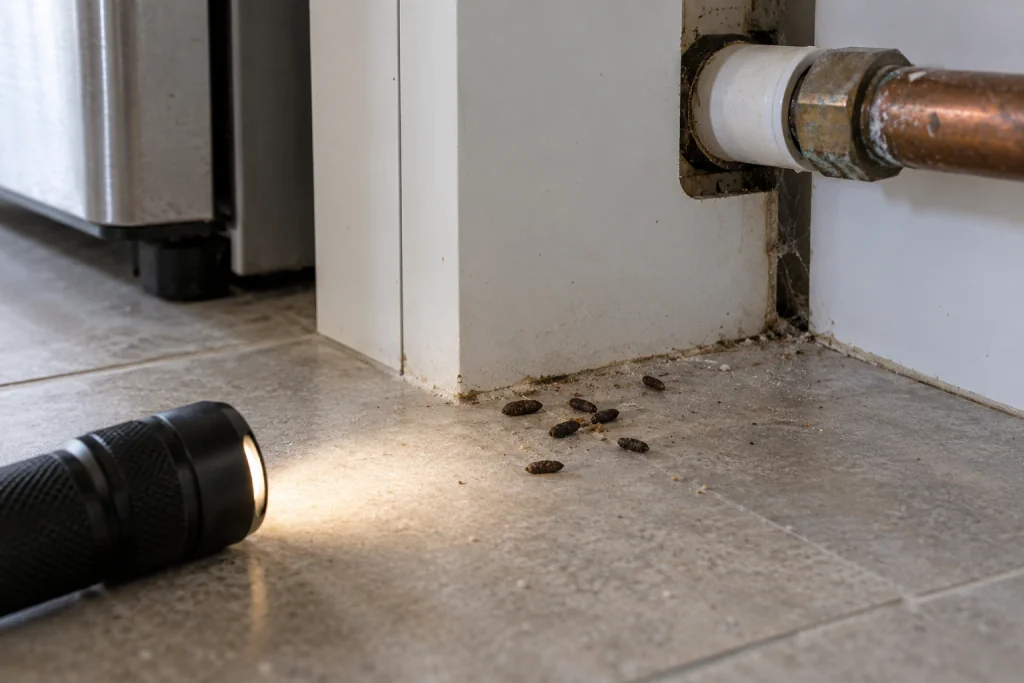
House mouse droppings are small, dark pellets. Many have a tapered or pointed end, although shape varies and a damaged pellet may not show it clearly. They are usually found in groups along routes that offer cover: the back of a base unit, behind an appliance, beside a pipe opening or along a wall edge. A mouse may leave marks in several connected places as it moves between shelter and food.
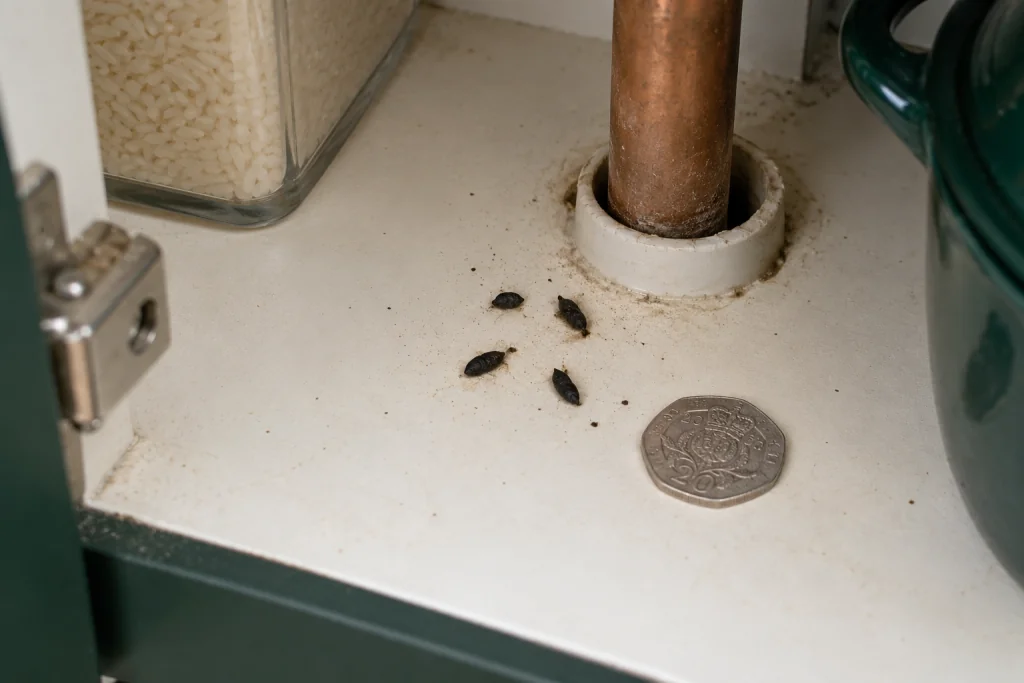
Size is useful only as a rough clue. A photograph taken very close to the floor can make any pellet look large. If you take a picture, include a familiar object such as a coin beside the marks without touching them. Keep the coin out of food use afterwards. Do not pick up a pellet to measure it or crush it to test its age. Those actions add avoidable contact with potentially contaminated material and rarely settle identification.
Colour can change with food, moisture and age. Fresh deposits may appear darker, while older ones can dry and fade. Neither colour nor apparent dryness can establish exactly when an animal visited. A kitchen that has been cleaned recently may still contain old material in an inaccessible void, while one new pellet may be the first visible clue to active movement. Look at the pattern and the surrounding surfaces.
Common lookalikes in a kitchen
Dark seeds and grains can be surprisingly convincing, especially under a kickboard where dust gathers. Check whether similar seeds are present in open food, bird feed or a nearby shopping bag. Food fragments may be irregular or flattened rather than consistently pellet shaped. Insect debris can be much smaller and may occur near a harbourage rather than along a clear travel route. Some cockroach activity produces pepper-like spots, but a photograph alone may still be ambiguous; cockroach inspection focuses on insects, cast skins and sheltered warm gaps as well as spots.
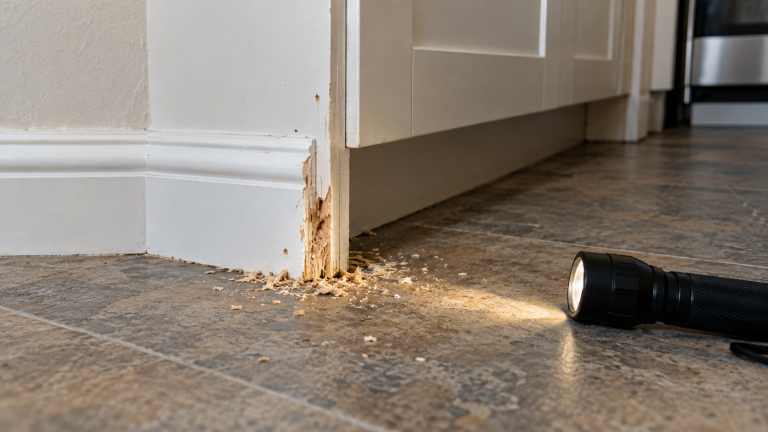
Wood shavings or dark fragments below a cabinet hinge can come from wear, drilling or gnawing. A pipe leak may stain dust and create small clumps. These possibilities do not mean you should ignore the finding. They mean that the next useful question is whether other signs agree with the mouse hypothesis. Repeated marks in protected corners, damaged food packaging and a plausible entry gap strengthen it. A single unidentified particle with no associated evidence deserves a careful note, not an automatic treatment decision.
Where to look without dismantling the kitchen
Begin with areas that are already accessible. Shine a torch into the back of an empty cupboard, along visible skirting and around the exposed edge of a service pipe. Stand clear of electrical fittings and do not pull out a heavy appliance. Record the exact position of any marks and whether the surface has recently been cleaned. If you can safely photograph them in place, take one wide picture to show the cupboard or wall and one closer picture for detail.
Open food containers, pet food and waste can help explain why activity concentrates in one part of a kitchen. This is an observation about access, not blame. A clean kitchen may still provide warmth, shelter and a hidden route through a service opening. Flats can have pipe routes connecting several units, so an apparent kitchen problem may need a wider building conversation. The rodent control overview explains why inspection and proofing advice belong alongside any suitable control method.
Do not remove a kickboard, open a service void or move a cooker simply to collect evidence. These areas may contain cables, sharp edges or unstable fittings. An inspector can decide whether further access is needed and agree it with the property owner or manager. If the marks are beside an appliance that must be used, protect exposed food, keep children and pets away from the affected corner and seek advice on safe interim use.
Other signs that make identification stronger
Look for a combination rather than a single dramatic clue. Chewed corners of packets, fresh scratches on a soft material, a narrow gap around a pipe and repeat marks along the same edge create a more useful picture. A faint smell or occasional noise may contribute context but is not proof on its own. Sounds can carry through floors and walls, and old damage may remain after an earlier issue was resolved.
Keep a simple observation log for a few days if there is no urgent concern. Note the date, room, exact location and whether you see any new material after the area has been professionally assessed or cleaned safely. Do not scatter flour or food to create tracks in a food preparation area. Avoid moving suspect material around for a better photograph. An undisturbed pattern can help a professional distinguish a route from a one-off spill.
Dropping size alone should not be used to call an animal a rat. Young animals, broken pellets and poor scale can confuse the comparison. If you also see larger gnaw marks, burrows outside or activity near drains, explain those observations when you enquire about rat control. The identification should follow the full evidence, not the most worrying possibility.
Food and utensils: immediate practical steps
Separate food that was sealed in intact rigid containers from food in open, torn or visibly contaminated packaging. Do not taste food to decide whether it is safe. Put suspect items aside for disposal according to the instructions of the local authority or the advice given during an inspection. Check neighbouring packets and storage boxes for damage without spreading contents across the kitchen. Clean hands after handling packaging and keep any photographs or notes separate from food surfaces.
For food preparation, use a different clean area if one is available until the affected cupboard has been assessed and cleaned appropriately. If the marks are on crockery or utensils, do not put those items straight back into use. Washing and cleaning decisions depend on the material and the extent of contamination. A food business has additional hygiene duties and should use its own reporting and food safety procedures immediately; the domestic advice here does not replace a business hygiene plan.
It can be tempting to spray a household product into a gap or place loose bait where the marks appear. That can introduce hazards around food, children and pets and may make the pattern harder to interpret. UK government guidance says pest methods and products must be used only for their intended species and in accordance with instructions. A property-specific plan is more useful than acting on an uncertain identification.
Cleaning without creating a new exposure
Do not dry sweep or vacuum suspect droppings as a quick first response. Disturbing dry debris can spread dust, and the cupboard may still be in use as a route. Keep people away from the immediate area, ventilate if it is safe to do so, and ask for appropriate cleaning advice once the source and scale are understood. Wear suitable protection if you are directed to clean; wash hands thoroughly afterwards. Anyone who is pregnant, immunocompromised or otherwise concerned about exposure should avoid handling the material and seek professional advice.
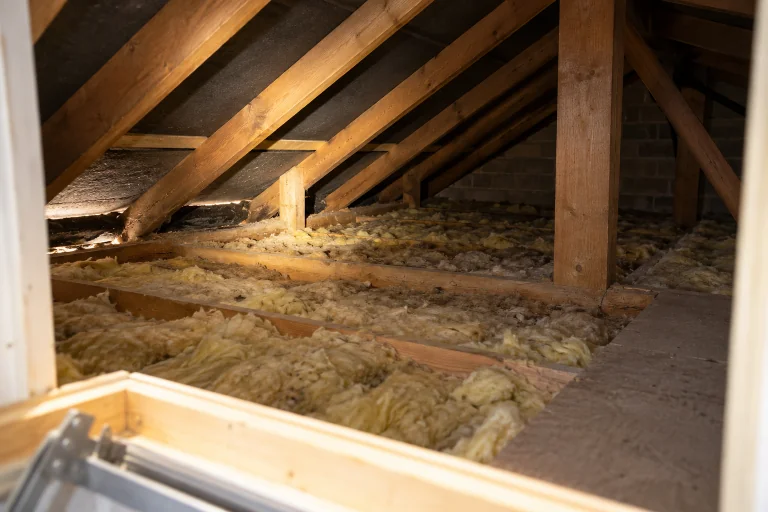
A few pellets in an accessible cupboard and extensive contamination in a loft are different jobs. Our separate guide on safe cleaning after rodent evidence will address the wider preparation and disposal decisions. For the kitchen, the priority is to avoid spreading material into food areas and to establish whether fresh activity is continuing. If there is an obvious large accumulation or signs near electrical equipment, do not treat it as a routine wipe-down.
When to ask for an inspection
Arrange a professional assessment if you find repeated marks, damaged food, several possible routes or evidence in more than one room. Seek prompt advice if the affected area is used for food preparation, if vulnerable occupants cannot avoid it, or if signs recur after cleaning. Tell the pest controller what you found and what you have already done. Photos showing location and scale can save time, but they do not replace inspection of accessible routes and shelter.
During the visit, ask which evidence supports the identification, what areas could not be checked and whether a gap needs later repair. Suitable trapping or secured baiting may be discussed after the species and property are assessed. Proofing should follow an understanding of where animals are moving; sealing an apparent opening without checking the wider route can leave activity unresolved. Agree how fresh signs will be monitored and what a return visit would cover.
The useful result is a clear explanation of the evidence and the next practical action. A small dark mark is a reason to look carefully, not a diagnosis by itself. If you have found suspect pellets in a Harrow kitchen, contact the team with the room, location and photographs so the concern can be assessed.