A new mark on a skirting board or food cupboard can be easy to blame on rodents. Teeth do leave recognisable damage, but scratches from furniture, old building work and ordinary wear can look similar. The most useful question is whether the mark belongs to a pattern of current activity. This guide describes where gnawing appears, how to record it, and what to do if cables, pipes or stored food are affected.
Why rodents gnaw
Mice and rats have front teeth that continue to grow, so gnawing is normal behaviour. It can help them enlarge an opening, reach food or work on nesting material. They may damage timber, plastic, cardboard and some cable coverings. A tooth mark does not by itself tell you whether a mouse or rat made it, and material hardness can change the appearance of the damage. Good identification draws on droppings, tracks, routes and sightings as well as the mark.
Rodents often move along edges and through sheltered spaces rather than across an open room. That is why marks around pipe penetrations, under kitchen units and at the back of a cupboard deserve attention. They may also appear beside an exterior gap, at the bottom of a door or around an outbuilding. A mark in one of these places is a clue to inspect the surrounding route; it is not permission to fill every opening immediately.
What does fresh damage look like?
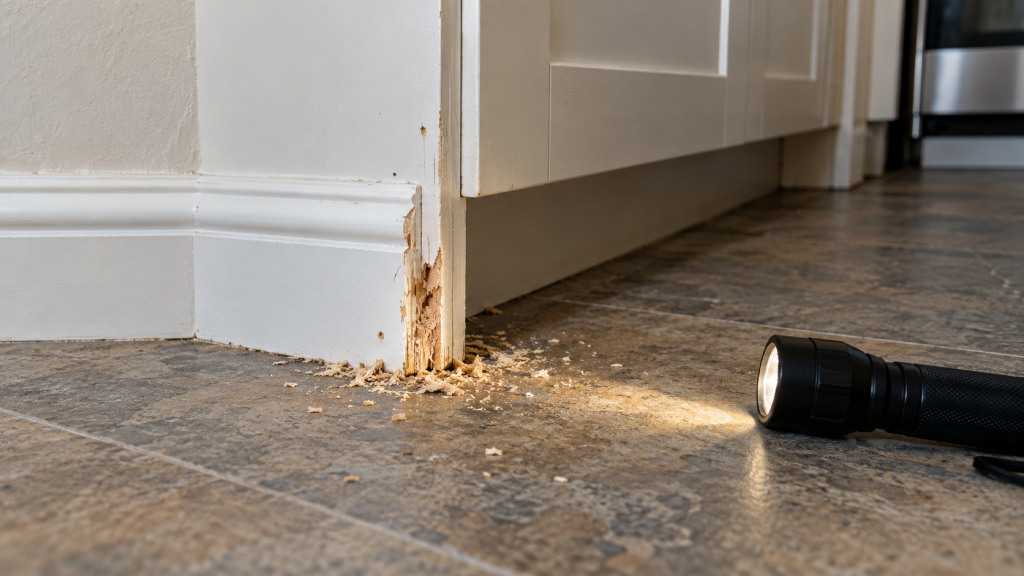
On unfinished timber, a recently exposed surface may look paler than its dusty surroundings. Fresh fragments or fine shavings can collect beneath it. On a painted edge, a new mark may expose a clean underlying layer. These clues are less reliable on damp, dark or regularly cleaned surfaces. Dust can settle quickly, while old damage can remain bright if it was covered. Photograph the mark in good light and record the date rather than trying to assign an exact age by colour.
Look closely for repeated narrow tooth grooves at an edge, especially where a hole has been enlarged. An irregular chew on a food packet can be more informative when it sits next to spilled food and droppings. A straight scrape on a wall that matches the height of moving furniture is less suggestive. If you are unsure, leave the mark undisturbed for an inspection. Repeated photographs from the same position may show whether the damage changes.

Check the whole location
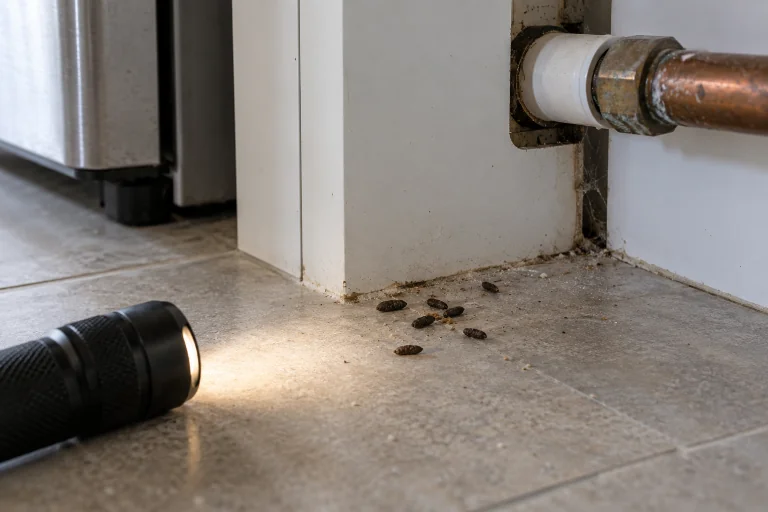
A useful inspection starts wider than the damaged spot. Is there a gap behind it, a food source nearby or a concealed line of travel? Are there droppings along the wall, an odour in a cupboard or marks on stored packaging? Can you see where the route leads outside? Take overview photographs and close-ups with a familiar object for scale. Avoid putting your hand into a blind void or moving heavy appliances without help.
Kitchen units can hide both activity and ordinary wear. A rough cut in a kickboard may be a previous installer’s access. New-looking edges can come from recent plumbing work. Check the shape, surrounding debris and whether there are other signs before concluding that an animal enlarged it. If mice are a possibility, a mice control inspection can assess the complete route, including access behind the units.
Does the size identify a rat or mouse?
Larger damage may increase concern about rats, but size is not a dependable identification test. A mouse can repeatedly work on an opening, and a rat may leave a modest mark on soft material. The edge may also have been damaged mechanically before an animal used it. Do not enlarge or cut away the area to investigate. Record its dimensions, nearby evidence and any outside signs such as burrows or drain problems.
When the species is uncertain, use the rodent control overview as a starting point and describe what you found. If there are signs associated with larger rodents, a rat control assessment can review the building and exterior conditions. The right response depends on the route and species, not just the width of a damaged hole.
Cables and electrical equipment need a different response
A nicked cable sheath, exposed conductor, damaged plug lead or suspicious mark near a consumer unit can be a fire or shock risk. Do not touch the cable, tape it over as a permanent repair or test equipment that appears damaged. If safe to do so, stop using the affected appliance and arrange a qualified electrician’s assessment. Explain that rodent activity is suspected so the electrical and pest aspects can both be addressed.
Do not place bait, traps or sealant inside an electrical enclosure. Professional pest control and electrical work have separate roles. The electrician determines whether wiring is safe; the pest professional investigates activity and routes. If the damaged cable feeds a critical system, seek prompt electrical advice. A visible gnaw mark on plastic alone cannot tell you whether a hidden conductor is intact.
Pipework and hidden openings
Rodents can follow service pipes through a building, and an opening around a pipe may be more significant than a mark on the pipe itself. In flats, the route may cross boundaries between homes or shared spaces. Photograph the location and tell the landlord or managing agent if communal fabric may be involved. Avoid pulling off panels or cutting access holes without permission and a clear plan. Exposed pipework can also involve hot water, gas or electrical services.
If water is leaking, arrange the relevant repair promptly. Moisture can attract pests and damage the building, but a pest visit does not replace plumbing work. Once the route and activity have been assessed, proofing can be planned around the actual opening. Sealing too early may leave an animal inside or push it to a different exit. The order of inspection, control and repair matters.
Food packaging and storage
Gnawed packaging in a cupboard should be treated as a food safety concern. Discard food from damaged or open packs; do not simply remove the visibly chewed portion. Check neighbouring packs for punctures and contamination. Transfer clean, unaffected dry foods into sound, lidded containers, and clean shelves in a way that does not disperse dust from suspect droppings. Keep children and pets away from the area while it is being assessed.
Ask whether a bag of bird food, pet food or household waste has created an accessible food source. Removing access helps, but it does not prove the activity has ended. Check for a route and signs elsewhere. Replacing one chewed cereal box while ignoring a gap behind the cupboard can allow the problem to return.
Should you fill the damaged gap?
Proofing is often important, yet an active entrance should be assessed before it is sealed. Confirm whether animals are present, where they can travel and whether there are other openings. A material suitable for a dry cupboard may be unsuitable near a pipe, cable or exterior weather line. An improvised filler can fail quickly or obscure evidence. Ask for a plan that deals with the animal activity and the building defect together.
A photograph of the mark before and after any authorised repair is useful for monitoring. If new damage appears beside a repaired opening, the route may not have been fully understood. Follow-up is therefore part of resolving the cause, not an admission that an initial visit failed. Keep the record simple: date, location, change and any accompanying sound or sighting.
When to arrange an inspection
Repeated damage, droppings, a sighting, suspect gnawing on cables or food packaging all justify prompt assessment. A single unexplained scrape without other evidence may be worth recording and watching, but do not wait if there is a safety issue. A clear photo and a short description help a professional decide what to inspect first. In a shared building, mention neighbouring reports and access restrictions as well.
The practical answer to a suspected gnaw mark is to protect any affected food or electrical equipment, preserve the evidence and identify the route. If you have found marks at a Harrow property, send the location and photographs through the contact page for advice on an appropriate inspection.