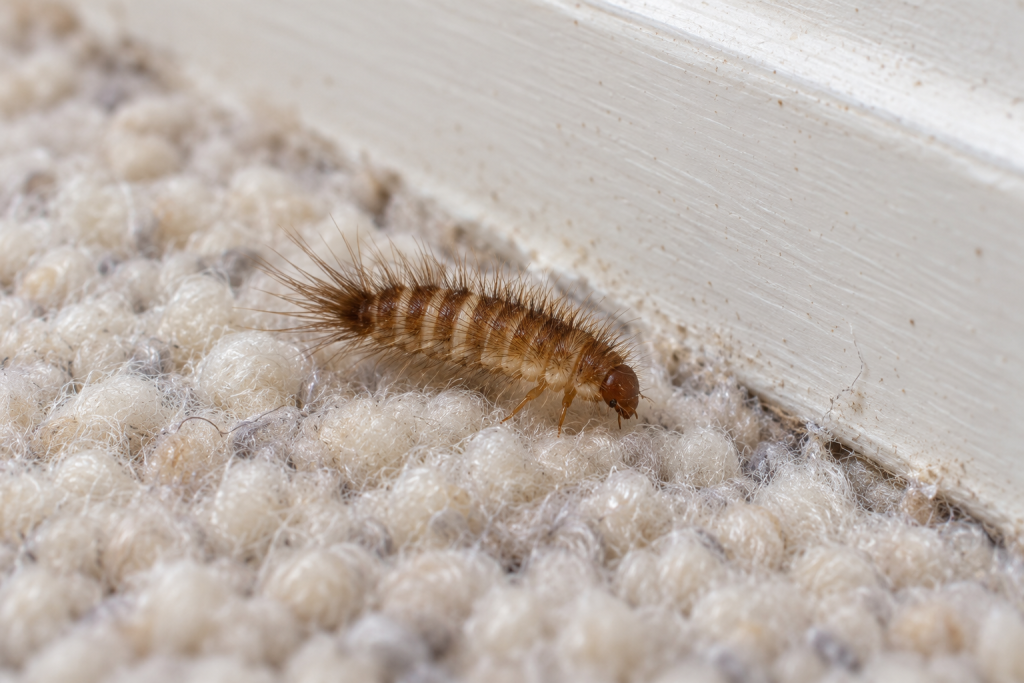
Finding a small bristly skin beside a skirting board can be more revealing than spotting an adult beetle at a window. Carpet beetle larvae are the stage associated with damage to susceptible animal fibres, and they shed their skins as they grow. A cast skin can show that a larva has been in the area, but it does not prove the larva is still present or identify the precise source. Careful photographs and a search of nearby textiles help turn a vague suspicion into useful evidence.
What does a carpet beetle larva look like?
Larvae vary by species, but many are small, brownish and covered with hairs or bristles. They may look like tiny fuzzy caterpillars and tend to be found in sheltered, undisturbed places rather than crossing an open floor in bright light. Size and colour alone are unreliable because the insect changes as it grows and household dust can obscure it. A clear close-up from above and the side, with an object for scale, is useful for identification. Avoid touching hairs with bare hands if you have sensitive skin.
Adult carpet beetles have a different appearance and may be noticed on windowsills as they seek light. The adult and larva can be in different parts of a room. A beetle at a window is a reason to inspect nearby natural-fibre materials, not proof that the carpet itself is infested. Our carpet beetle treatment service can help confirm the species and likely source.
What is a cast skin?
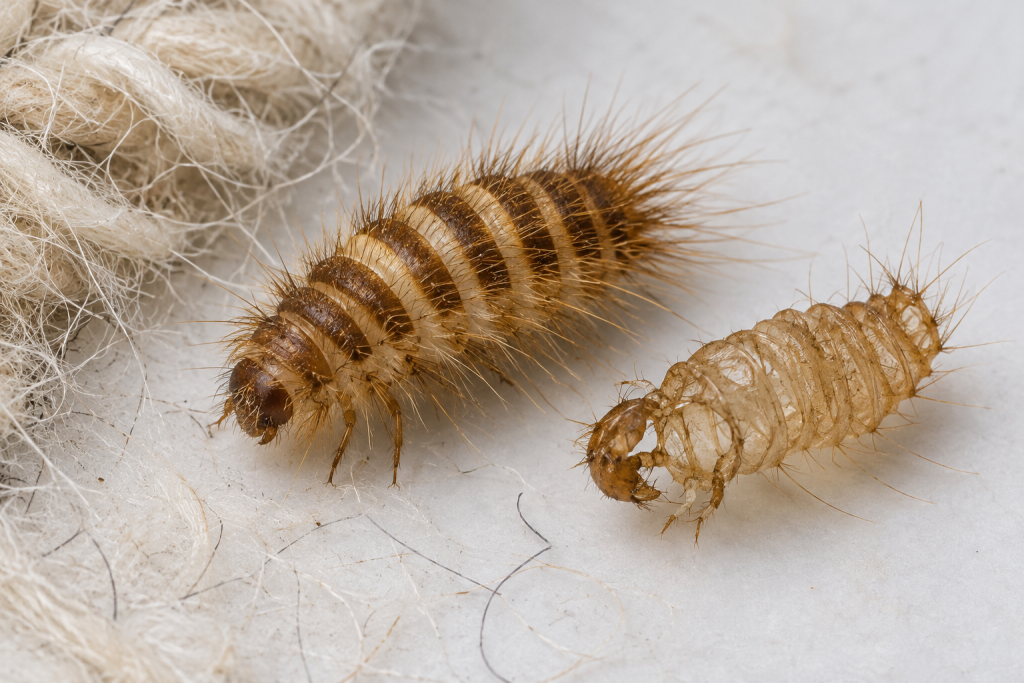
A larva must moult to grow, leaving an empty outer skin. That skin can retain the shape and hairs of the larva and may be found along carpet edges, beneath furniture or in a drawer. It is easy to mistake it for a live insect at first glance. Look closely for movement and photograph the object before removing it. A cast skin confirms that an insect developed somewhere, but it might have been carried by air movement or cleaning, and it may be old. Several skins concentrated near a textile source provide stronger evidence than one isolated find.
Keep a specimen in a small sealed container if practical. A photograph on a pale background with a ruler can also help. Do not spray the area before you know what the specimen is. Clothes moth cases, other beetle larvae and fragments of fabric can be confused with carpet beetle evidence. Identification matters because the search and treatment may differ.
Where are larvae likely to hide?
Look at the edges of wool carpets, beneath heavy furniture, behind skirting gaps and in undisturbed storage. Check wool blankets, felt, fur, feathers and upholstered items with animal-fibre content. Organic debris such as pet hair can collect in quiet corners and may support activity. A larva found in a hallway might have come from a nearby room, so inspect the wider context. Avoid pulling up fitted carpet or moving very heavy furniture yourself; photograph accessible edges and note areas a professional may need to assess.
In a wardrobe, inspect shelves, drawer corners, garment folds and stored natural fibres. In a living room, look beneath a sofa and along carpet edges rather than only at the centre of the floor. Vacuuming can remove loose debris but may not reach a hidden source. The wider insect control service can help if you are not certain whether the specimen is a carpet beetle.
What damage should you look for?
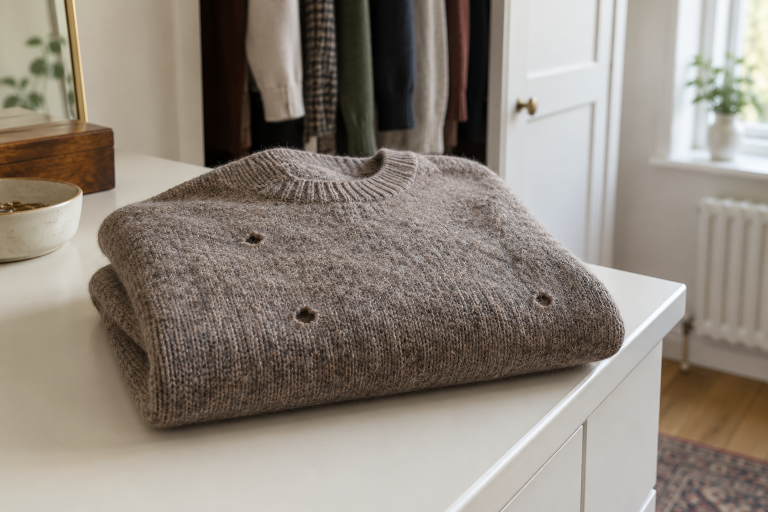
Larval feeding may leave irregular worn patches or holes in susceptible natural fibres. A carpet edge can appear thinned while the exposed centre looks intact. Wool clothing may show damage in folds or stored areas. Damage alone is not diagnostic: wear, moth larvae and cleaning accidents can leave similar marks. The strongest evidence combines the insect or cast skins with affected material in the same location. Photograph the damage and record the fibre type before cleaning or discarding an item.
Check several items stored together. One damaged garment may have been affected elsewhere before it was placed in the drawer. If you find larvae, isolate suspect textiles in clean, closed bags and inspect the rest of the storage. Avoid moving unbagged items to another room. Follow care labels and use a specialist cleaner for delicate or valuable materials. Do not apply a pesticide directly to clothing unless the label specifically permits it.
How are they different from clothes moths?
Clothes moth larvae are pale, caterpillar-like and may produce silk webbing or portable cases. Carpet beetle larvae are usually more obviously hairy or bristly and leave hairy cast skins. Adult moths and adult beetles also look very different, but either adult may be seen away from the damaging larvae. Both groups can affect animal fibres, so a mixed collection of holes and adult insects needs careful identification. Our moth control information may help you compare the evidence, but an actual larva or skin is best.
A small brown speck or a hole should not prompt a whole-house insecticide application. First identify what you have, inspect likely sources and document the pattern. Some homes have more than one insect present, making assumptions from a single adult misleading. A professional can assess whether the signs are active and which materials need treatment or protection.
What can you do after finding a skin?
Photograph and retain the skin, then inspect the nearby edges and natural-fibre items. Vacuum accessible corners and under furniture after documenting evidence; promptly seal and dispose of the vacuum contents. Wash or clean suspect textiles only as their care labels allow. Reduce undisturbed dust and pet hair where practical. Store clean, completely dry vulnerable items in suitable closed containers, and inspect them periodically. These steps improve control and monitoring, but they may not eliminate a hidden reservoir inside upholstery or fitted materials.
Keep a dated log of where skins or larvae appear. A single old skin after cleaning may reflect earlier activity; new larvae or repeated skins in the same area warrant further investigation. Do not judge success solely by adult beetles at a window. Ask about follow-up if you have confirmed damage, several life stages or signs across multiple rooms.
Making photographs useful
Place a specimen on a plain background without crushing it. Take one image showing its whole body, another from the side if possible, and a wider image showing where it was found. Include a ruler or coin for scale, but do not let it obscure the hairs or head. Photograph the nearby carpet edge or garment damage separately. Good lighting matters more than heavy digital zoom, which can blur fine features. If the insect is alive, a sealed clear container can make photographing it safer and easier.
When should you seek a survey?
Professional help is useful when the source is unclear, damage continues or larvae appear near valuable carpets, furnishings or clothing. Send sharp photographs of the larva, cast skin and affected textile, plus locations and dates. Mention any cleaning or DIY products already used. A targeted survey can distinguish active feeding from old evidence and identify the materials that need attention. You can share those details through our Harrow contact page.
The key identification lesson is to connect the larval stage, its shed skins and the material nearby. An adult beetle or an isolated skin starts the search; it does not finish it. Preserve evidence, inspect sheltered natural fibres and seek a clear diagnosis before choosing a treatment.