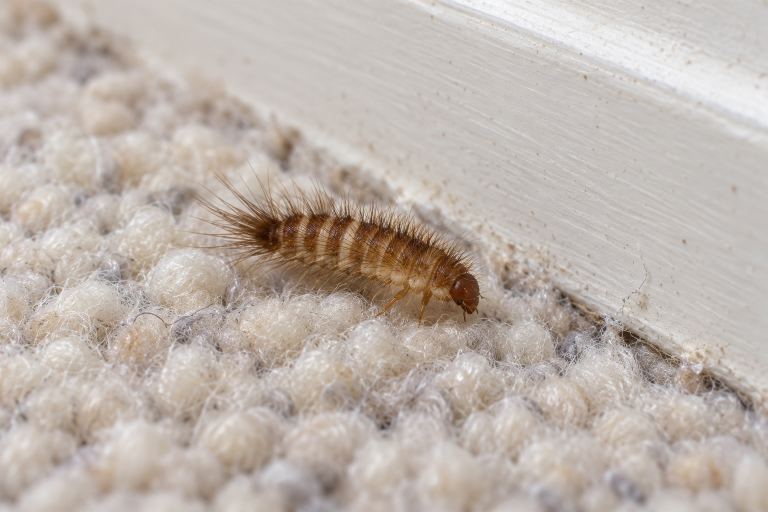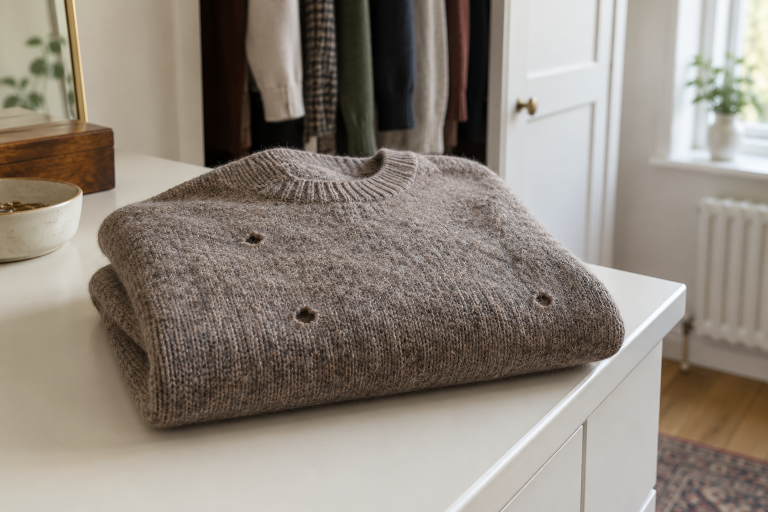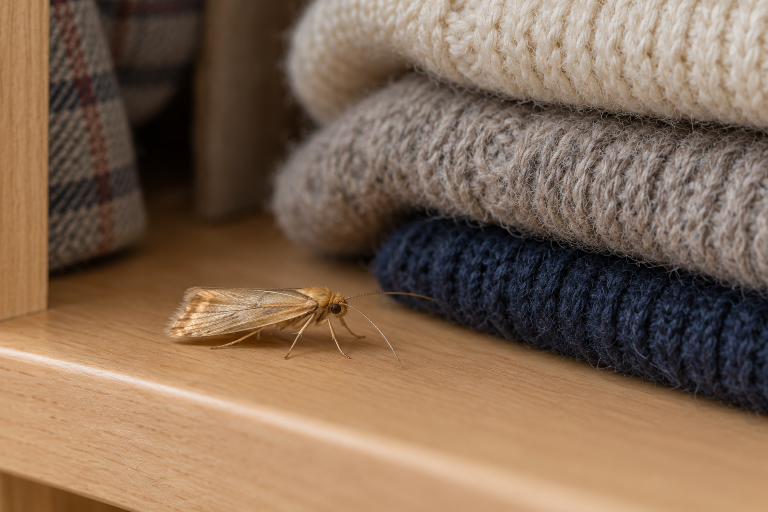
Wardrobes are made for protecting clothes, yet their quiet corners can also conceal textile pests. A quick glance at hanging garments may miss larvae in a folded scarf, under a drawer or along a carpeted base. A careful inspection is less about turning the room upside down and more about checking one area at a time, recording evidence and keeping clean items separate from suspect ones. The process below is suitable for an accessible domestic wardrobe; fixed fittings and valuable textiles may need professional help.
Prepare a simple inspection area
Choose a clean, well-lit surface and put down a pale sheet or paper so small larvae, cases and cast skins are easier to see. Have a torch, phone camera, sealable bags and a notebook ready. Work from one shelf or rail section at a time. Photograph the original arrangement if that helps you remember where things were stored. Do not mix items from several wardrobes into one pile; the pattern of where signs occur may be essential to finding the source.
Start by looking at the wardrobe before removing anything. Check the floor, shelf corners, door hinges, drawer runners and joins in the lining. Note dust, loose fibres, small cases, webbing, hairy cast skins or insects. Photograph them in place before cleaning. Then remove one group of garments and inspect the newly exposed surface. If you see a live insect, try to photograph it clearly or place it in a sealed container for identification without crushing it.
Which clothing deserves close attention?
Natural animal fibres such as wool, cashmere, silk, fur and feathers are relevant to clothes moth and carpet beetle investigations. Blends may also contain susceptible fibres. Inspect seasonal garments that have not been handled recently, especially those stored with food or body soil still on them. Open folds and check collars, cuffs, pockets, seams and under linings. Look at the inner side of knitwear and along the edges of folded blankets. A hole on an exposed front panel can draw attention, but larvae may be feeding in a quieter area nearby.
Keep clean, inspected items in a separate container while you work. Bag a garment with suspected larvae, cases or fresh damage rather than laying it on other clothing. Check its care label before laundering, heat treatment or specialist cleaning. Delicate and valuable textiles may require a conservator. Our moth control service can advise when the evidence points to clothes moths; carpet beetle treatment may be more appropriate if you find hairy larvae or cast skins.
What should you look for in the furniture?
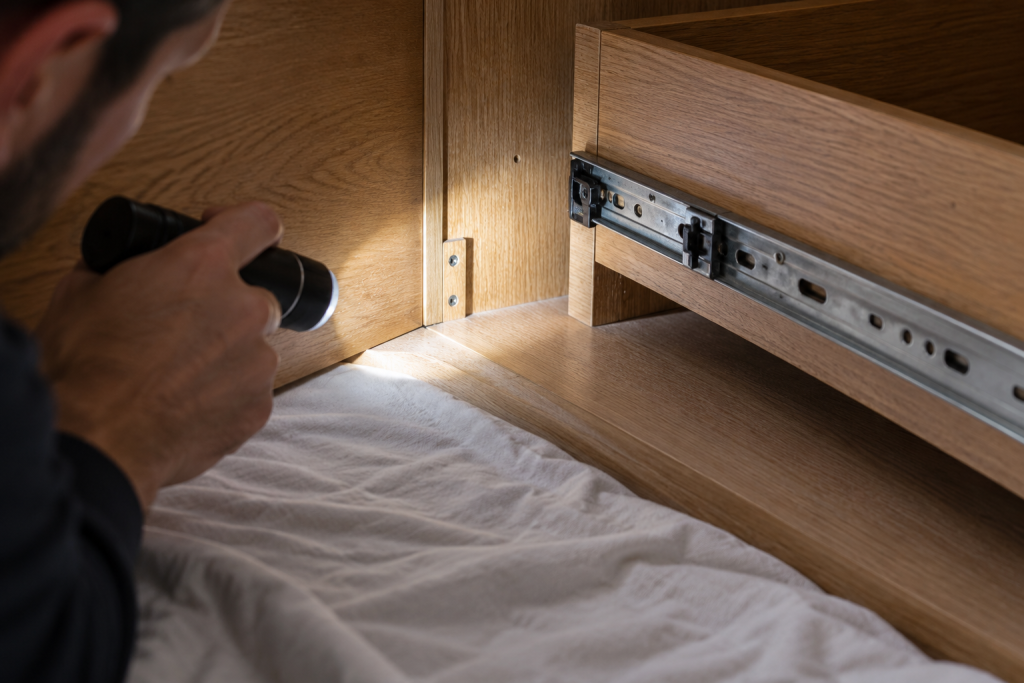
After removing items from a section, inspect the rear corners, shelf supports, screw holes and the underside of drawers where accessible. Run a torch along the base and skirting edge. If the wardrobe is fitted, look at accessible joins with the wall and carpet; do not dismantle panels or interfere with electrical fittings. Clothes moth larvae may leave silk webbing or cases in sheltered spaces. Carpet beetle larvae can leave bristly cast skins along edges. Dust alone is not a diagnosis, so take photographs and look for the insect or repeat signs.
Check nearby textiles too. A wool carpet edge, upholstered chair, spare blanket or feather-filled item may be the real source. Inspect the space behind a freestanding wardrobe only if it can be moved safely without strain or damage. Otherwise note the concern for a professional. The broader insect control team can help identify an unfamiliar textile pest from photographs.
How do you distinguish old damage from active activity?
A hole can remain long after an insect has gone, or it may be caused by wear. Fresh larvae, recently shed skins, intact webbing and repeated adult moth sightings close to the same storage area offer stronger evidence. Note which garments have only old-looking damage and which have insects or signs. Photograph an item now and compare it after cleaning and isolation. Avoid drawing a conclusion from one hole or one adult moth. A clear specimen can settle questions that fabric damage cannot.
Pheromone traps can help monitor certain adult clothes moths when used according to their instructions. They do not reveal every larva and cannot prove that a wardrobe is clear. A carpet beetle adult may appear at a window while the damaging larvae are elsewhere. The practical focus is the material that supports the immature stages and the places where they can hide.
Clean without losing the trail
Once signs have been photographed, vacuum accessible shelves, corners and floor edges. Dispose of the vacuum contents promptly in a sealed bag. Wipe suitable hard surfaces and allow them to dry before replacing clothing. Do not spray a general insecticide on garments or shelves simply because you found a hole. A product must be suitable for the exact site and used according to its label; professional-only products are for trained operators. Cleaning is useful, but it may not reach a reservoir inside upholstery, carpet edges or fitted voids.
Follow each garment’s care instructions. Professional cleaning may be sensible for delicate wool, silk or heirloom items. Put fully dry, inspected clothing into suitable closed storage. Avoid sealing damp textiles in plastic. Label boxes with their contents and inspection date. A record makes the next check faster and helps you identify new activity instead of repeatedly rediscovering old damage.
Make a follow-up schedule
Check the same high-risk items and corners again after an appropriate interval. Record any new moth catches, larvae, cast skins or holes by location. Keep handling seasonal clothing occasionally rather than leaving it undisturbed for years. If new signs appear only in one wardrobe section, focus the next inspection there and nearby. If they appear across rooms, consider a wider survey. A systematic record is more informative than repeatedly replacing traps or cleaning the entire house without a clear source.
If several people share storage, explain what was found and keep suspect pieces isolated. Avoid moving boxes of untreated wool to another bedroom or loft. In a rented home, report persistent activity and any affected fitted carpet or furniture to the relevant person. For a local assessment, send photographs, a sketch of the wardrobe and your inspection notes through our Harrow contact page.
What if you find no insect?
A clear inspection is reassuring, but it cannot establish that every hidden life stage is absent. Keep photographs of the original damage, clean and store the garments appropriately, and revisit the same locations after a few weeks. Consider whether a snag, worn seam or previous laundering could explain the hole. If a new hole appears on an inspected piece, compare it with the earlier images and search again for larvae or cast skins. You can also ask an experienced professional to identify a specimen caught elsewhere in the room before committing to treatment.
When should you call a professional?
Seek help when larvae or cast skins are found in several areas, damage continues after cleaning and isolation, or the suspected source is inaccessible. Ask the provider to identify the pest, explain which materials and rooms are affected, and give written preparation and follow-up advice. The most useful wardrobe inspection is one that narrows the source and preserves evidence. With that information, treatment can be targeted and unaffected clothing can stay protected.