Finding a suspected mouse dropping beside flour or a torn cereal packet changes how you should use that cupboard. The immediate priority is to protect food and food-contact items while preserving enough information to understand whether activity is ongoing. You do not need to identify the exact species before taking sensible hygiene steps. This guide covers what to discard, what can be kept, how to clean and how to reduce repeat access.
Pause food preparation in the affected area
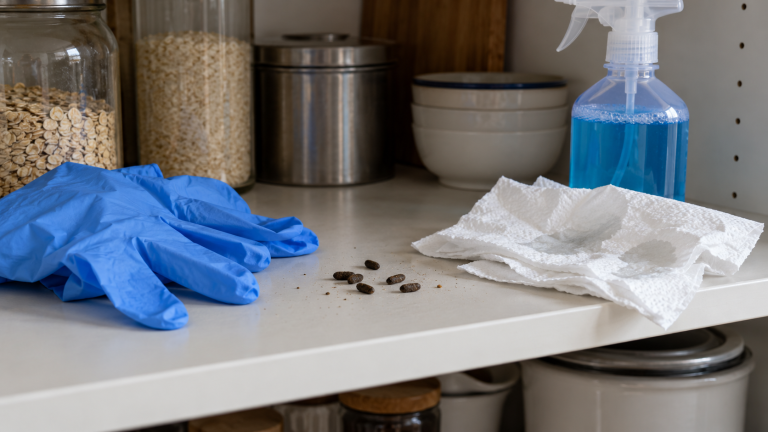
Keep children and pets away from the cupboard. Take a photograph showing where the evidence lies before moving packages. Do not touch droppings with bare hands, and avoid dry sweeping or vacuuming. If there is a strong odour, substantial contamination or a live animal, leave the area undisturbed and seek advice. The photographs can help a rodent control inspection identify a route, even after necessary cleaning.
Wash your hands before handling clean food elsewhere. Use a clear surface for sorting and keep suspect packages away from it. A cupboard can contain both obviously damaged food and sound, sealed items; assess each rather than assuming that every item has the same exposure. The aim is to avoid carrying contamination into another cupboard while you sort.
Which food should be discarded?
Discard food in torn, chewed, punctured or open packaging where rodent contact is possible. Do not cut off the visibly affected corner and keep the rest. Dry foods in paper, cardboard or thin plastic are especially vulnerable to hidden damage. If a package has suspect droppings or urine on a surface that contacts food when opened, discard it. Follow local waste arrangements and tie the waste bag securely before placing it in a closed bin.
Food in an intact can, glass jar or robust sealed container may be salvageable if its outside can be cleaned without compromising the seal. Check for dents, broken lids, gnawing and other damage first. Wash or disinfect the exterior according to the container material and cleaning product instructions, then dry it before storage. If you cannot be confident that the seal is intact or that the item can be cleaned safely, discard it.

What about crockery and utensils?
Plates, pans and cutlery from the affected cupboard should be washed before use. A dishwasher cycle suitable for the items or thorough washing with detergent and warm water can remove ordinary surface contamination. Let items dry on a clean rack. Check cloth bags, cardboard trays and porous materials individually; some may be difficult to clean reliably. Keep clean items away from the cupboard until it has been inspected and cleaned.
If the evidence is inside a drawer with utensils, photograph the drawer and inspect the runners and back edge before removing items. Do not shake loose debris over a worktop. Transfer items in a controlled way, and clean the drawer after the evidence has been dealt with. A clean drawer liner can be added after the area is dry, but it does not close an entry route.
Clean without spreading dust
Once you have recorded the location, follow appropriate rodent hygiene guidance. Ventilate the area if practical, wear gloves and use a suitable disinfectant according to its label to dampen droppings and affected surfaces before wiping. Use disposable cloths or towels and bag the waste. Do not mix bleach with other cleaners or use a chemical on a surface for which it is unsuitable. Wash hands after removing gloves.
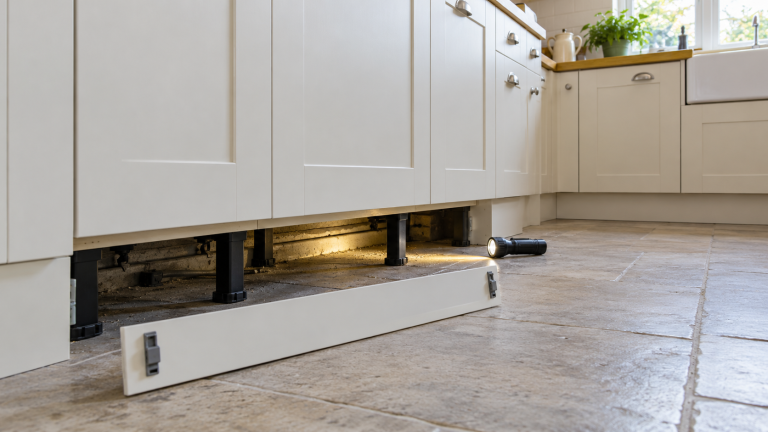
Clean shelves, corners, handles and nearby food-contact surfaces. Pay attention to a pipe opening or back panel without reaching into a blind void. If contamination extends behind fixed units or into insulation, a professional assessment may be needed. Cleaning visible pellets is not proof that an animal is gone. Record the cleaning date so new signs can be recognised later.
Store unaffected food more securely
Use sound containers with close-fitting lids for flour, rice, cereals, pet food and other dry goods. Glass, metal and sturdy plastic are easier to inspect than thin bags. Label containers with the food and date, and avoid topping up old food with new food without checking the container. Keep lower cupboards orderly so the back wall and pipe entries remain visible. Do not stack packages against a suspected opening.
Take kitchen waste out regularly and use a bin with a close-fitting lid. Clean ordinary spills, including crumbs behind accessible appliances, and avoid leaving pet food out overnight. These steps reduce opportunities, but a mouse can still enter a tidy kitchen through a building gap. The mice control service considers routes and proofing as well as food access.
Do not mistake storage for control
Putting every dry food into a container is worthwhile, but it does not explain why a dropping appeared. Look for repeat signs along cupboard edges, under the sink and near service pipes. Note whether packaging is damaged again after cleaning. A single dark speck could be a seed or insect debris; repeated pellets, gnawing or a sighting make rodent activity more likely. The pattern determines whether a professional inspection is needed.
Do not set loose poison in a food cupboard. It can create a hazard for people and pets, and a hidden treatment may not be monitored properly. Trap or bait choice depends on the species, building and household. If treatment is recommended, ask how it is secured, checked and removed. Food storage and treatment need to work together, with safety in the kitchen first.
What if the evidence may be from a rat?
Dropping size alone is not enough to identify a rat, particularly without scale. Larger droppings, substantial gnawing or activity associated with drains and outside burrows are worth reporting. Do not handle material to compare it. Photograph it beside an object for scale if you can do so without touching it. A rat control assessment can examine the whole property when those signs point to a larger rodent.
In a flat, tell the landlord or managing agent if evidence sits beside a pipe route that may connect to a shared riser. Other units or communal areas may need access. Avoid sealing a gap while an animal may be using the void. An agreed inspection and repair plan is more dependable than filling the nearest hole after one discovery.
When to seek medical advice
If someone has been exposed to suspect contamination and becomes unwell, seek advice from an appropriate health professional and explain the exposure. Do not diagnose an illness from the appearance of droppings. For routine cleaning questions, follow reputable public health guidance and the instructions on the cleaning product. People with health vulnerabilities may prefer to avoid cleaning a heavily affected area themselves.
Keep any professional treatment record and cleaning notes, especially in a rental or commercial food setting. Food businesses have additional duties and should follow their own food safety procedures. A domestic cupboard guide is not a substitute for those procedures.
A simple plan after discovery
Photograph the evidence, protect clean food, discard damaged or contaminated packages, clean safely and inspect for a route. Keep a dated note of any new signs over the following days. If droppings return, packaging is damaged or an animal is seen, arrange an assessment rather than repeating the same clean-up indefinitely. The next visit should answer where the animal is travelling and how access will be addressed.
If you found suspect rodent evidence in a Harrow kitchen cupboard, send the location, photos and any repeat dates through the contact page. That information helps direct a practical inspection while you keep food safe.