Suspect rodent droppings should be handled as a hygiene issue, even when the animal has not been identified. The key mistake is to make dry material airborne by brushing or vacuuming it. A careful clean-up begins with assessing how much material is present and whether the place is safe to enter. This guide explains a practical domestic approach, when to stop and why cleaning is only one part of resolving the problem.
Assess the area before touching it
Look at the amount and location of material. A few suspect pellets on an accessible hard shelf are different from extensive droppings, nesting material and dust in a loft. Photograph the location before cleaning, because it may show a travel route. Keep children and pets out. If the space has exposed wiring, unsafe flooring, poor access or heavy contamination, do not attempt a routine clean; arrange appropriate professional help.
Open a window where practical and avoid actions that stir dust. Do not eat, drink or smoke in the affected area. Cover any cuts before cleaning and wash your hands thoroughly afterwards. UK public health guidance specifically advises against sweeping or vacuuming rodent urine, droppings or nests because infectious material can become airborne.
What to prepare
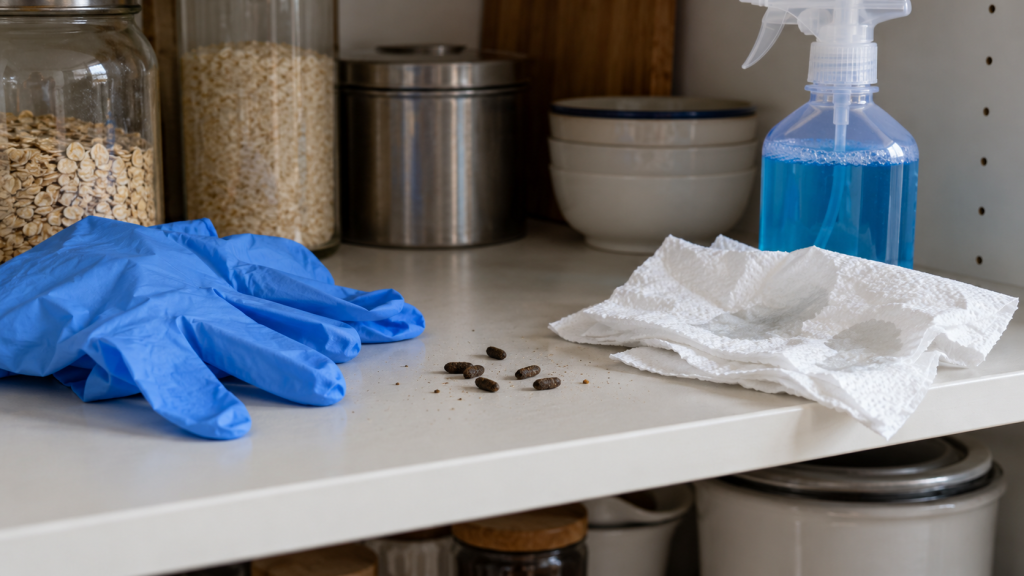
Have household gloves, disposable damp towels or wipes, a suitable cleaning and disinfecting product, waste bags and a way to wash hands ready before you start. A suitable face mask may be advisable, especially where dust is present; public health guidance mentions FFP1 or FFP2 masks for rodent cleaning contexts. Follow the product label for dilution, contact time and compatible surfaces. Never mix bleach with other cleaning chemicals.
Do not bring a vacuum cleaner into the area as a precautionary tool. A standard domestic vacuum can disperse material and contaminate its parts. Likewise, a dry brush or compressed air makes the problem harder to control. If you discover a larger hidden deposit than expected, stop and reassess rather than trying to finish the job quickly.
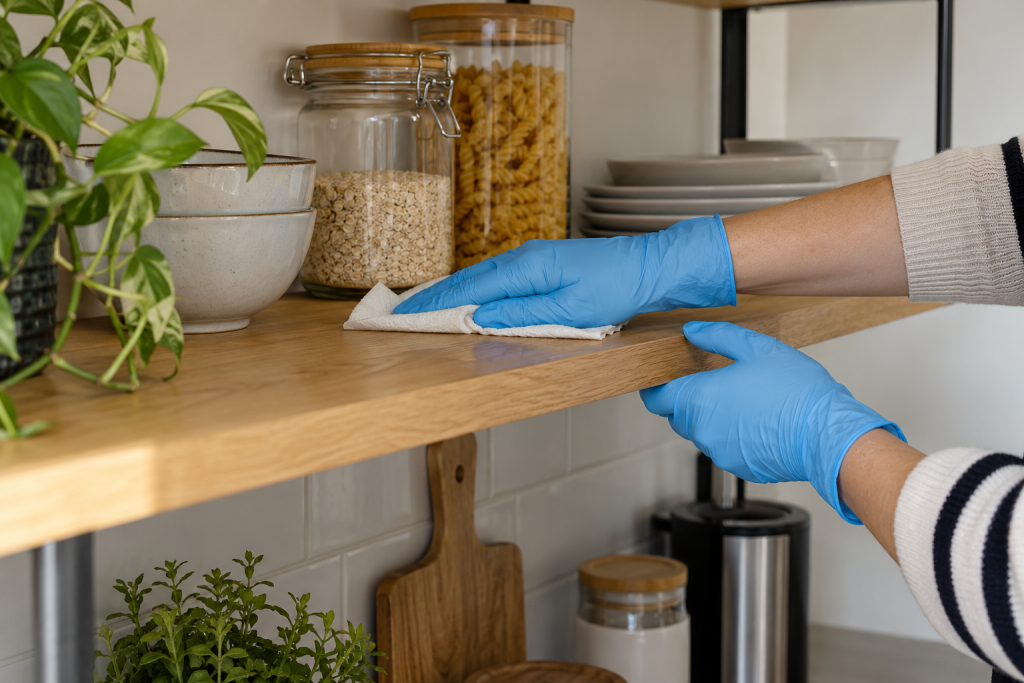
Clean a small accessible hard surface
After photographing the evidence, gently dampen the material with a suitable product as directed, avoiding a forceful spray that scatters it. Pick it up with a damp disposable towel or wipe while wearing gloves. Place the used material in a plastic bag and seal it before putting it in the bin. Clean and disinfect the surrounding surface according to the product instructions, including the stated contact time, and let it dry.
Clean reusable gloves if appropriate, or dispose of them safely. Wash hands with soap and water after removing gloves. If a mask was used, remove it by its straps rather than touching the front, then wash hands again. These steps are more useful than trying to identify disease risk by the colour or apparent age of a dropping. You cannot reliably judge safety from appearance.
Food-contact areas need extra care
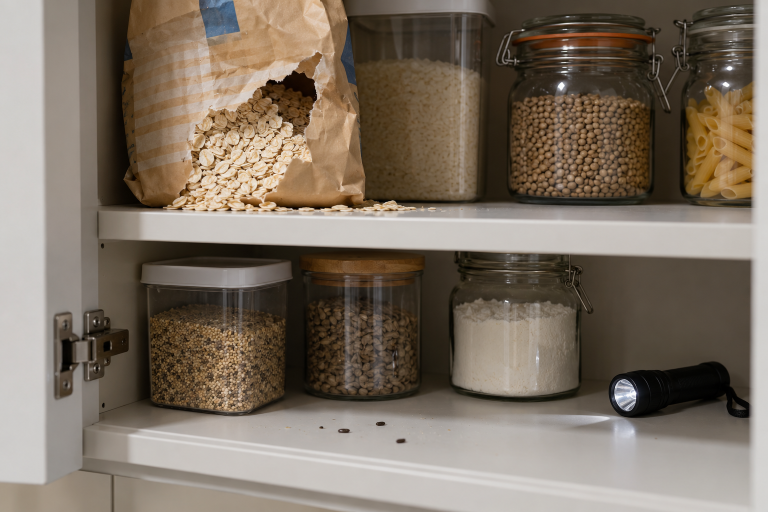
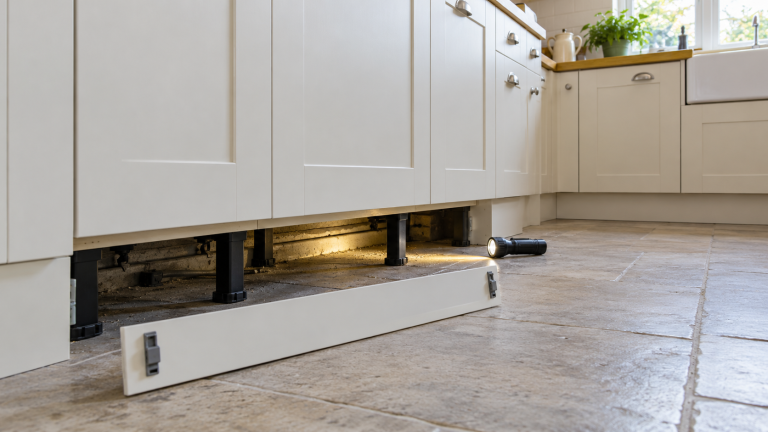
In a kitchen cupboard, keep clean food and utensils away from the affected shelf while you work. Discard food in damaged or contaminated packaging. Wash crockery and utensils before use. Clean food-contact surfaces in line with the cleaning product label, including any rinse instruction. Do not spray an unsuitable disinfectant onto food or a porous package and assume the food is safe. A separate guide to mice control can help if further evidence indicates an active route behind the units.
Move items one at a time so you do not transfer contamination to another cupboard. Sound sealed containers may be cleaned on the outside if the seal is intact, but damaged thin packaging should be discarded. Keep a dated note of what was found and cleaned. If new pellets appear later, the record helps distinguish renewed activity from an old deposit.
Soft furnishings and stored belongings
Fabric, cardboard and insulation are harder to clean than a hard shelf. If a washable item has visible contamination, handle it without shaking and launder it with detergent on the hottest setting the fabric can tolerate, following its care label. Do not carry a loose pile of contaminated textiles through living areas. Bag items for transfer to the washing machine and clean the bagged route afterwards if necessary.
Some porous or heavily contaminated items may need disposal. A valuable item, electrical device or large soft furnishing may require specialist advice. Avoid applying a liquid disinfectant blindly to electrical equipment or delicate material. If a nest is present in a wall or loft, do not pull it apart during a casual clean; first determine safe access and whether the animal problem is still active.
Lofts, sheds and enclosed spaces
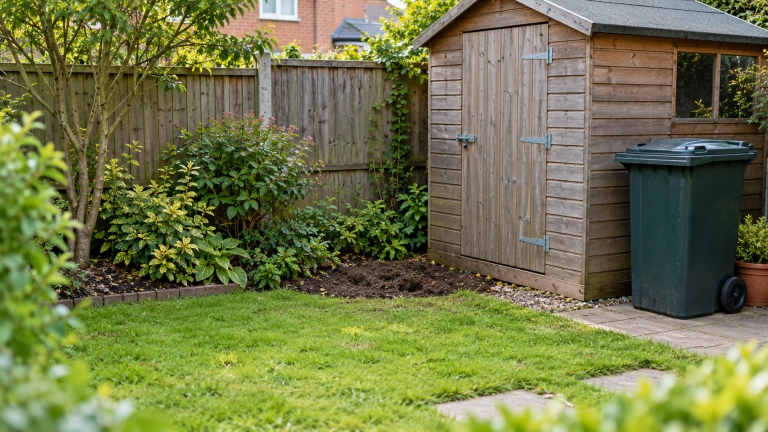
A dusty loft or shed can contain a larger accumulation than a kitchen shelf. Open doors or windows if this can be done safely and allow ventilation before disturbing stored items. Do not step off boarded routes in a loft or lift insulation to reach material. If access is awkward or contamination extensive, ask for a professional assessment. A fall or electrical injury is a more immediate danger than an untidy corner.
Photograph the area from a safe point. Note possible entrances, damaged packaging and signs of nesting. A rodent control inspection can determine whether control and proofing are needed before a deep clean. Cleaning the space while an active route remains can mean the same contamination returns.
Do not treat droppings as a species test
Mouse and rat droppings can differ in size, but age, damage and lack of scale make casual identification uncertain. Seeds and insect debris can also be mistaken for pellets. Do not handle a dropping to feel its texture. Photograph it in place with a nearby object for scale if practical. Report other signs such as gnaw marks, sounds, a live sighting or an exterior burrow. A rat control assessment is appropriate when the wider evidence points in that direction.
If the marks might be cockroach debris, the surrounding signs will differ. Insects, cast skins and activity in warm sheltered cracks would be relevant to cockroach treatment. Cleaning remains sensible, but effective pest management depends on correct identification rather than a guess from one dark mark.
When health concerns need medical advice
If someone becomes unwell after a possible exposure, seek advice from a health professional and explain what happened. Do not self-diagnose a disease from an online photograph of droppings. People with respiratory conditions, compromised immunity or other vulnerabilities may prefer not to handle a contaminated area themselves. The public health guidance on cleaning pet rodent areas is useful for the general principle of avoiding airborne material, but a large wild-rodent deposit may warrant professional handling.
Keep a record of any treatment and cleaning products used, especially if more than one person is involved. If a product causes irritation, follow its label and seek appropriate advice. More chemical is not automatically safer; correct dilution and contact time matter.
After the surface is clean
Check the area for fresh signs over the following days. A clean shelf can be photographed from the same position for comparison. Protect food, close waste bins and report any repeat activity. A single clean-up removes visible material; it does not explain how an animal entered. Ask for inspection if droppings return, packaging is damaged or a live rodent is seen.
For a Harrow property, send your dated photos and the location of the evidence through the contact page. That allows a practical discussion about the route and next steps after the immediate hygiene issue has been addressed.