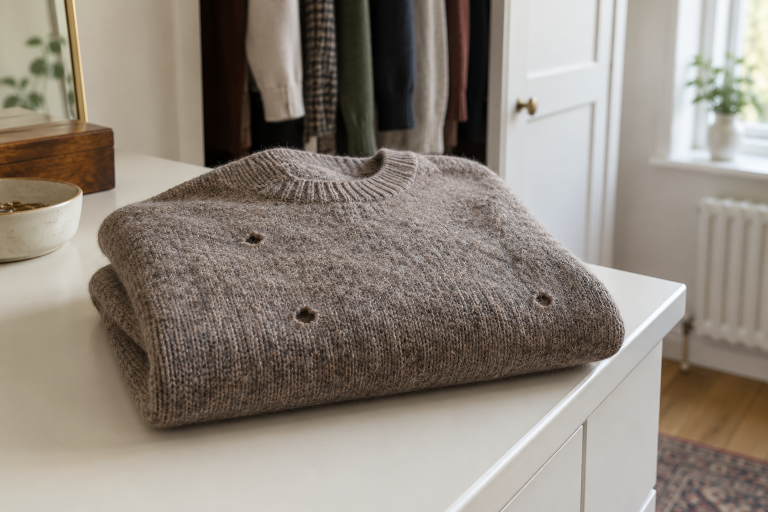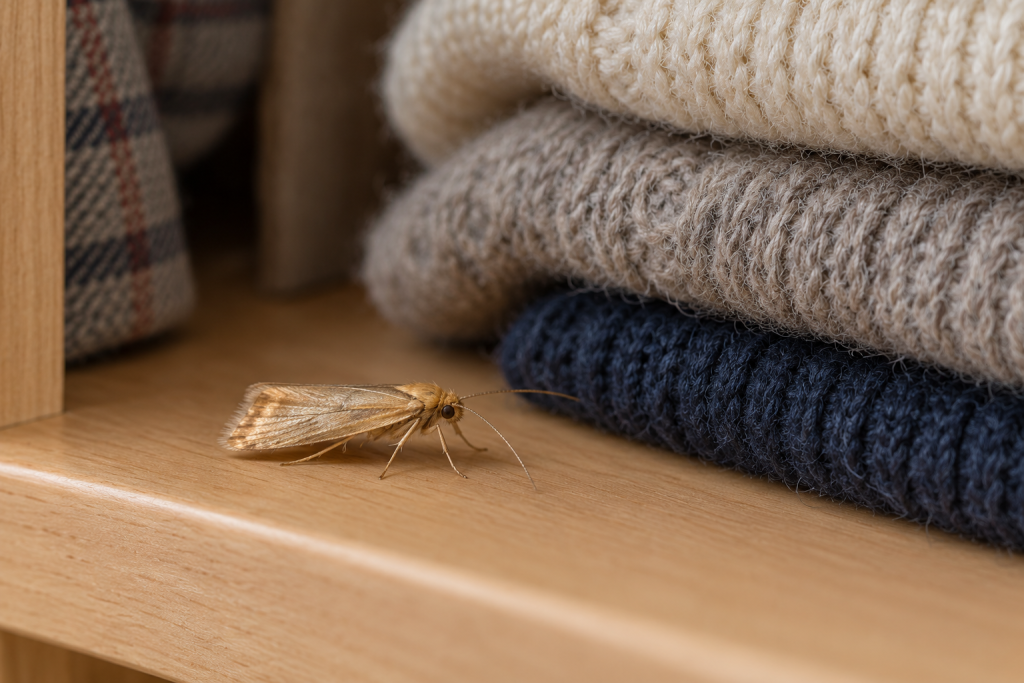
When a small moth flutters out of a wardrobe, it is natural to blame the adult for a hole in a jumper. In a clothes moth problem, the feeding larva is the stage that damages susceptible textiles. The adult is an important clue because it may have emerged nearby or be looking for a place to lay eggs, but it does not chew through your wool. Understanding that difference changes where you inspect and what you protect.
The life stage that feeds on fabric
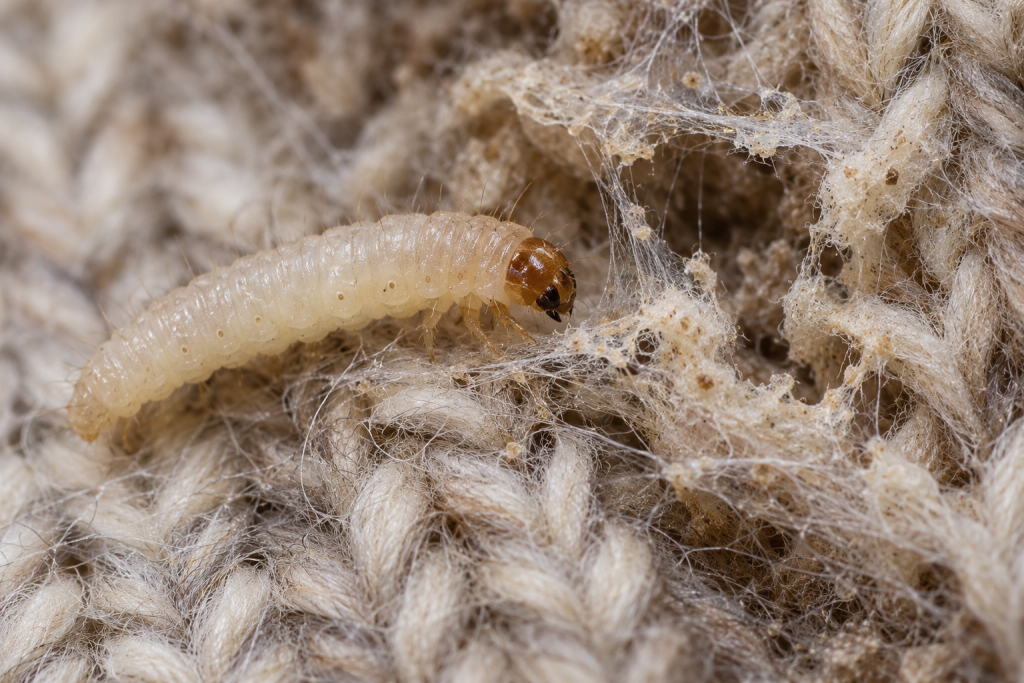
Clothes moth larvae can feed on materials containing animal fibres, including wool, cashmere, silk, fur and feathers. They are drawn to suitable, often undisturbed material, particularly where soiling provides additional nutrients. Damage may begin in a fold, seam or hidden part of an item rather than on the face you see when opening a drawer. The larva may leave silk webbing or a portable case depending on the species. The Natural History Museum identifies common clothes moths and case-bearing clothes moths as household textile pests and notes that their larvae cause the damage.
An adult moth lives for reproduction, not textile feeding. Swatting every moth you see may reduce the number of flying adults but will not remove larvae hidden in a wardrobe, beneath furniture or in stored textiles. Conversely, finding one adult indoors does not prove your clothes are infested. Identification and a search for larval evidence are needed before you decide on treatment. Our moth control service can help locate the source.
How can you recognise the stages?
Adult clothes moths are small and often avoid bright light. Species can be difficult to distinguish from a quick glimpse, and many harmless outdoor moths enter homes. A sharp photograph of the moth at rest is more useful than a description of its flight. Larvae are pale, caterpillar-like and may be found among textile fibres, with a darker head. Some make silk tunnels or webbing; case-bearing larvae carry a fibre-covered case. Inspect a suspect item over a pale sheet so any moving stages, cases or debris are easier to see.
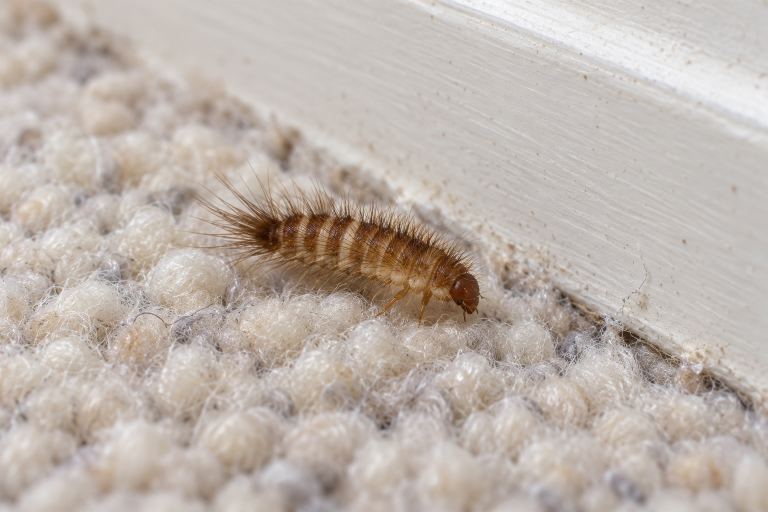
Do not confuse moth evidence with carpet beetle larvae. Carpet beetles leave hairy cast skins and have a different appearance and life cycle. Both may affect natural fibres, so a diagnosis should include the insect and its signs. If you have no specimen, photograph the holes, nearby seams, storage conditions and any cases or skins. The wider insect control service can direct identification and treatment after the evidence is reviewed.
Why are holes often noticed late?
Larvae favour quiet, sheltered areas, whereas people usually inspect clothing only when they take it out to wear. A coat at the back of a cupboard or a wool blanket in a box may be untouched for months. Damage can accumulate before a moth is seen in the room. A garment can also be weakened along a fold and develop a visible hole during handling or washing. Inspect several items in the same storage area rather than assuming that one visible hole represents the whole problem.
Look inside collars, cuffs, pockets, seams and under linings. Check folded blankets, spare bedding with animal fibres and the textile side of furniture in the same room. Where safe and accessible, examine beneath stored boxes and along wardrobe edges. Do not pull apart fitted furniture or expose electrical equipment. If a valuable or delicate textile is affected, photograph it and consult a specialist cleaner or conservator before using heat, freezing or chemicals.
What does an adult moth tell you?
A moth caught in a wardrobe may warrant a careful check of stored items. Repeated adults emerging from the same area increase the reason to inspect nearby fabrics and hidden edges. A moth seen by an open window may have come from outside. Location and repetition matter, as does identification. A sticky pheromone trap may help monitor certain clothes moth species, but its catch is a signal about adult activity, not a direct count of larvae or damage. Follow the trap instructions and keep it out of reach of children and pets.
Keep a dated record of adults, larvae and damaged items. Take photographs of trap catches before disposal. An empty trap does not establish that all textiles are safe; it may be in the wrong place or attract only the species it was designed for. Inspect items directly. The most useful question is where larvae have access to food and shelter, rather than how many moths you saw flying through a hallway.
Can damage tell you when the moth arrived?
A hole does not provide a reliable date. It may have been present when an item went into storage, developed during months of undisturbed feeding, or become obvious only when weakened fibres were stretched. Compare photographs or previous condition records if you have them, but avoid declaring an infestation active from old damage alone. Fresh larvae, webbing, cases or repeated adult catches close to the same textiles provide stronger evidence of current activity. Recheck cleaned and protected items after an agreed interval to see whether new signs appear.
What can you do with suspect clothing?
Separate affected items in clean, closed bags while you assess them. Do not carry an unbagged garment through other storage areas. Follow its care label and consider a suitable professional cleaner for delicate fibres. Laundering or other treatment must be appropriate for the material; excessive heat can shrink wool and damage finishes. Vacuum accessible wardrobe shelves, seams and floor edges, then dispose of the vacuum contents promptly in a sealed bag. Cleaning removes loose fibres and debris but may not reach every hidden stage.
Store clean, completely dry textiles in suitable closed containers or garment covers after inspection. Do not trap dampness inside plastic. Check other natural-fibre items in the same room before sealing them away, because a container can preserve a problem if larvae were already inside. Keep a small inspection schedule for seasonal clothes. Regular handling and light make it easier to notice new signs, even though they cannot guarantee protection.
When is professional help worthwhile?
Seek advice when damage continues, larvae or cases appear in several places, or the source is in upholstery, fitted carpet or inaccessible storage. Tell the provider which fibres are affected and what you have already washed, frozen, discarded or treated. The plan should distinguish clothes moths from carpet beetles and explain any preparation, treatment areas and follow-up. Avoid spraying garments or wardrobes with an unsuitable product. Any pesticide must be authorised for the site and used exactly as its label directs; professional-only products belong with trained operators.
If a garment has sentimental or monetary value, the safest treatment for the textile itself may differ from the treatment for the room. Ask about protecting it before applying anything. For local advice, share photographs and the pattern of damage through our Harrow contact page. A clear identification can prevent unnecessary treatment and help protect the items that are actually at risk.
The practical distinction
Adult moths reveal that a life cycle may be present, while larvae are the stage to find when investigating holes. Inspect folds, seams and nearby storage, not just the air around a light. Record what you find, handle delicate items according to their care needs, and address the source rather than chasing individual adults. That approach gives moth treatment a much clearer target.