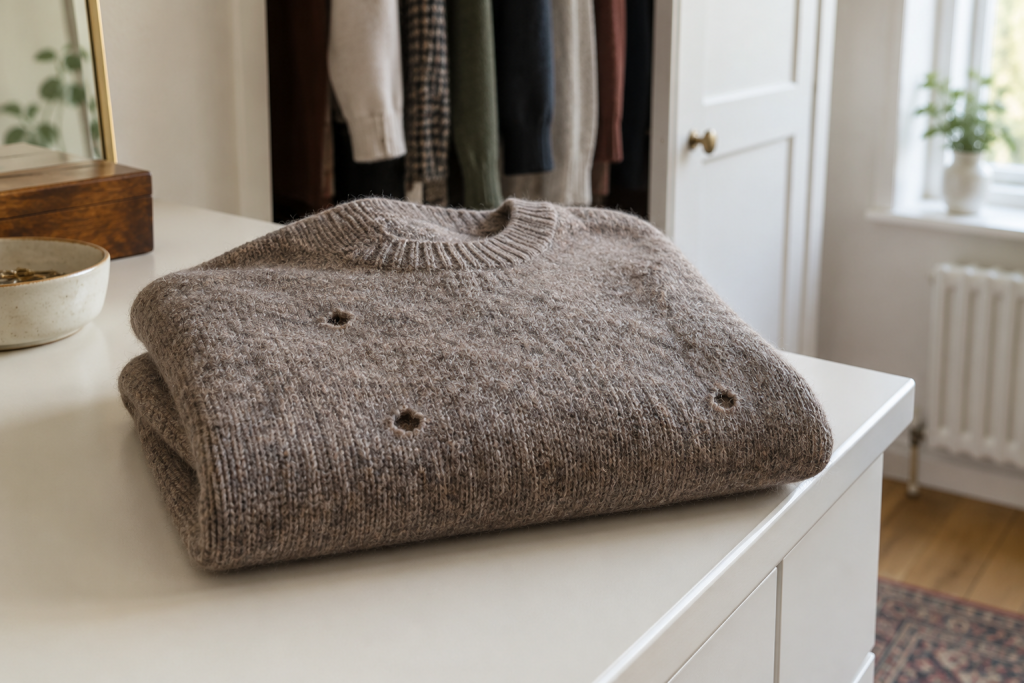
Discovering holes in a wool jumper after months in storage is frustrating, but the damage alone does not identify the cause. Clothes moth larvae and carpet beetle larvae can both affect animal fibres. Wear, snagging, laundering and age can also weaken a garment. A careful inspection of the item and its storage area is the fastest way to separate a current textile pest problem from old or mechanical damage. Work methodically so you preserve evidence and protect the rest of the wardrobe.
Begin with the garment, not a spray
Place the garment on a clean, pale surface and inspect it in good light. Photograph the holes before shaking or washing the item. Look at both sides, then open folds and examine seams, cuffs, collars, pockets and under any lining. Note whether several small holes cluster in a sheltered part or whether a tear follows a worn seam. Check for loose fibres, silk webbing, small cases, larvae or hairy cast skins. If you find an insect, photograph it close-up with a scale; a specimen in a sealed container may help with identification.
Do not assume a hole made during storage is necessarily new. A small worn area can become obvious when you lift or stretch the knitwear. Compare older photographs if available. What matters most for an active infestation is fresh evidence: live larvae, recently shed skins, webbing or continuing damage in other items. Our moth control service can assess whether signs point to clothes moths and where the source may be.
Which pests should you consider?
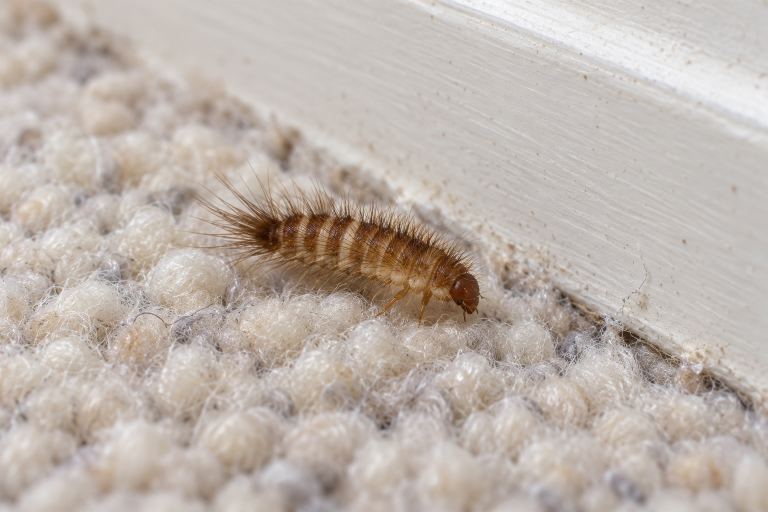
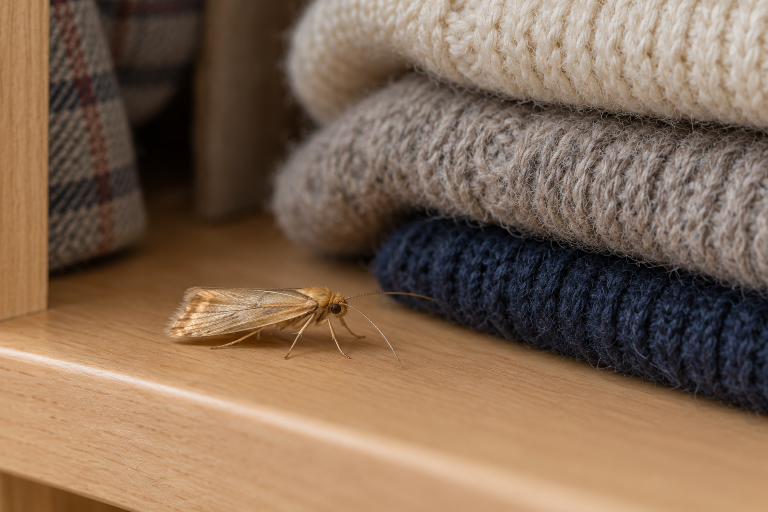
Clothes moth larvae feed on suitable natural fibres; the adult moth does not make the holes. Their signs may include fine silk webbing or a portable case made with fibres, depending on species. Carpet beetle larvae can also feed on wool, fur and other animal materials. They are often bristly, and their hairy cast skins can remain after the larva has moved away. Adult carpet beetles generally do not cause the textile damage. These clues are helpful but not always clear in a damaged garment, so identification is worth doing before treatment.
A pest may be feeding elsewhere in the room and only occasionally using the jumper. Wool carpet edges, an upholstered chair, a box of old blankets or a feather-filled item can support activity. Check the storage area as a whole. If you find characteristic hairy cast skins, see our carpet beetle treatment information. If you are unsure which pest is present, send photographs rather than choosing a product based on holes alone.
Inspect the wardrobe and nearby storage
Empty one shelf or drawer at a time so you can keep track of where each item came from. Examine the rear corners, shelf joins, drawer runners and floor edges with a torch. Look behind storage boxes and under folded blankets. Check nearby natural-fibre clothing, especially pieces that have not been handled recently. Record which items have visible damage and which have insects or signs. A simple list prevents the investigation from turning into an untraceable pile of clothes.
Fitted wardrobes can have inaccessible voids, but do not dismantle panels or pull out fixed electrics. Photograph gaps and ask a professional to assess them if activity continues. Check whether the wardrobe is dry; damp or soiled garments should be dealt with according to their care instructions before storage. Clean clothing in closed storage is easier to monitor than loose, cluttered piles. The broader insect control service can help identify an unfamiliar specimen.
How should you handle a suspect item?
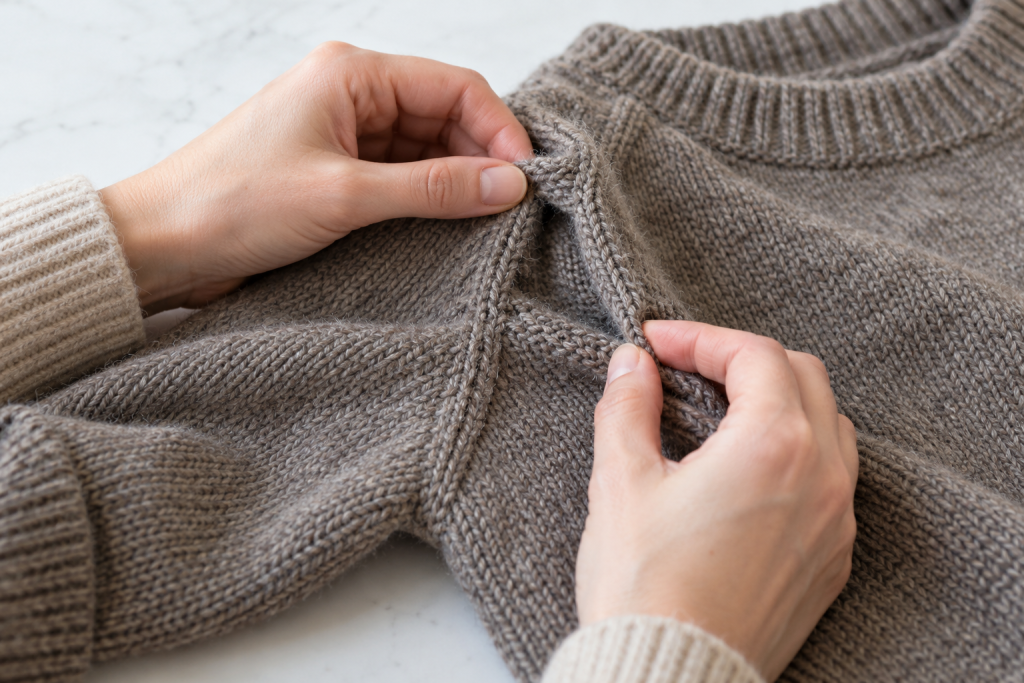
Put affected garments in separate clean, closed bags or containers until you decide how to clean them. Avoid carrying an unbagged item through other textile storage. Check the care label before washing or using heat. Wool and cashmere may shrink or lose their finish if treated too aggressively, and valuable items may need a specialist cleaner or conservator. Do not apply household insecticide directly to clothing unless the product specifically permits that use and every label direction can be followed.
For ordinary washable items, cleaning according to the label can remove soil and some pest stages. A professional cleaner can advise about delicate pieces. Vacuum accessible shelves, drawer corners and floor edges; dispose of vacuum contents promptly in a sealed bag. Clean storage is helpful, but it does not confirm that all hidden stages are gone. Reinspect the area and the stored items on a schedule. Keep untreated suspect pieces separate from cleaned, inspected clothing.
Do the holes have a pattern?
Concentrated damage in folded or undisturbed areas supports a textile pest possibility, especially if you find larvae or their signs. A line of damage along an exposed edge may have a different explanation, including friction or snagging. A single neat hole is not a reliable species marker. Look for context: the type of fibre, whether several items in one drawer are affected, and whether a nearby carpet or upholstered item has signs. Identification depends on the insect and its evidence, not a photograph of a hole alone.
Check natural-fibre accessories such as scarves, hats and gloves, plus stored blankets and rugs. Synthetic fabric is less likely to be a primary food source, but blends can contain wool or silk, and surface soiling can complicate interpretation. Garments with food or body oils should be cleaned before long storage. Close containers only when items are completely dry, or you may create a moisture problem while trying to avoid insects.
Protect unaffected clothing
Inspect and clean items before putting them away, then use suitable closed containers or covers. Avoid packing so tightly that you cannot periodically examine the contents. Regularly handle and inspect seasonal clothing, particularly valuable natural fibres. If you use moth pheromone traps, remember that they monitor certain adult moths; they do not prove larvae are absent and are not a complete treatment. Label storage boxes so you can record where any new evidence appears.
Do not move suspect items to an attic or another bedroom without isolating them. That may spread a problem or make the source harder to find. If you find evidence across several storage areas, seek professional help before treating each space separately. A targeted plan should identify the pest, address affected materials and consider nearby reservoirs.
If the item is part of a set or was stored with matching pieces, inspect those too even when no hole is visible. Larval feeding can be hidden within a fold. Photograph the condition of each item before cleaning and keep notes on which bag or box it came from. That record will help you recognise genuinely new damage at the next check. It also reduces unnecessary disposal of garments that show no evidence of activity.
When should you ask for an assessment?
Arrange advice if you find live larvae, repeated adult moth activity near the same textiles, hairy cast skins in several places, or new damage after cleaning and isolation. Share photographs of both the insect and the garment, the fibre type, storage dates and locations, and anything you have already done. Ask how the provider will confirm the pest and what preparation is required. Our Harrow contact page is available for sending that evidence.
The source of holes may be a small group of stored items, a carpet edge or another undisturbed textile. Trace the evidence before choosing a treatment. By inspecting carefully, isolating suspect pieces and identifying the life stage present, you can protect unaffected wool and direct any professional work to the place that matters.