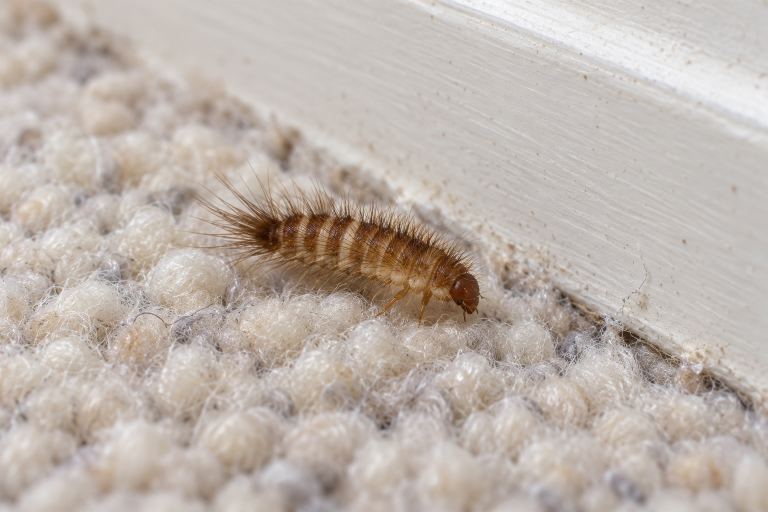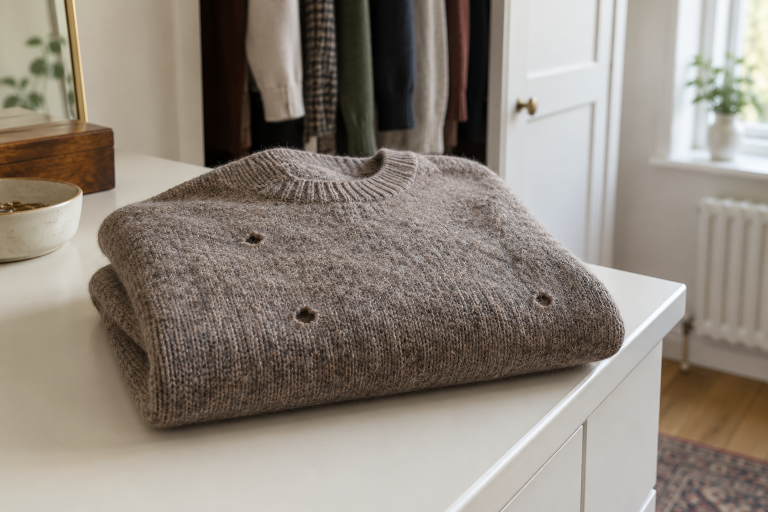
A box of wool blankets, silk accessories or feather-filled items can remain undisturbed for months. That makes it easy to overlook carpet beetle larvae until a stored piece is taken out and damaged fibres become obvious. Protection begins before storage: identify vulnerable materials, clean them appropriately, inspect the container and keep a record that lets you notice change. Closed storage helps only when the item is clean, dry and free of insects when it goes in.
Which materials need the most attention?
Carpet beetle larvae can feed on animal-derived materials such as wool, fur, feathers and some upholstery fillings. Silk and natural-fibre blends may also be relevant. A synthetic outer cover does not necessarily mean the whole item is safe if it contains down or wool. Check care labels where available. Old rugs, spare woollen clothes, felt hats, feather accessories and inherited textiles are common items to review. Stored pieces with pet hair, lint or food soil deserve closer inspection because organic debris can accumulate around them.
Damage is usually linked to the larval stage rather than adult beetles. Adults may appear at windows while larvae remain in dark storage or along carpet edges. A beetle on a windowsill is a reason to inspect, not proof that every stored textile is affected. If you find bristly larvae or hairy cast skins, our carpet beetle treatment service can help confirm the source.
Inspect before you pack
Lay each item on a clean, pale surface and check folds, seams and undersides. Look for live larvae, cast skins, holes, thinned patches and loose fibres. Photograph suspicious signs before cleaning. Inspect storage boxes and the shelf or floor where they have stood, especially corners and joints. Do not combine a suspect item with unaffected pieces. Place it in a clean, closed bag while you decide how to clean it, and record where it came from.
A hole alone cannot identify a pest. Clothes moth larvae, wear and previous cleaning damage can create similar marks. Carpet beetle cast skins are distinctive clues but may be old. Clear photos of the insect or skin, the item and its storage location are more useful than a description of the hole. Our moth control page helps compare the other common textile pest, while a professional identification avoids treating for the wrong one.
Clean items according to their care needs
Follow each care label. Some pieces can be laundered; others need a dry cleaner or textile conservator. Excess heat can shrink wool or damage finishes, so do not improvise a temperature treatment for a valuable garment. Remove surface lint and hair from appropriate items, and ensure everything is fully dry before packing. If an item has confirmed larvae or cast skins, discuss suitable treatment for that specific material before placing it back with clean stock.
Vacuum accessible storage shelves, wardrobe bases and floor edges after documenting signs. Seal and dispose of the vacuum contents promptly. Wipe hard surfaces where appropriate and let them dry. Cleaning reduces debris and removes some exposed stages, but it may not reach larvae hidden in a fitted carpet, upholstery or structural gap. If evidence continues, inspect the room rather than repeatedly washing the same item.
Choose storage that can be checked
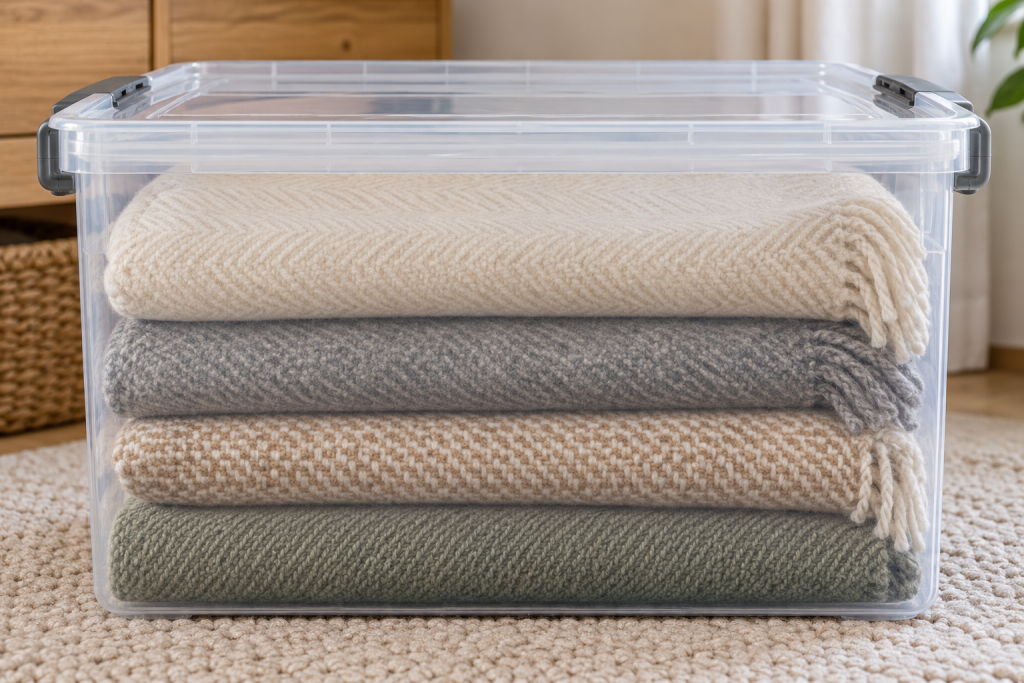
Use clean containers or garment covers that close properly and suit the textile. Avoid overpacking; compressed items are hard to inspect and may develop creases or moisture problems. Label each container with its contents and the packing date. Place it where you can access it for periodic checks rather than at the back of a damp loft. Do not seal a damp garment in plastic. A closed box can prevent new access from outside, but it can also trap any larvae already on the fabric.
For long-term or valuable storage, ask a textile specialist about materials that will not harm dyes or fibres. Household mothballs and other chemical products are not a default solution. Any pesticide must be approved for its intended use and handled strictly according to the label; do not place loose chemicals among clothing or bedding. A clean, inspectable container and a record of what is inside are often more practical than an unverified deterrent.
Check the room around the boxes
Carpet beetles may be using a source outside the container. Inspect carpet edges, beneath furniture, skirting corners and any wool upholstery nearby. Pet hair and lint can gather where cleaning seldom reaches. Move only light, freestanding items you can handle safely. Photograph inaccessible spaces for a professional rather than pulling up fitted carpets or dismantling furniture. If you find larvae along the carpet edge, storing a blanket more tightly will not address the source.
Keep the room reasonably clean and dry, and inspect items periodically. A simple annual check of seasonal textiles is better than waiting until damage appears. Record larvae, skins and new holes by location and date. If all signs cluster near one shelf, focus the next search there and in adjacent material. If they occur across several rooms, a wider survey may be needed. The general insect control service can help with identification when the evidence is mixed.
What should you do if you find activity?
Isolate suspect items in clean, closed bags. Photograph and retain a specimen if practical. Check other items from the same box or shelf, then inspect the surrounding room. Do not move unbagged textiles into another wardrobe. Clean according to care labels and discuss delicate pieces with a suitable specialist. Avoid spraying clothing or storage boxes with a general-purpose aerosol. It may damage textiles, expose people unnecessarily and leave the actual larval source untouched.
Ask a pest professional to identify the species and the reservoir if larvae or skins recur. Share your storage list, photographs and any products already used. The plan may involve cleaning, targeted treatment, proofing or follow-up depending on the findings. It should explain which items can safely return to storage and when to recheck them. For Harrow advice, send the evidence through our contact page.
Special care for inherited and valuable pieces
An heirloom rug, antique garment or museum-quality textile may react badly to ordinary laundering, heat or a household spray. Photograph its present condition, limit handling and ask a qualified textile conservator or specialist cleaner about safe options. Tell the pest professional that the item is valuable before any room treatment is planned. Keep the piece separate from other textiles without folding it in a way that creates new damage. A careful diagnosis can also prevent needless disposal: old holes and cast skins do not always mean there is live activity today.
If a collection has many pieces, make a short inventory with storage locations and condition notes. Inspect a representative item from each container, then widen the check wherever signs appear. This is more manageable than mixing everything together, and it preserves the trail to a particular shelf or room. After cleaning, keep the inventory with the boxes so the next inspection can focus on genuine changes.
A repeatable storage routine
Inspect, clean, dry, pack and label each vulnerable item. Check the storage location and nearby textiles before putting the box away. Reopen it on a sensible schedule and compare the contents with your earlier photographs. If you find a cast skin or new damage, trace the source before repacking. This routine protects natural fibres more reliably than leaving items untouched and hoping a container alone will solve the problem.