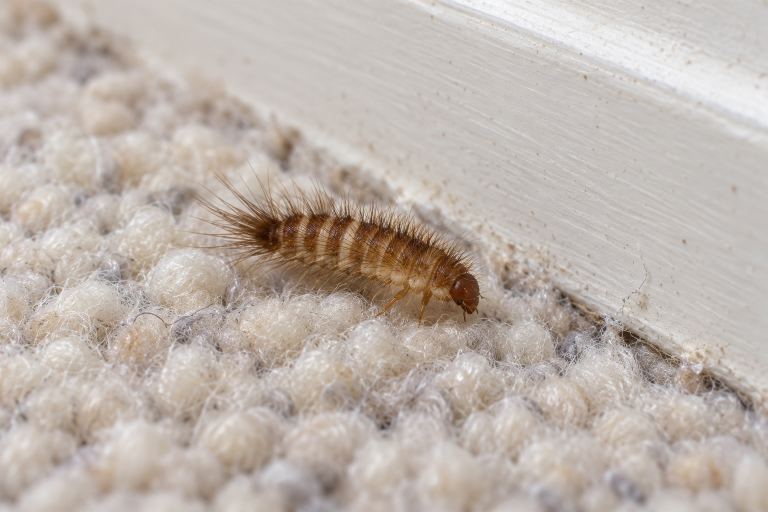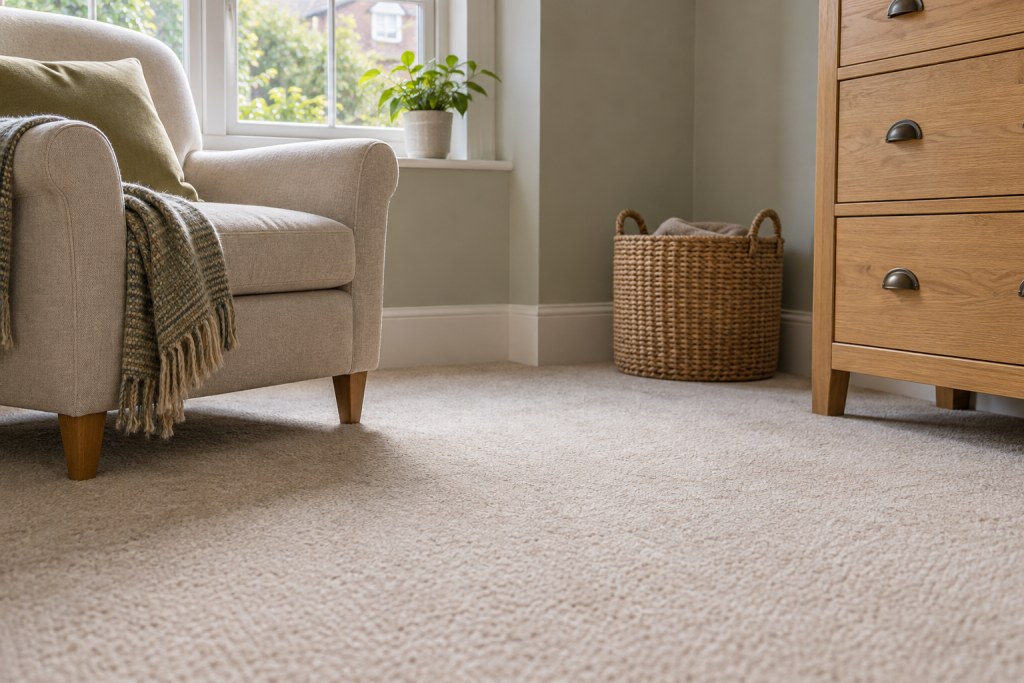
A worn strip of wool carpet beside the skirting board can be easy to miss when the centre of the room looks sound. Textile pest larvae favour sheltered, undisturbed places, so the edge behind a sofa or the corner of a seldom-used room may reveal more than an open floor. That pattern does not identify the species by itself. Clothes moths and carpet beetles both need consideration, and ordinary wear can also damage carpet. A careful edge inspection helps you find evidence before choosing treatment.
Why do quiet areas matter?
Undisturbed rooms allow dust, pet hair and loose fibres to collect. Furniture can shield carpet edges from light, vacuuming and regular foot traffic. The resulting space may offer shelter and suitable material to feeding larvae. Wool carpet, natural-fibre upholstery or stored blankets can provide resources. A room that is rarely entered may also be checked less often, so damage can develop before anyone notices it. The issue is the combination of material, shelter and time, not a simple rule that every quiet room attracts pests.
Carpet beetle larvae are often found in sheltered edges and beneath furnishings; clothes moth larvae may also use natural-fibre carpets and nearby textiles. Adult insects can be seen elsewhere, making the source less obvious. Our carpet beetle treatment service and moth control service both begin with identifying the pest and locating the material that supports its larvae.
Where should you inspect first?
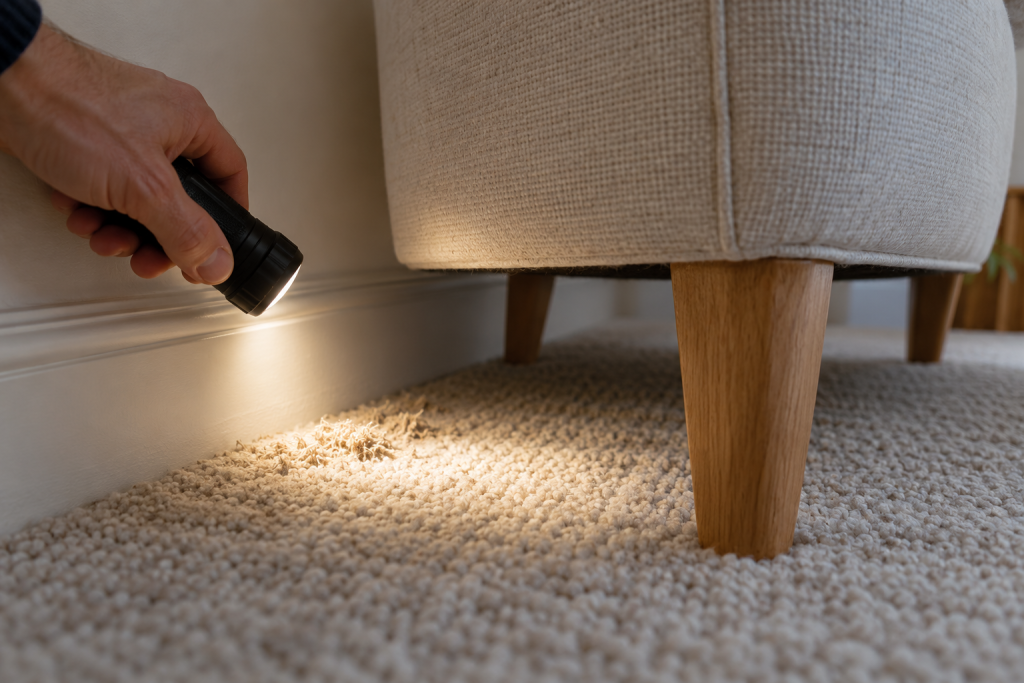
Use a torch to look along accessible skirting edges, beneath light furniture and in corners behind stored boxes. Check where carpet meets a fitted wardrobe and around the legs of a sofa or bed. Inspect the underside of a movable rug and the adjacent floor. Do not pull up a fitted carpet, drag heavy furniture or dismantle fixtures. Photograph inaccessible areas and tell the professional why they concern you. If there is a loft or spare bedroom full of stored textiles, inspect its accessible edges in the same measured way.
Look for larvae, shed skins, silk webbing, small cases and irregular thinning or holes in vulnerable fibres. Photograph signs before cleaning. A single cast skin can be old, and a bare carpet edge may be caused by wear or poor fitting. Several signs together in one location carry more weight. Record the room, exact edge and date, then compare with other rooms. A simple floor sketch helps show whether evidence follows one wall or is scattered.
Which materials are at risk?
Animal-derived fibres such as wool, fur, feathers and some upholstery fillings are relevant to both groups of textile pests. A carpet labelled as a blend may contain wool even if it includes synthetic fibres. Check rugs, blankets and soft furnishings near the suspect edge. Stored clothing can be a separate source in the same room. Pet hair and lint can collect under furniture, so clean those accessible areas after you document the evidence. Synthetic flooring alone may be less likely to serve as the main food source, but nearby organic debris and furnishings still deserve inspection.
Do not conclude that the carpet is the source just because you found an adult moth or beetle in the room. Adults move and may be attracted to light. The damaging larvae may be in an old blanket, upholstered chair or box of clothing. The broader insect control service can help distinguish these possibilities when you can provide a specimen or clear photograph.
How does damage develop at an edge?
Larvae may feed where fibres are sheltered against a wall, beneath a furniture foot or under the lip of a rug. The centre remains visible and regularly disturbed, while the edge goes unnoticed. Thinning can look like ordinary wear until you inspect closely. Compare both sides of the same room and check whether the damaged portion follows a traffic line. Natural wear is more likely where shoes and furniture rub repeatedly; pest evidence is strengthened by larvae, cast skins or webbing in the same protected area.
Photograph the carpet with a ruler so you can see whether the affected area expands after cleaning and treatment. Keep the original image; a memory of the patch size is unreliable. Do not apply a pesticide just to cover the visible strip. If the source is in furniture or another textile, treating the carpet alone may miss it.
What cleaning helps?
Vacuum accessible edges, beneath movable furniture and along skirting after photographing evidence. Use a suitable attachment without damaging the carpet. Seal and dispose of the vacuum contents promptly. Remove pet hair, lint and textile scraps from storage corners. Clean and inspect nearby blankets and clothing according to their care labels. Avoid moving unbagged suspect items to another room. Cleaning can remove exposed stages and make future evidence easier to see, but it may not reach larvae beneath fitted carpet or inside upholstery.
Keep the room reasonably ventilated and dry. Fix leaks or dampness through the appropriate repair process; moisture can create other problems even if it is not the sole driver of textile pest activity. Periodically move light objects and inspect beneath them so a new hotspot does not remain hidden for a season. This is a monitoring habit, not a need to turn the room over every day.
Checking a room that has been empty
Before bringing stored clothing or bedding back into a spare room, inspect its carpet edges, wardrobes and upholstered furniture. Open boxes one at a time on a pale sheet, check vulnerable fabrics, and keep any suspect item isolated. Take photographs if you find a larva or skin. Vacuum accessible dust and pet hair only after you have recorded signs. An empty room can still contain an affected rug, carpet or furnishing, so a lack of recent human use does not settle the question. A short checklist and location notes will make follow-up much easier.
When is professional inspection useful?
Arrange help if larvae or cast skins recur, damage expands, or the source appears to be beneath fitted materials or inside furniture. Share photographs of the insect, the damage and the surrounding room, and list any natural-fibre items nearby. Explain what you have cleaned or treated already. A professional can assess whether the signs are active, identify the pest, and advise which areas need targeted treatment and follow-up. They can also explain how to protect unaffected textiles while work is done.
Do not use professional-only pesticides yourself or spray a broad area without identifying the pest. Any household product must be suitable for the exact site and used according to its label. Delicate rugs and furnishings may need a textile specialist before any treatment. For a Harrow survey, send evidence through our contact page.
Keep checking the places that are easy to forget
After the initial clean and any treatment, revisit the same carpet edges and quiet rooms on a schedule. Note new larvae, skins or damage by date and location. If the area remains clear while a different room develops signs, update the search rather than assuming the original edge was always the source. A focused record gives you a better measure of progress than adult insects seen elsewhere in the house.
Carpet edges and undisturbed rooms deserve attention because they combine vulnerable materials with shelter and infrequent inspection. They are starting points for a search, not a diagnosis. Find the life stage, identify the species and trace nearby textiles before deciding what needs treatment.