A flat can be clean and well maintained yet still have rodent activity. Mice and rats use shelter, warmth and access routes; they do not respect the boundary marked on a tenancy plan. Service pipes and the spaces around them can create a concealed path between a kitchen, bathroom, utility cupboard and shared riser. Understanding that route helps residents describe the problem and coordinate a proper response.
What is a service route?
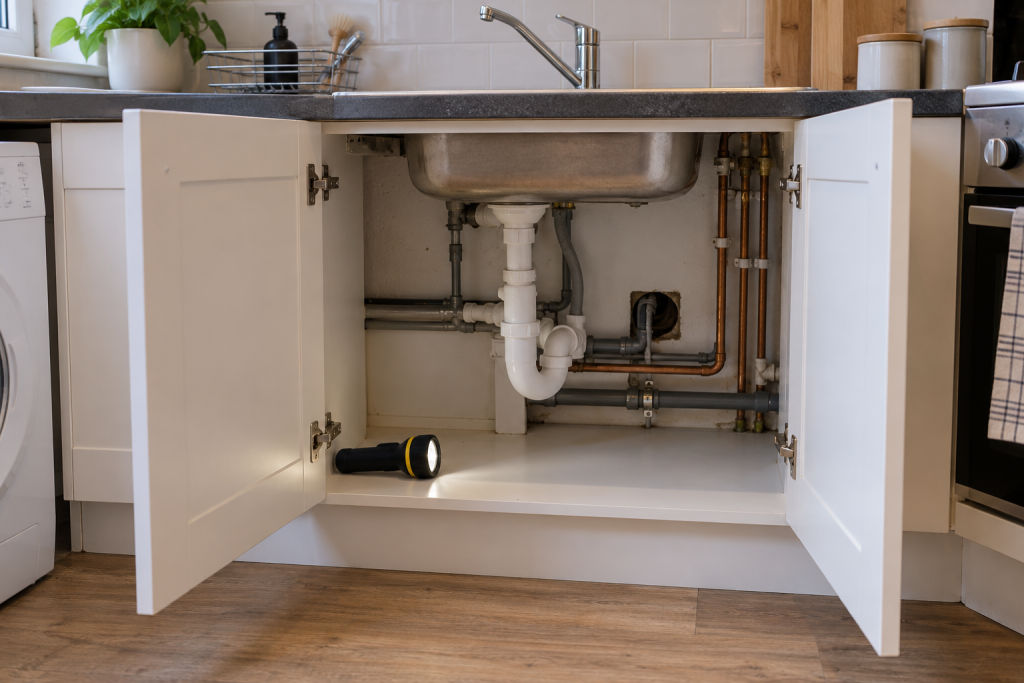
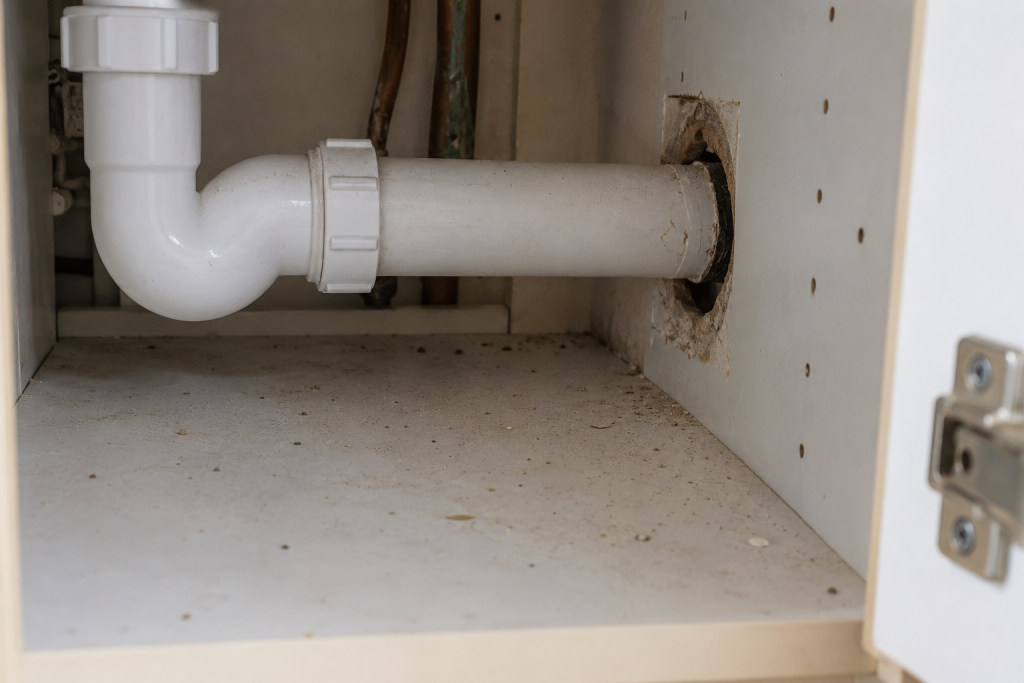
Water, waste, heating and electrical services often pass through floors, walls and cupboards. The pipe or cable may be sealed tightly, or there may be a gap around it. Behind boxing and kitchen units, several openings can connect to a larger void. An animal might travel beside a pipe rather than inside it. A visible gap in one flat is therefore a clue, not proof that the source is that home.
Some routes continue through shared areas, such as a vertical service riser. A mouse may enter a building at ground level and appear several floors higher. Rats can also use building voids, though their routes, entry points and associated signs need separate assessment. The rodent control service can look at the entire path rather than treating one cupboard as an isolated site.
Why a sighting in one flat may involve another area
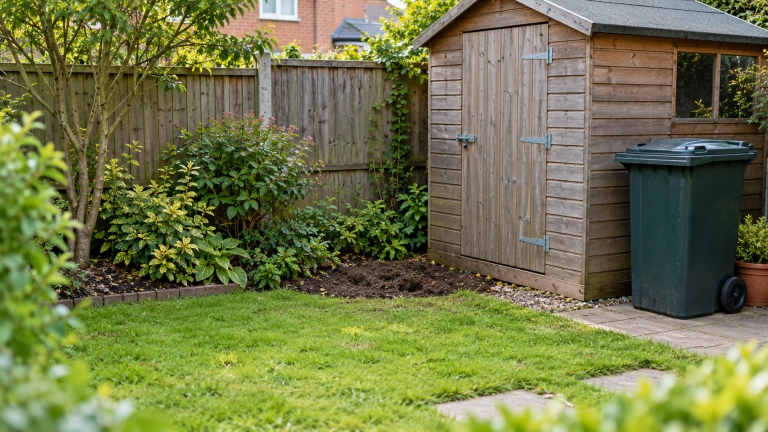
Rodents need access to food and shelter, but those resources may be in different places. They can move from a shared bin store, garden or plant room into a void, then emerge near a warm kitchen pipe. A resident may find droppings without having left food exposed. This is one reason blame is unhelpful. Useful information includes where the evidence appears, when it started and whether adjacent homes or shared areas report similar signs.
A single sighting does not reveal the full route. The animal may have entered through an open door, a damaged exterior opening or a service gap. If several flats report activity near the same wall, a shared route becomes more plausible. Record the locations on a simple floor plan if possible. Avoid identifying a neighbour as the cause without evidence.
Where to look from inside the flat
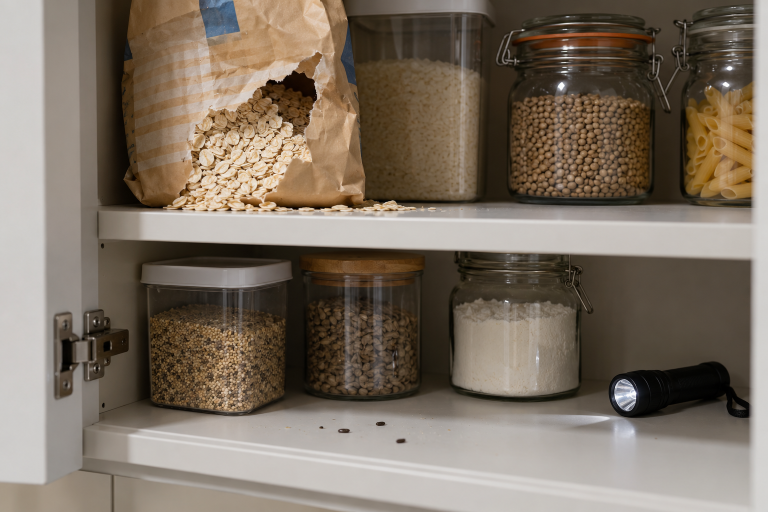
Start with accessible areas: beneath the sink, beside washing machine connections, behind the visible edge of a kitchen plinth and around bathroom boxing. Use a torch and take photographs before moving anything. Look for droppings, dust disturbance, gnawed material and a gap large enough to warrant professional assessment. Do not reach into a void, remove fixed panels or move a heavy appliance alone. Building services can be hot, live or fragile.
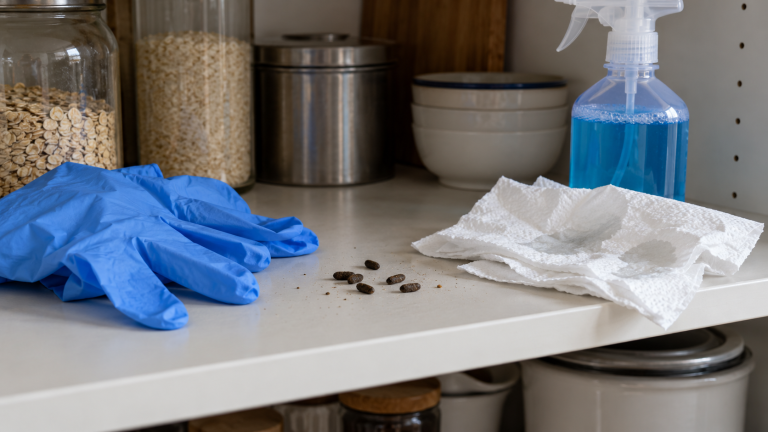
Check stored food, waste and pet food in the affected room. These can influence where an animal spends time, even when the entry point is elsewhere. Keep sound food in lidded containers and discard any food from damaged or contaminated packs. If you find suspect droppings, avoid dry sweeping or vacuuming them. Restrict access until you have suitable hygiene guidance.
How to distinguish mice from rats here
A pipe route does not identify the species. Small droppings, fine gnawing and narrow openings may suggest mice, while larger droppings and heavier damage may raise concern about rats. Overlap, age and scale make casual identification unreliable. A photograph of a mark beside a coin is more useful than an unsupported description such as “quite big”. A mice control assessment or rat control assessment should follow the evidence found across the property.
Some marks can be mistaken for insect debris or old building dust. Droppings may be hidden behind appliances, but do not dismantle the kitchen to search. A pest professional can decide whether additional access is warranted and how to avoid damage. The aim is to identify active travel and entry points, not to collect as much material as possible.
Tell the landlord or managing agent early
In a rented flat, report evidence promptly and in writing. Include dates, rooms, photographs and any signs in shared areas. The landlord or managing agent may need to arrange access to a riser, inspect exterior fabric or coordinate neighbouring units. A treatment focused only on one flat can fail if a shared route remains open. Keep copies of reports and appointment notes so everyone works from the same facts.
Some buildings have a residents’ association or caretaker who can help gather reports. Share observations, not accusations. A coordinated inspection can establish whether the route is private, communal or linked to an external defect. Where access is restricted, an agreed plan for several units may be needed. This is particularly relevant if activity appears on the same service line at different levels.
Why proofing needs a plan
Filling a visible gap can feel decisive, but it may obscure evidence or drive an animal to another exit if activity remains inside. Proofing must also respect the pipe, cable, fire separation and maintenance access. Materials suitable for one opening may be unsuitable for another. A specialist should determine where the animal travels, which gaps should be sealed and in what order. Ask for the recommendations in writing if several parties will arrange the work.
Fire stopping around service penetrations is a separate building safety issue. A pest controller may identify a gap, but fire-rated work should be specified and installed by someone competent for that system. Do not pack a shared riser with improvised filler. The building manager should coordinate any required repair so pest proofing and fire safety are both addressed.
What a coordinated inspection may cover
An inspection may begin in the affected flat, then extend to accessible communal areas, exterior openings, bin storage and other reported units. The professional may assess droppings and damage, identify likely routes and recommend monitoring or control suitable for the species. Residents should be told what access is needed and what belongings, if any, should be moved. Sensitive areas should be checked with the resident present where practical.
Ask who will handle repairs, when follow-up takes place and how new reports should be logged. Control products, if used, require appropriate placement and monitoring around children and pets. An unexplained treatment in one cupboard without a route assessment may not address the cause. Clear notes make the plan easier to review if signs continue.
What residents can do while waiting
Keep food and waste in closed containers, clean ordinary spills and avoid leaving pet food out overnight. Photograph new marks before cleaning them, and note whether activity changes. Do not set out unlabelled poisons or traps in a communal area. Other residents, pets and wildlife may be exposed, and unauthorised measures can complicate an inspection.
Do not assume that silence means the route has been closed. Rodent activity can be intermittent, and a single night’s absence is not a reliable endpoint. Follow the agreed monitoring period and report further signs promptly. If you see damaged wiring or a leak, address that hazard through the appropriate trade as well as the pest issue.
When to seek help
Repeated droppings, a live sighting, gnawed packaging or several reports near the same service run justify a prompt, coordinated assessment. The key details are where and when the signs were found, who controls access to shared spaces, and what repair work has already been done. For a Harrow flat, you can contact the team with those facts and photographs to discuss an inspection that considers the full building route.