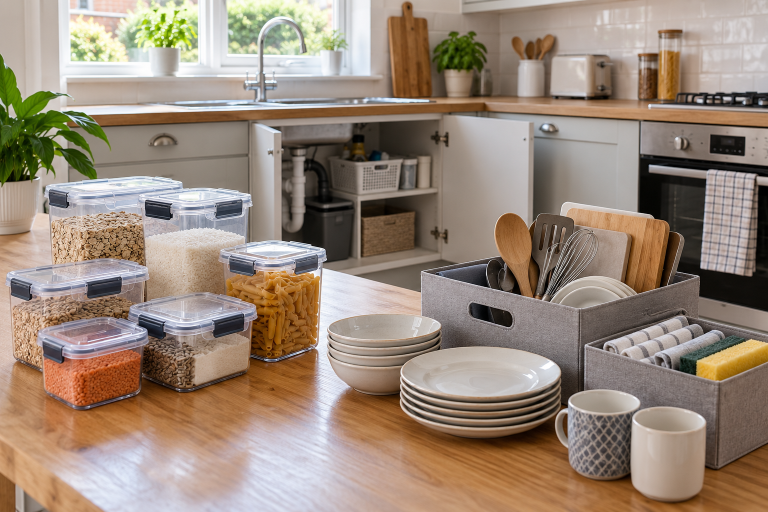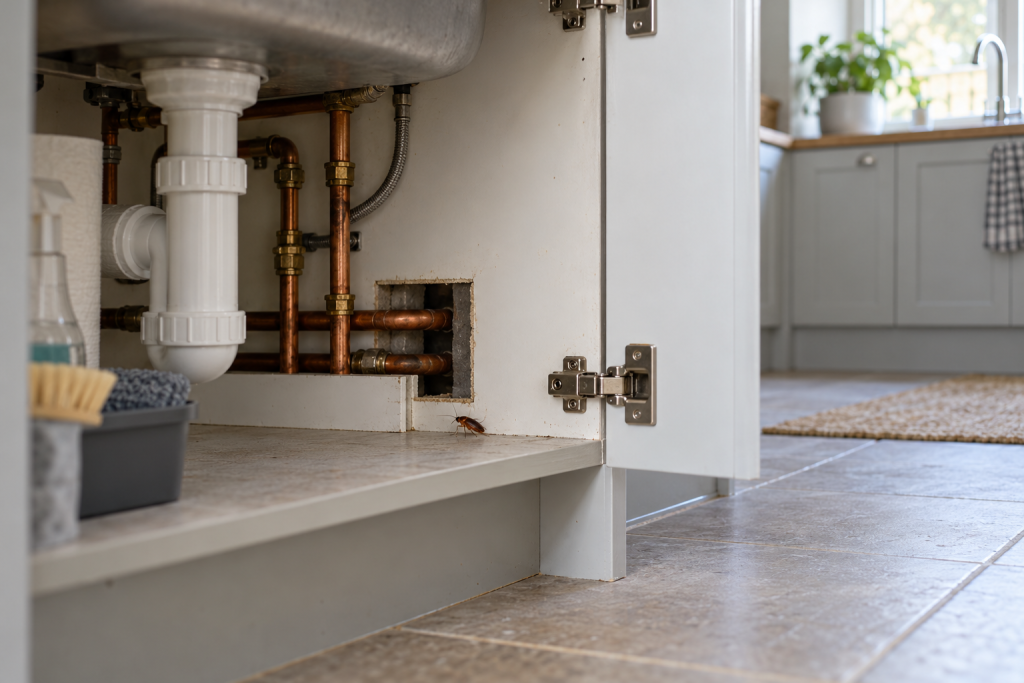
A kitchen can look clean from the doorway while still offering a cockroach a protected route behind a cupboard. Warm pipework, moisture near a sink and narrow gaps around fitted units create a different environment from the open worktop. Understanding those concealed spaces helps you interpret sightings and explain the problem clearly to a pest professional. It also keeps you from dismantling a kitchen or spraying blindly into places you cannot inspect.
What makes a concealed gap attractive?
Cockroaches need shelter as well as access to food and water. A narrow space gives them contact with surfaces on either side and protects them from ordinary household disturbance. The void behind a kitchen plinth, the space around a pipe where it passes through a cabinet, or the rear of a fitted unit may remain undisturbed for months. These gaps also connect parts of the room. An insect seen beneath a sink may have travelled from behind another unit rather than living in the first cupboard you opened.
Temperature matters, particularly for German cockroaches, which favour warm indoor areas. A cabinet beside a warm appliance or pipe can provide a sheltered microclimate, especially where heat is retained overnight. The point is not that every warm pipe contains cockroaches. It is that warmth can make a suitable hiding place more favourable when shelter, water and access are already present. A single sighting near plumbing should prompt a measured inspection, not a conclusion about the size of an infestation.
Water can be as important as crumbs
People often focus on food scraps, but a slow drip under a sink, condensation or damp material around pipework can support pest activity. The inside of a sink cabinet may be dark, warm and rarely emptied. A leaking trap or supply connection can leave a persistent moisture source even after visible surfaces have been wiped dry. If you notice a leak, arrange a suitable repair and dry the area. Do not work on plumbing or electrical equipment beyond your competence.
Food residue may also collect in hidden places. Grease can settle behind a cooker, crumbs can fall beneath a plinth, and packaging may remain at the back of a storage cupboard. Removing accessible residue is worthwhile because it reduces available resources and makes later monitoring easier. Cleaning cannot by itself prove that insects have gone: eggs, immature stages and hiding places may remain out of sight. Our guide to cockroach treatment explains when an inspection and targeted plan are appropriate.
Where should you look first?
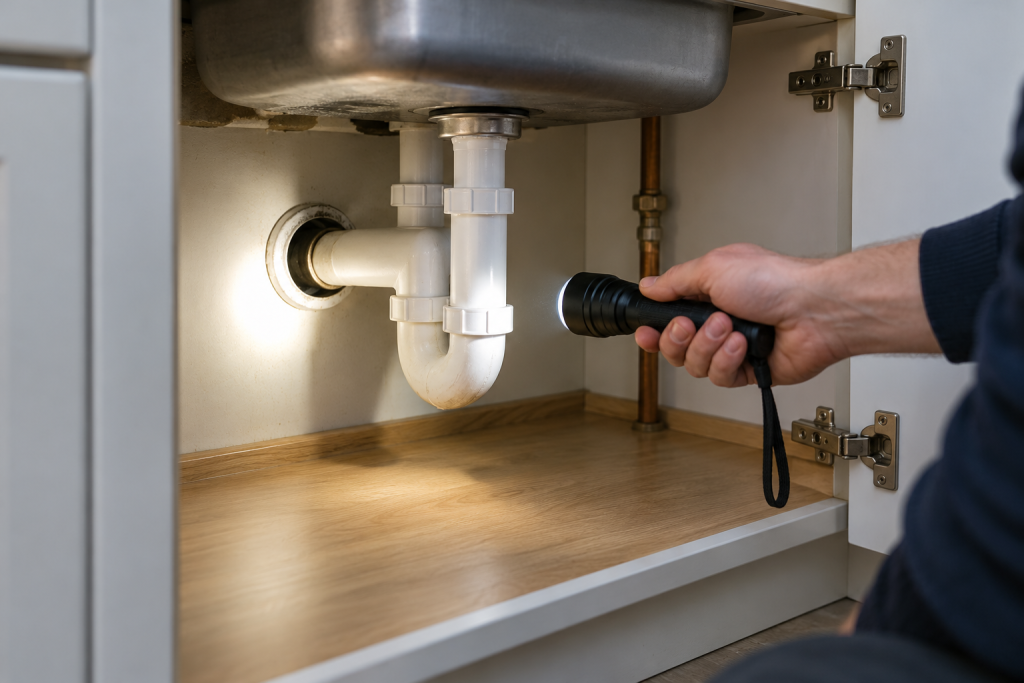
Start with areas you can reach without moving heavy fitted equipment. Use a torch to inspect the base and rear corners of the sink cabinet, around accessible pipe entries, cabinet hinges, drawer runners and the edges of a removable plinth. Look along the joins between cabinets and walls. Check the accessible floor around a cooker, fridge or dishwasher for droppings, shed skins, egg cases or insects. Photograph anything you find and note its exact location and date. A clear record is more useful than a vague report that you saw “bugs in the kitchen”.
Do not pull out a gas cooker, disconnect a dishwasher or expose wiring to investigate a suspected harbourage. A fitted unit may also have sharp edges or loose panels. If you cannot inspect safely, describe the gap and leave it for an appropriate professional. Their survey can distinguish a likely route from an isolated sighting and decide whether neighbouring units or rooms need checking. The wider insect control service is a starting point if you are still identifying the insect.
Which signs are worth recording?
Live insects are direct evidence, but their appearance matters. German cockroaches are relatively small and light brown, with dark parallel markings behind the head. Other insects can be mistaken for them, and a photograph helps avoid a wrong assumption. Small dark specks in sheltered corners may be droppings, but dust, food debris and mould can look similar. Shed skins and egg cases can add context if a trained person can identify them. Keep a sample in a sealed container if that is practical and safe; otherwise take sharp photographs from several angles.
Write down when you see activity. Repeated sightings after dark, or multiple life stages in a compact area, can suggest an established local problem. A lone insect carried in with a delivery has a different pattern. Neither pattern can be confirmed from one clue alone. If you are unsure, our article on professional cockroach control describes the inspection and follow-up process, while a direct enquiry through contact us lets you share photographs and the locations you have noted.
Why do cabinets complicate treatment?
Fitted furniture creates many shallow voids, some accessible and others closed. Activity may be concentrated in a junction that is only a few millimetres wide. A treatment placed elsewhere may miss that route. This is why a pest professional will normally want to assess where insects are feeding, sheltering and travelling before deciding what to use. They may ask you to clear selected cupboards for access, identify water sources and preserve monitoring devices. The preparation should match the actual plan rather than a generic instruction to empty the whole kitchen.
Random aerosol spraying into cabinets can scatter insects, contaminate stored items and interfere with professional baits or monitors. Never apply a product in a food preparation area unless its label permits that exact use and you can follow every instruction. Products intended only for professional users should be left to trained operators. Keep children and pets away from any treated or monitored area as directed. The same care applies to any insect treatment, whether you are dealing with a kitchen pest or something else.
What can you do while arranging an inspection?
Store food in closed containers, remove accessible crumbs and grease, take rubbish out regularly, and dry obvious water spills. Avoid leaving pet food out overnight where practical. Repair leaks through a qualified person where needed. Keep the area around a suspected gap as undisturbed as possible once you have documented it, so the inspector can see the signs. You can make a simple room sketch with cabinet and appliance positions, marking sightings and any moisture. This is particularly useful when someone else will be at home for the visit.
If you live in a flat, the route may cross a shared wall or service duct. Tell your landlord, managing agent or building contact about repeated sightings and visible gaps around shared services. Do not seal a suspected route before it has been inspected if doing so could simply redirect activity or hide evidence. Any sealing should be coordinated with the treatment plan and carried out without affecting ventilation, fire stopping or access to services.
When should you ask for help?
Arrange advice if sightings repeat, several stages appear, or you find evidence in more than one cabinet or room. Prompt assessment is also sensible in a food business, where hygiene procedures and documented pest control may be required. Tell the provider about children, pets, allergies, food storage and any previous products used. Those details help them choose a suitable approach and give accurate preparation instructions. You can review cockroach treatment in Harrow and send your observations through the contact page.
Warm plumbing and cabinets are clues about where to inspect, not a diagnosis on their own. The most useful next step is to combine safe inspection, photographs, moisture control and a targeted professional survey when activity persists. That gives the treatment a better chance of reaching the places insects actually use, while keeping your kitchen safe to live in.