A clean kitchen is easier to inspect and less attractive to many pests, but a spotless worktop does not guarantee cockroaches have gone. They can shelter behind fitted units, beside warm equipment and inside service gaps that ordinary cleaning never reaches. If you keep seeing insects despite careful hygiene, it does not mean you have failed at housekeeping. It means the problem needs to be understood beyond the visible surfaces.
Cleaning removes resources, not every hiding place
Wiping grease, crumbs and spills reduces available food. Drying the sink and repairing leaks reduce accessible water. Emptying rubbish regularly and storing food in closed containers can make an area less supportive of insects. These steps are useful before, during and after professional work. They also expose marks and movement routes that clutter might conceal. Yet a cockroach can spend much of its time in a crack behind a cabinet or appliance, leaving the open room only briefly to feed.
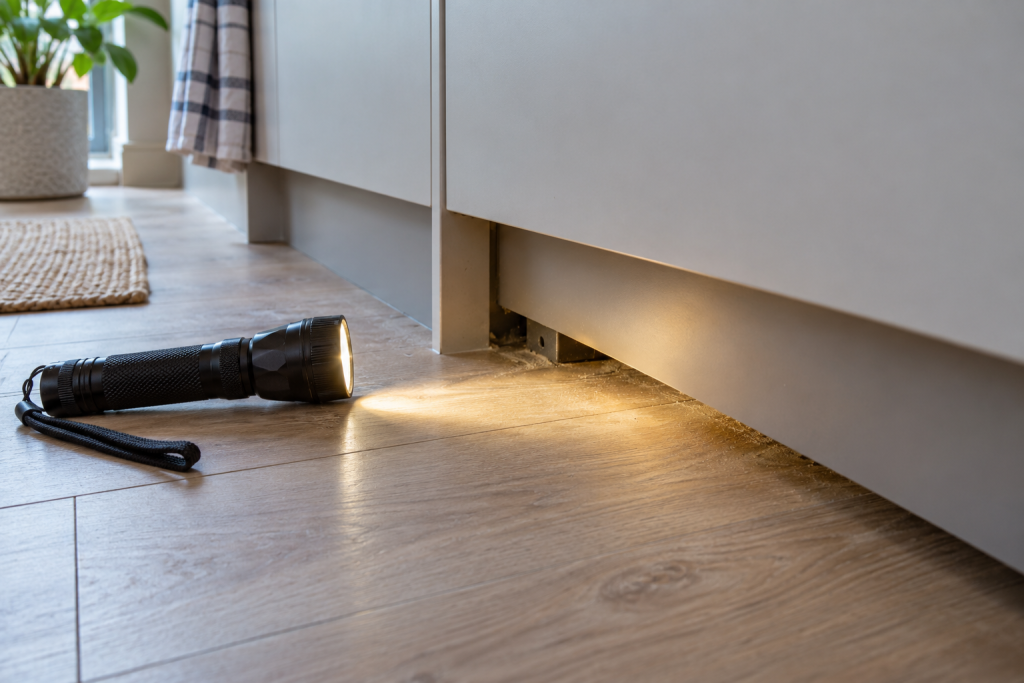
The gap between a wall and a fitted cupboard can be narrow enough to escape a sponge or vacuum nozzle. The same is true of pipe penetrations and the void behind a plinth. Even deep cleaning may not reach an egg case or the small insects hidden in those spaces. Disturbing them without a plan can make activity harder to track. Professional cockroach treatment starts by locating likely harbourages and deciding how to address them safely.
Why does activity appear in a tidy home?
Cockroaches may enter with goods, move through shared building routes or arrive from an adjoining area. A single introduced insect is different from a developing population, but the distinction takes evidence. Warmth and moisture can provide favourable conditions even where food hygiene is good. A cupboard beside a leaking pipe or a service duct can be more relevant than a clean floor. Good hygiene narrows the opportunities; it does not block every route of entry or remove an established harbourage.
In a multi-unit property, cleaning one flat cannot address insects using a shared riser or neighbouring void. Tell the landlord or building manager about repeated sightings and any accessible gaps, giving dates and photographs. Coordinated inspection may be needed. Avoid blaming another household without evidence. A technician can look for routes and advise on sealing after treatment, while any work around fire protection or building services should be handled appropriately.
What evidence should you keep?
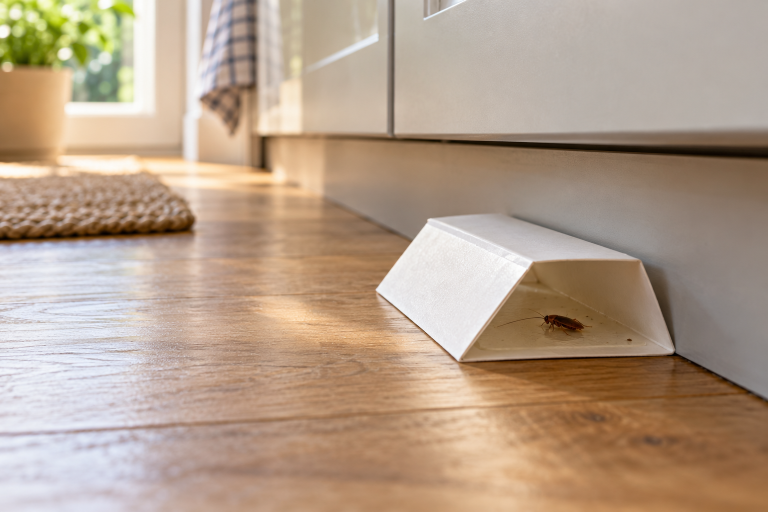
Photograph live insects, droppings, shed skins and suspected egg cases where you find them. Note the time, room and precise location. A small monitor placed according to its instructions can add a record of movement near a cabinet edge, but an empty monitor does not prove the room is clear. Retain a sample in a sealed container if practical. These details help distinguish a cockroach from another small insect and show whether activity is local or widespread.
Do not scrub away a useful cluster of signs just before an inspection. You can photograph it, clean ordinary food areas and tell the technician what you removed. Make a simple sketch of the kitchen and mark sightings, leaks, warm equipment and pipe openings. If you used a pesticide, write down the product and date. This is more useful than simply saying that you have cleaned every day. Our general insect control page can help you decide what information to send for identification.
Why can random spraying make diagnosis harder?
An aerosol applied around a kitchen may kill some exposed insects while missing those sheltered deeper in the structure. It can also move activity away from the places being monitored and interfere with a bait or inspection. Spraying near food, utensils, pets or electrics creates avoidable risks. Only use a product authorised for the precise setting and follow every label direction. Products restricted to professional users should be handled by trained operators. Tell the provider about any DIY application so they can account for it.
There is no reason to empty a whole kitchen or apply strong chemicals because of one unidentified insect. First establish what you saw. A sharp photograph and location history may change the advice substantially. If repeated catches or multiple life stages confirm activity, a targeted survey is more likely to locate its source than another round of general surface cleaning.
What should a professional survey consider?
A technician should consider the species, evidence of breeding, moisture, warmth, food sources and how insects move between rooms or units. They may inspect the accessible edges of appliances, cabinet joins, sink plumbing and service penetrations. The plan may include monitoring, targeted treatment and follow-up, plus practical changes such as repairing leaks or reducing clutter. The precise method should fit the property; a domestic kitchen, takeaway and block of flats have different access and food safety requirements.
Ask what needs clearing before the visit and what should remain untouched afterwards. If a bait is placed, do not wipe it away or spray over it. If monitors are set, keep their locations and check dates. Follow instructions about food contact surfaces, re-entry and pets. A clear written plan makes it easier to continue ordinary hygiene without undermining the treatment.
How can cleaning support the treatment?
Focus on repeatable habits. Remove accessible crumbs and grease from behind movable small appliances. Store food and pet feed in closed containers. Take rubbish out before it overflows. Dry spills promptly, and have a leak repaired. Vacuum accessible cabinet edges and floor corners when the provider says it is appropriate, then dispose of the collected material carefully. Keep worktops and utensils clean for normal use. These measures reduce competing resources and make new signs easier to spot.
Avoid dismantling fitted equipment or sealing every gap immediately. A technician may need access to a route during inspection, and a poorly placed seal can hide evidence or redirect insects. Repairs and proofing work best when linked to an understanding of the building. In a flat, share the plan with the manager so common areas and service routes are not overlooked.
Track progress without overreacting
After treatment, keep a dated record of sightings and any monitor catches in the same locations. Include the condition of each monitor and any changes to the room, such as a fixed leak or a new appliance. A single observation may have several explanations; a trend across several weeks is more informative. Ask the provider what level of activity they expect during follow-up and when to report a new sighting. Continue ordinary cleaning, but follow instructions about treated cracks, baits and devices. That lets the treatment work while preserving useful evidence.
When is cleaning not enough?
Seek help if sightings recur, insects appear in different stages, monitors repeatedly catch cockroaches, or activity continues despite reducing food and water sources. Early advice is especially useful where food is prepared commercially. Send photographs, a location record and details of any previous treatment through our contact page. The assessment can determine whether the evidence points to a local harbourage, an introduction or a wider building issue.
Cleaning remains an essential part of cockroach management because it improves hygiene and reduces resources. Its limits are equally important: hidden insects and shared routes need identification, inspection and a plan suited to the property. Combining those steps gives you a clearer way to measure progress than repeated cleaning alone.