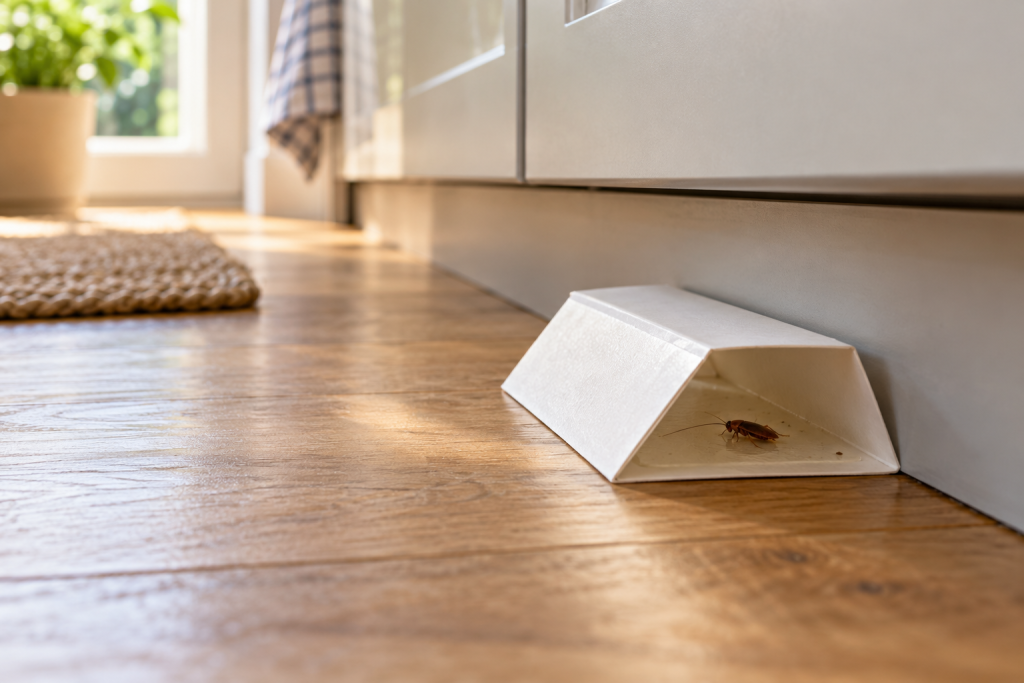
A sticky cockroach monitor is a small piece of evidence, not a verdict on the whole property. When placed and read correctly, it can help show where insects are travelling and whether activity changes over time. When used alone, it can also mislead. A trap with one insect does not reveal the number hidden nearby, and an empty trap does not prove the room is clear. This guide explains how to use monitors sensibly and what information to pass to a pest professional.
What is a cockroach monitor?
Most domestic monitors are folded cardboard or plastic units with a sticky surface and sometimes a food-based attractant. They are intended to catch insects moving across a particular small area. The device is a sampling point: it records what crossed that spot while the adhesive was usable. It is not designed to draw every cockroach from a whole kitchen, and it does not replace identification or a proper survey. Always follow the monitor maker’s placement and safety directions.
Monitors are useful because cockroaches spend much of their time in concealed cracks. A person may see none during the day even where activity continues after dark. Several devices in sensible locations can show a pattern that a brief visual inspection misses. They may also catch other insects, which makes clear photographs or retained specimens valuable. A professional can interpret those catches alongside droppings, shed skins, moisture and structural features.
What can a catch tell you?
A confirmed cockroach on a monitor establishes that one crossed that location during the monitoring period. If the device is near a sink cabinet and a second monitor by a warm appliance remains clear, the result may help prioritise the sink area for closer inspection. Repeated catches in the same place can indicate a route or nearby shelter. Counts taken at regular intervals may help assess whether activity is rising, falling or moving after a treatment.
Age and identity matter. Small immature cockroaches found repeatedly near a cabinet gap may suggest local development, while a single adult can have arrived through another route. A photograph should show the whole insect and its size, preferably next to a ruler without touching it. Do not assume every small brown insect is a German cockroach; other household species and outdoor insects can look similar at a glance. Our cockroach treatment service begins with identifying the pest and relevant harbourages.
What can an empty monitor not tell you?
An empty monitor only tells you that nothing was caught at that point while it was active. The adhesive may have become dusty, the device may have been moved, or insects may be travelling a few centimetres away. A unit set in the middle of an open floor is less likely to intercept an insect following a wall or cabinet edge. A short monitoring period can also miss intermittent activity. Avoid using a single clear result as a reason to ignore repeated sightings elsewhere.
A monitor also cannot identify the source of an infestation by itself. In flats, insects may move through service ducts, pipe openings and adjoining units. A catch beside a shared wall is a clue about movement, not proof that a particular neighbour has a problem. Building layout, sightings in other rooms and inspection findings are needed before drawing conclusions. If activity spans communal areas, tell the property manager with dates and locations rather than assigning blame.
Where should monitors go?
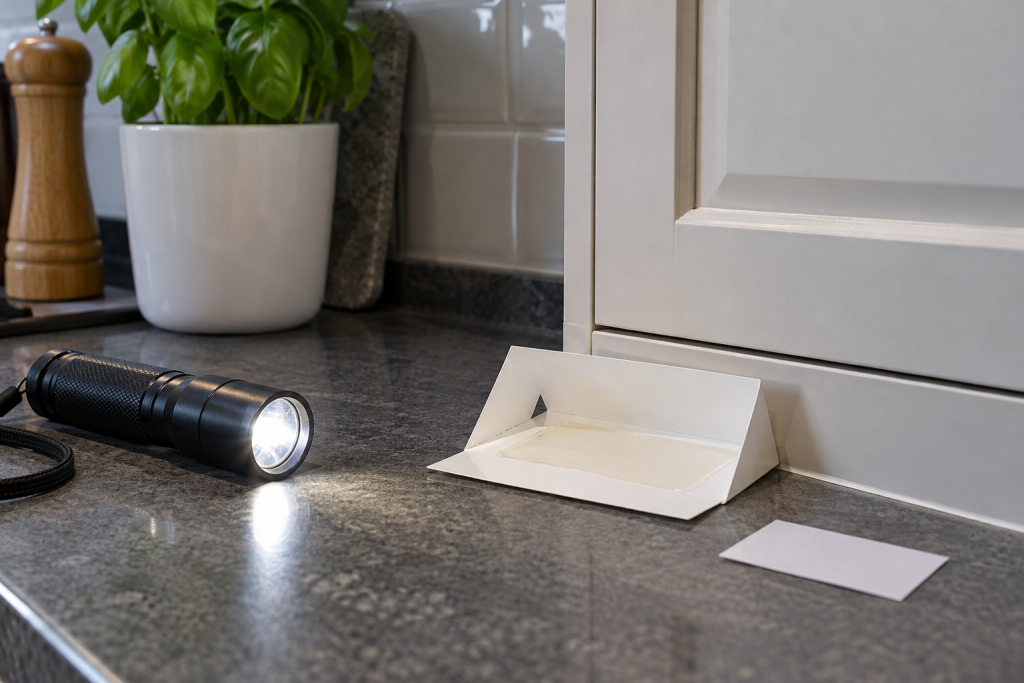
Place them where an insect is likely to travel and where they will not be stepped on, wetted or touched by children or pets. Common accessible positions include along a wall near the underside of a sink cabinet, beside a cabinet plinth or near the accessible edge of an appliance. Do not push a monitor into electrical equipment or behind a heavy appliance you cannot move safely. Avoid placing it on food preparation surfaces unless the product instructions specifically allow that. Keep it away from any area where adhesive could damage a surface.
Use a simple location code if you have several devices: K1 under the sink, K2 by the cooker, K3 beside the fridge. Write the date set and date checked on each one or in a notebook. Keep the position consistent so later catches can be compared. If a pest professional is arranging treatment, ask whether to leave existing monitors in place. Their placement may be part of the inspection plan. Moving them just before the visit loses useful context.
How often should you check?
Follow the product instructions and any professional schedule. For a household record, checking at regular intervals is more helpful than looking repeatedly throughout the day. Note the number and apparent type of insects, whether the adhesive remains usable, and any changes in the room such as a repaired leak or a cupboard being emptied. Photograph a catch before disposing of a used monitor. Wash hands after handling it and keep it away from stored food.
Do not treat a falling count as automatic proof of success. A monitor may have dried, been covered with dust or been moved to a less active spot. Likewise, a brief rise after disturbance does not always mean a treatment failed. Compare multiple locations over time and include visual sightings. A professional may use those trends to decide where to inspect again or whether follow-up work is needed.
Can monitors control an infestation?
They can catch individual insects, but their main value is information. They rarely reach the concealed population in warm cabinets, service gaps and appliances. Cleaning accessible spills, storing food securely and repairing leaks can reduce support for insects, but those actions do not turn monitors into a complete treatment. If catches continue or live insects appear in more than one place, arrange an inspection. The broader insect control service can help if the catch needs identification first.
Be wary of combining monitors with random sprays. Some sprays can repel insects away from the locations you are trying to assess, and unnecessary chemical use may contaminate storage areas. Any pesticide should be suitable for the site and used strictly according to its label. Products restricted to professional use belong with trained operators. If you have already applied something, record its name, location and date for the person inspecting the property.
What should you send with an enquiry?
Share the date of the first sighting, clear insect photographs, monitor locations, catches by date and any visible moisture or gaps. Mention whether the room is a domestic kitchen, a food business or part of a multi-unit building. Include relevant details such as pets, young children or recent DIY treatments so the advice fits your circumstances. A sketch of the kitchen often communicates the pattern faster than a long description. You can send these details through our contact page when seeking an assessment in Harrow.
The safest interpretation is modest: monitors help locate and track activity, while identification, inspection and context explain what the catches mean. If a monitor catches a cockroach, preserve the evidence and investigate the surrounding conditions. If it stays clear while sightings continue, adjust the survey rather than assuming the problem has vanished. Used this way, monitoring helps make professional cockroach control more targeted and follow-up more meaningful.