The space beneath kitchen units is a common place to discover a dark pellet, a rustle or a damaged food pack. It is also difficult to inspect well: plinths conceal the back of cabinets, pipes cross the area and dust collects where people rarely clean. A careful check can produce useful evidence without dismantling the kitchen or creating a fall, electrical or hygiene risk.
Decide what you need to learn
Before lifting anything, note why you suspect activity. Was there a live sighting, repeated sound, droppings, gnawing or an odour? Record the date, room and exact position. This helps separate a one-off mark from a pattern. A professional can use photographs and a location sketch to decide whether the route is likely to be behind the units, around a pipe or somewhere else. The goal is to observe accessible signs, not to catch an animal by surprise.
Set aside a torch, phone camera and a sheet of paper for notes. Wear closed shoes and avoid loose clothing that might catch on a panel. Keep children and pets out of the kitchen during the check. If you see exposed wiring, a leak or damaged flooring, stop and arrange the appropriate repair. A pest inspection does not replace electrical or plumbing assessment.
Start with a visual check from the room
Look at the plinth line, unit corners and visible pipes before moving a panel. Check whether a gap is a normal ventilation opening, an unfinished cut or recent damage. Search for droppings along edges rather than in the centre of the floor, and for fine debris below a possible entry point. Take an overview photograph that shows where the mark sits in the kitchen, then a close image with scale. Avoid touching suspect material.
Inspect the cupboard beneath the sink and other accessible base cabinets. Pipe penetrations through walls or cabinet backs may create routes. A dark hole is not proof of current activity. Combine the observation with other signs such as fresh debris, damaged packaging or repeat sightings. If you find suspect droppings, do not sweep or vacuum them dry; these methods can disperse contaminated dust.

Can a plinth be removed safely?
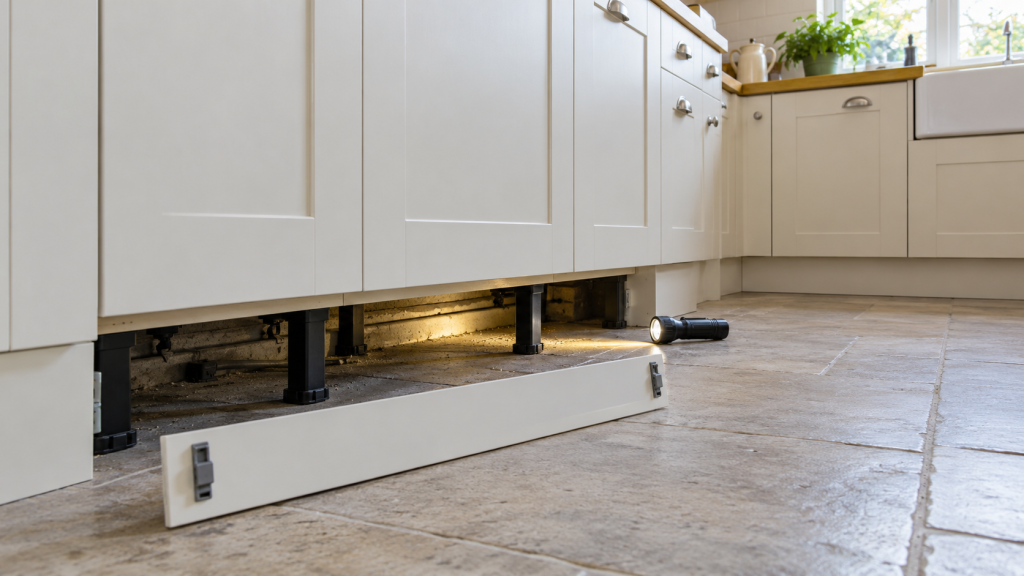
Some kitchen plinths clip off, while others are screwed, glued or integrated with the unit. If yours is designed to lift away and you know how it is fixed, remove it gently from a stable position. Do not force a stuck panel, pry against a pipe or pull near electrical fittings. In a rented property, check your tenancy or ask the landlord before removing fixed material. Take a photograph of the original position so it can be refitted correctly.
After removing a clip-on plinth, shine a torch into the void while staying outside it. Do not reach in with an unprotected hand. Watch for sharp screws, broken glass, dust, cables and possible control products left by previous occupants. If the space is too deep or obstructed to see, leave further access to a professional. An inspection should not damage the kitchen to satisfy curiosity.
What evidence is useful?
Note the position and number of suspect droppings, any gnawed edge, loose insulation, shredded material or disturbed dust. A row along the back wall can indicate a travel line, but it might be old. Photograph marks before cleaning, and repeat from the same angle if new activity is reported. A live sighting is valuable; record where the animal came from and went, without trying to chase it or block it into a cupboard.
Dropping shape and size may support identification but cannot prove it alone. Food grains, seeds and insect debris can resemble animal material, particularly in dim light. If signs point towards a smaller rodent, mice control may be relevant. Larger droppings, exterior burrows or drain concerns may lead to a rat control assessment. Let the full evidence guide the conclusion.
Look at the pipe route
Waste and water pipes often pass through a cabinet wall, floor or room wall. Look at accessible edges around them. An unsealed gap may connect the unit void to a larger service area. In a flat, a vertical riser may serve other homes as well. Photograph the opening and mention it to the landlord or managing agent if shared fabric is involved. Do not pack the gap with a random material while activity is suspected.
Proofing should follow an assessment of whether an animal is inside and where other exits exist. Pipework may need maintenance access and fire-rated sealing in a shared building. A pest controller can identify likely travel routes, while the relevant building professional should handle specialised fire stopping or service repairs. The rodent control service can advise how inspection and proofing fit together.
Check stored food and nearby attractants
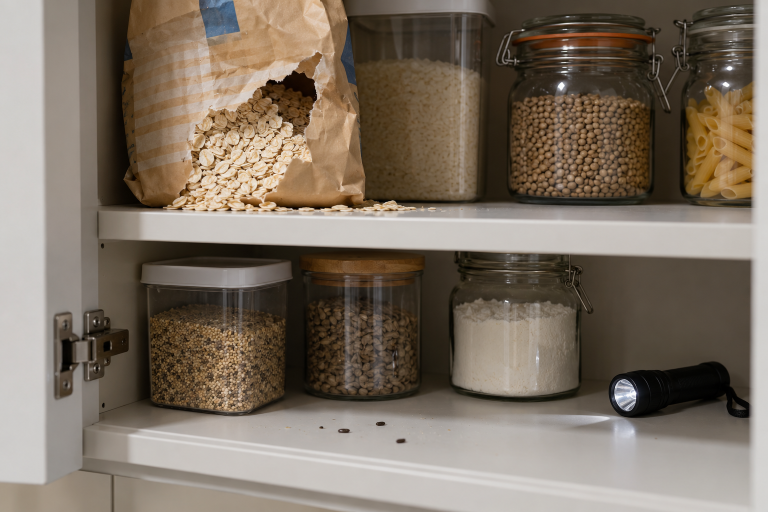
Inspect food stored in low cupboards and any pet food or household waste nearby. Discard food from visibly damaged or contaminated packs. Transfer sound, unaffected food into clean, lidded containers. Keep the bin closed and clean ordinary spills. These measures reduce easy access to food, but they do not resolve an entry route by themselves. A tidy kitchen can still be affected if animals travel through a wall or under flooring.
Do not place loose bait or an unprotected trap in the unit void. A hidden device may be inaccessible for monitoring, and children, pets or other occupants may encounter it. Treatment choice depends on the species, location and people using the kitchen. If a professional recommends a device, ask where it will go, how it is secured and when it will be checked.
What if you find droppings?
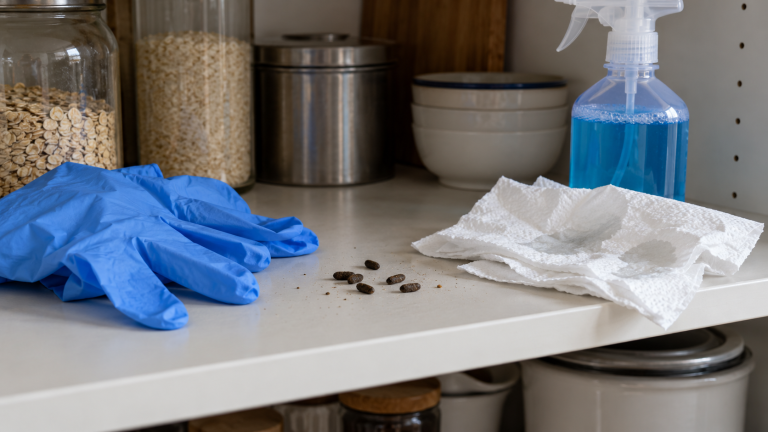
Leave the material undisturbed long enough to photograph its location. Keep food preparation away from that spot and wash hands after handling items from the cupboard. If cleaning is needed, follow appropriate hygiene guidance: avoid dry sweeping and vacuuming; dampen the area with a suitable household disinfectant according to its label and use disposable materials. Do not mix cleaning chemicals. Wear gloves, keep children and pets away, and clean nearby food-contact surfaces afterwards.
If there is substantial contamination, damage or uncertainty about safe access, ask for professional help. The same applies if you suspect activity inside inaccessible voids. Cleaning removes visible material, but inspection is needed to understand whether there is an ongoing route. Keep a note of when the area was cleaned so any later marks can be distinguished from the earlier finding.
When a simple check becomes a bigger job
Repeated droppings after cleaning, new gnawing, a live animal or activity in several cupboards suggests that the route needs assessment. Do not assume that the gap closest to a dropping is the only entry point. Mice can move through narrow service runs, and rats may use exterior or drainage-related access. A kitchen in a block of flats may require coordination beyond one unit. Give the professional the room layout, photographs and any history of building repairs.
Ask for a clear explanation of what was found, which route is likely and who will handle repairs. A follow-up plan should state how new activity will be monitored. If the problem involves a rental or shared building, pass the report to the person responsible for access and fabric. Save dated photos and notes; they can prevent repeated guesswork.
A practical stopping point
Once you have safely checked what is visible, stop. There is no benefit in removing fixed units, reaching blindly into cavities or exposing services without a plan. Protect food, avoid disturbing suspect contamination and arrange assessment if the signs are repeated or convincing. For a kitchen in Harrow, send the locations and photographs through the contact page so an inspection can focus on the most likely routes.