A hole beside a shed or a movement near a fence can raise concern about rats in the house. Garden activity matters, but an outdoor sign does not automatically mean a building is infested. The practical task is to distinguish wildlife or old ground disturbance from evidence of current rodent use, then check whether the route reaches a home or outbuilding. This guide explains what to observe from a safe position and how to reduce avoidable attractions.
Begin with the location
Where did you see the animal or mark? A rat crossing a garden at dusk, a burrow beside a compost area and droppings at a back door tell different stories. Record the date, time and exact place. Photograph the setting rather than only the hole or pellet. Note whether it is close to a wall, drain, shed base, bin store or bird feeder. Repeated sightings along the same edge suggest a travel route, while a single sighting may be transient.
Do not approach or corner an animal. Children and pets should be kept away from suspect burrows, droppings and any control products. Avoid putting your hand into a hole or lifting a heavy paving slab to investigate. The rodent control service can assess signs and building access without relying on a single outdoor observation.
What might a burrow indicate?
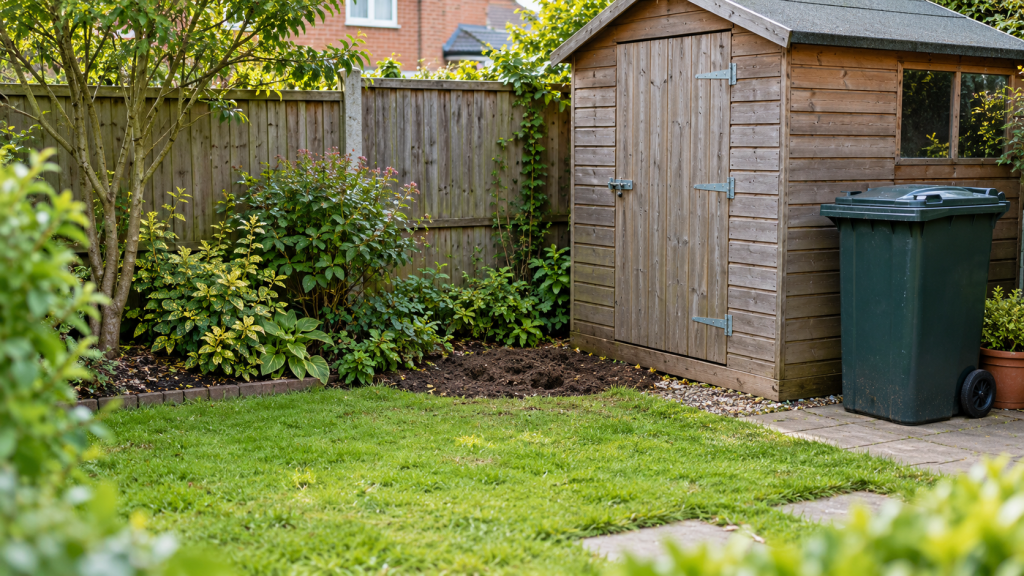
A rat burrow may have a used entrance with disturbed soil and a clear run to cover or food, but many animals and ordinary garden processes can create holes. Foxes, hedgehogs, insects and decaying roots can all leave openings of different sizes. Soil thrown out recently can look fresh after rain, and an old burrow can remain open. Do not identify the animal from diameter alone. Look for repeat activity, tracks, droppings and a route linking the hole to other signs.
If the hole is beside a foundation or drain, take photographs and note any water, odour or damaged pipework. A drainage defect needs assessment by an appropriate professional as well as pest advice. Do not pour chemicals, fuel or water into a burrow. Such actions can harm people, pets and wildlife and may force an animal into another part of the property.
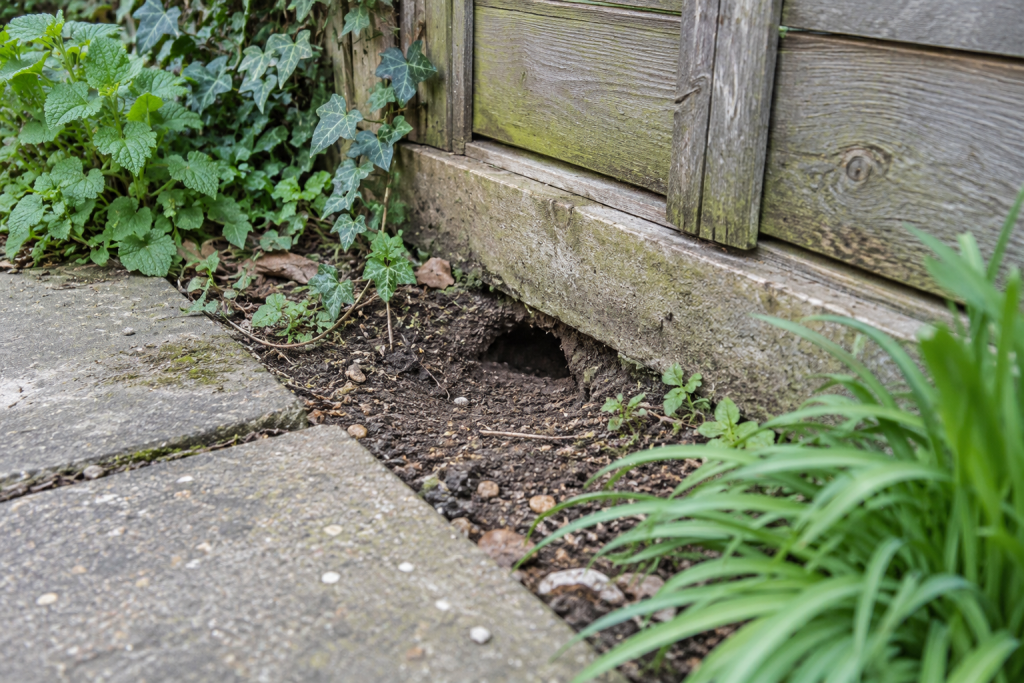
Check the building from ground level
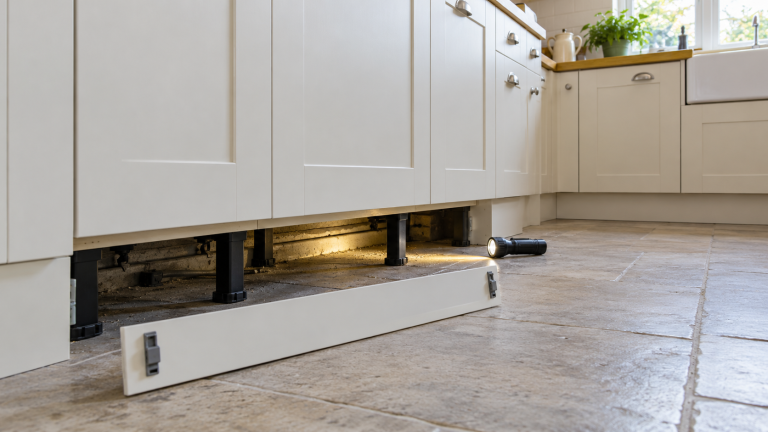
Walk the accessible perimeter without climbing or moving fixed materials. Look at door thresholds, air bricks, service entries, vents, cladding edges and the base of an outbuilding. A damaged opening that leads into a void deserves attention, especially if there are droppings or gnawing nearby. A gap by itself may be an intentional vent or service access, so do not block it without knowing its function. Photograph both the close detail and the whole wall.
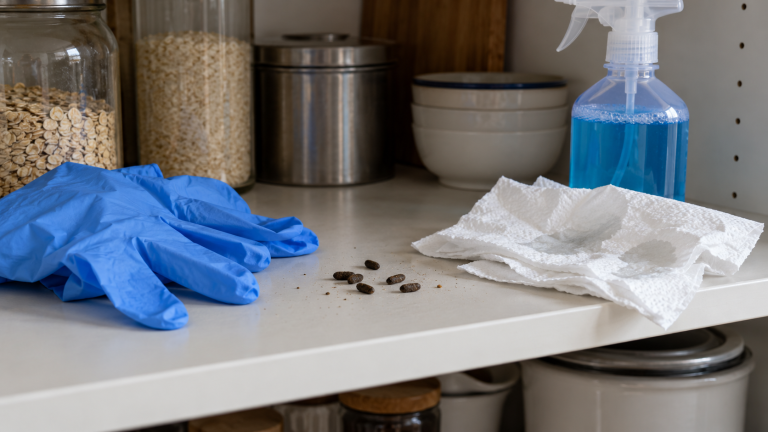
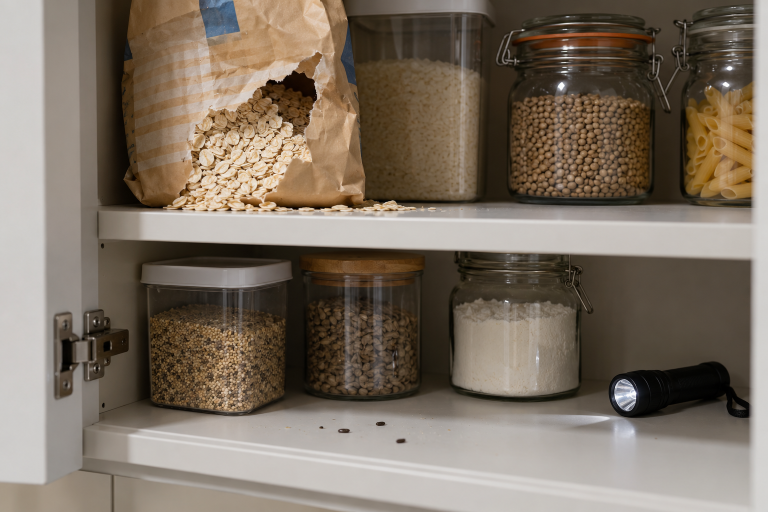
Inside, check accessible rooms nearest the outdoor signs. Have you found droppings, damaged food packaging, sounds in a wall or evidence around pipe routes? A garden sighting becomes more significant when independent signs appear inside. If activity seems limited to the exterior, the response may focus on food sources and access points rather than indoor treatment. A rat control assessment can evaluate the pattern and advise on suitable action.
Food and shelter in a garden
Accessible food makes a route more attractive. Check bin lids and bases, pet food, fallen fruit, compost contents and spilled seed under bird feeders. Feed birds in a way that minimises fallen food and clear spillages regularly. Store animal feed in sound containers. A compost heap should be managed so food waste is not left exposed. These steps are useful even if the animal has not been identified, but they do not replace a check for building access.
Dense vegetation, stored materials and unmaintained sheds can provide cover. Tidying a route may make inspection easier, but avoid disturbing an occupied nest or exposing children to contaminated material. A practical approach is to record the area, remove obvious food access and arrange assessment if sightings or signs recur. An immaculate garden is not guaranteed to be free of rodents; neighbouring and shared conditions also matter.
Could the movement be a squirrel?
A squirrel running along a fence or entering a roof edge can be mistaken for a rat at a glance. Time of day and climbing behaviour may help, but a blurred sighting cannot settle the question. Squirrels often move in daylight; rats can also be seen by day under some circumstances. If the concern is an animal entering the roof, record where it goes and seek a species assessment. The squirrel control service is relevant when roof-space use is suspected.
UK wildlife rules make species identification important. Do not trap and relocate an animal as a quick fix. In particular, captured grey squirrels cannot simply be released elsewhere. Other wildlife may have legal protection, and any method must be lawful and humane. A competent professional can explain the options after confirming what is present.
Shared gardens and neighbouring property
In a terrace or block of flats, a garden route may cross several boundaries and lead to a communal bin store or drain. Share factual observations with the landlord, managing agent or neighbours: dates, places and photos. Avoid assigning blame. A joint inspection can be more effective if the likely food source or building entry is on shared land. If only your garden is treated while an accessible route remains nearby, activity may return.
Keep a simple log. Record when bins were secured, when vegetation was cleared and whether sightings continued. This helps distinguish a sustained change from a quiet evening. It also makes follow-up decisions more evidence based. Do not leave loose bait or traps in a shared garden; children, pets and wildlife may encounter them, and monitoring responsibility can become unclear.
Where a neighbour reports similar activity, compare places and dates rather than pooling guesses about species. A route along a rear fence may connect several gardens, yet the important repair may be a gap at one outbuilding or a shared waste area. The management company may need permission to inspect a locked store or plant room. Your dated observations can make that conversation practical and reduce unnecessary repeat visits to the same isolated spot.
When to call for help
Repeated rat-like sightings, an active burrow near a building, droppings at an entrance, gnawing or signs indoors justify a prompt assessment. Urgency rises if there is damage to wiring, a drain problem or contamination near food storage. If you are unsure what the animal was, say so. Clear photographs and a route description are more useful than a confident but unsupported identification.
Ask the professional to explain whether the garden signs connect to the building, what food and shelter factors matter, whether a repair is needed and how success will be checked. A one-off sighting may call for monitoring; an active route may need coordinated control and proofing. The decision should follow the evidence found at the property.
From an outdoor sign to a sensible plan
Garden rodent activity becomes a building concern when there is a plausible access route and corroborating signs. Record the location, make food and waste less accessible, check the building safely and avoid improvised treatment. For a Harrow property, send photographs and the dates of sightings through the contact page so the assessment can cover both the outside route and the structure.